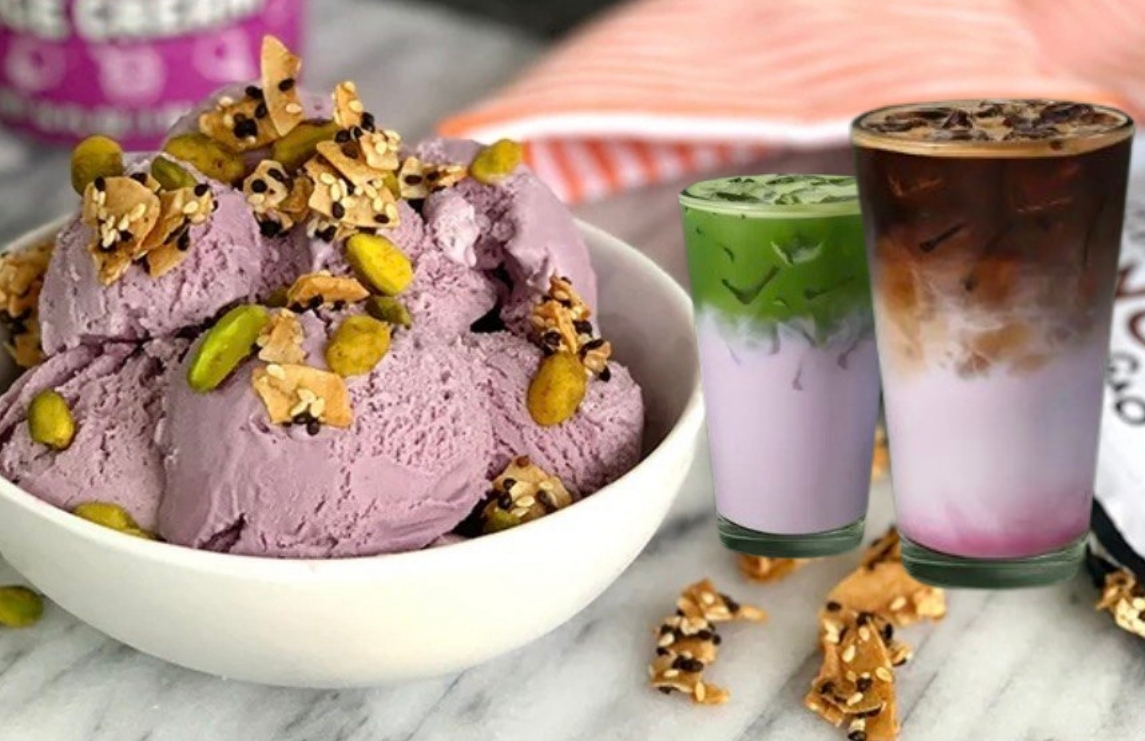
Once tucked away in Filipino kitchens, ube is now enjoying a vivid rise on the world stage. The purple yam that flavored childhood treats is turning into a global obsession, catching the eye of trend-watchers and coffee chains alike.
Even in the United Kingdom, the buzz is unmistakable. Ambassador Sarah Hulton OBE recently shared her surprise at seeing ube featured in London, a sign that its appeal has crossed well beyond diaspora circles.
British media have begun to hint that ube could rival matcha as the next must-have flavor, and major brands are responding quickly with limited-run drinks and desserts that lean into its color and charm.
Much of the early momentum comes from Filipino entrepreneurs abroad. Independent bakeries and cafes have been quietly introducing ube to new audiences through breads, pastries, and ice cream. Their success has opened the door for bigger players, turning what started as a niche offering into a seasonal highlight across high streets.
The story is similar in North America, where ube has been slipping into everyday products. It shows up in pancake mixes, specialty lattes, and supermarket freezers, proving it can move comfortably from artisanal counters to mass shelves.
Filipino-owned businesses continue to anchor its authenticity, even as the ingredient adapts to new formats.
Part of ube’s appeal lies in its visual punch. Its bright purple hue is tailor-made for social media, helping it stand out in a crowded market where consumers are constantly hunting for the next eye-catching bite.
Food companies are locked in a race to offer something new, and ube delivers both novelty and narrative.
That narrative is backed by hard numbers. Philippine exports of ube and ube-based products reached USD3.06 million in 2025, reflecting steady global demand for both its flavor and its natural coloring properties. Data from Mintel’s Global New Products Database tracked 359 product launches worldwide featuring ube, a sign that innovation is accelerating well beyond its country of origin.
Supporting that growth is a small but expanding network of exporters. Companies such as APO Products Ltd. and UNO Foods Inc. supply ube powder and other processed ingredients to international buyers, while distributors like Corinthian Distributors help move these products into overseas retail and food service channels, particularly in North America.
Trade Secretary Cristina A. Roque said the crop’s growing popularity highlights how a traditional ingredient can evolve into a high-value export, with benefits that ripple far beyond the farm.
“Behind every ube product enjoyed overseas are Filipino farmers and MSMEs whose dedication sustains their families and rural communities,” Roque said.
While innovation is spreading across markets such as Japan, China, and the United States, the Philippines remains central to production. This gives the country a strong position as demand expands in Europe and the Middle East, where curiosity for Asian flavors continues to grow.
The government is now working to strengthen quality standards and supply chains to ensure Philippine ube stays competitive as global interest intensifies.
What began as a familiar comfort food is now a serious export story. Ube’s journey shows how a distinctly Filipino ingredient can capture global attention and turn cultural heritage into commercial momentum.