The Philippine retail sector continues to expand, but growth is easing as weaker consumer spending and global uncertainties slow mall recovery and reshape expansion plans.
A study by Colliers Philippines showed retail development in Metro Manila has sharply decelerated, with only 96,000 square meters of leasable space completed from the fourth quarter of 2025 to the first quarter of 2026.
Annual additions are projected to average just 113,000 square meters through 2028—far below the 322,000 square meters delivered yearly between 2017 and 2019 during the height of Philippine offshore gaming operator (POGO)-driven demand.
“Retail is still growing, but no longer at the pace seen in previous years,” said Joey Bondoc, Colliers head of research.
Developers are now shifting away from large regional malls toward smaller, community-focused retail formats, while major property firms such as Ayala Land, SM Prime Holdings and Rockwell Land continue to upgrade assets and invest in premium retail experiences in Metro Manila and key provincial centers.
Retail leasing has gradually improved, with Metro Manila vacancy falling to 10.8 percent in the first quarter of 2026 from 11.4 percent in the third quarter of 2025—the lowest level since early 2020. Full-year vacancy is projected to average 10.2 percent.
However, Bondoc warned that the ongoing Middle East conflict could delay the sector’s full recovery to pre-pandemic vacancy levels until the first half of 2027, later than earlier forecasts of late 2026.
“The Middle East crisis will definitely be a game changer in the retail sector,” Bondoc said, citing rising fuel prices and inflationary pressures that are discouraging discretionary spending and reducing mall visits, particularly among car-dependent households.
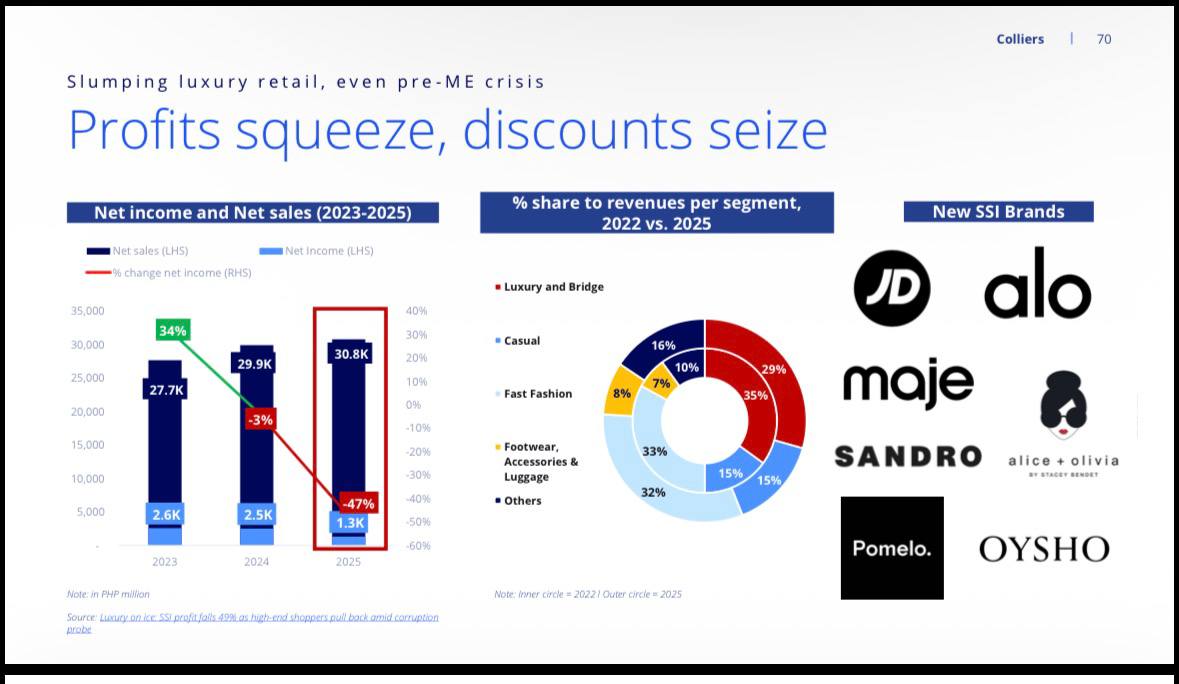
Higher shipping and commodity costs are also prompting consumers to tighten budgets, resulting in softer foot traffic, shorter operating hours in some malls and more cautious expansion plans among retailers. Premium and luxury segments are expected to be among the most affected as shoppers become increasingly value-conscious.
Despite the slowdown, food and beverage outlets, fast fashion brands, and beauty and wellness retailers remain expansion drivers. These segments account for 76 percent of planned store openings over the next 12 months, highlighting sustained demand for experience-driven and essential spending categories.