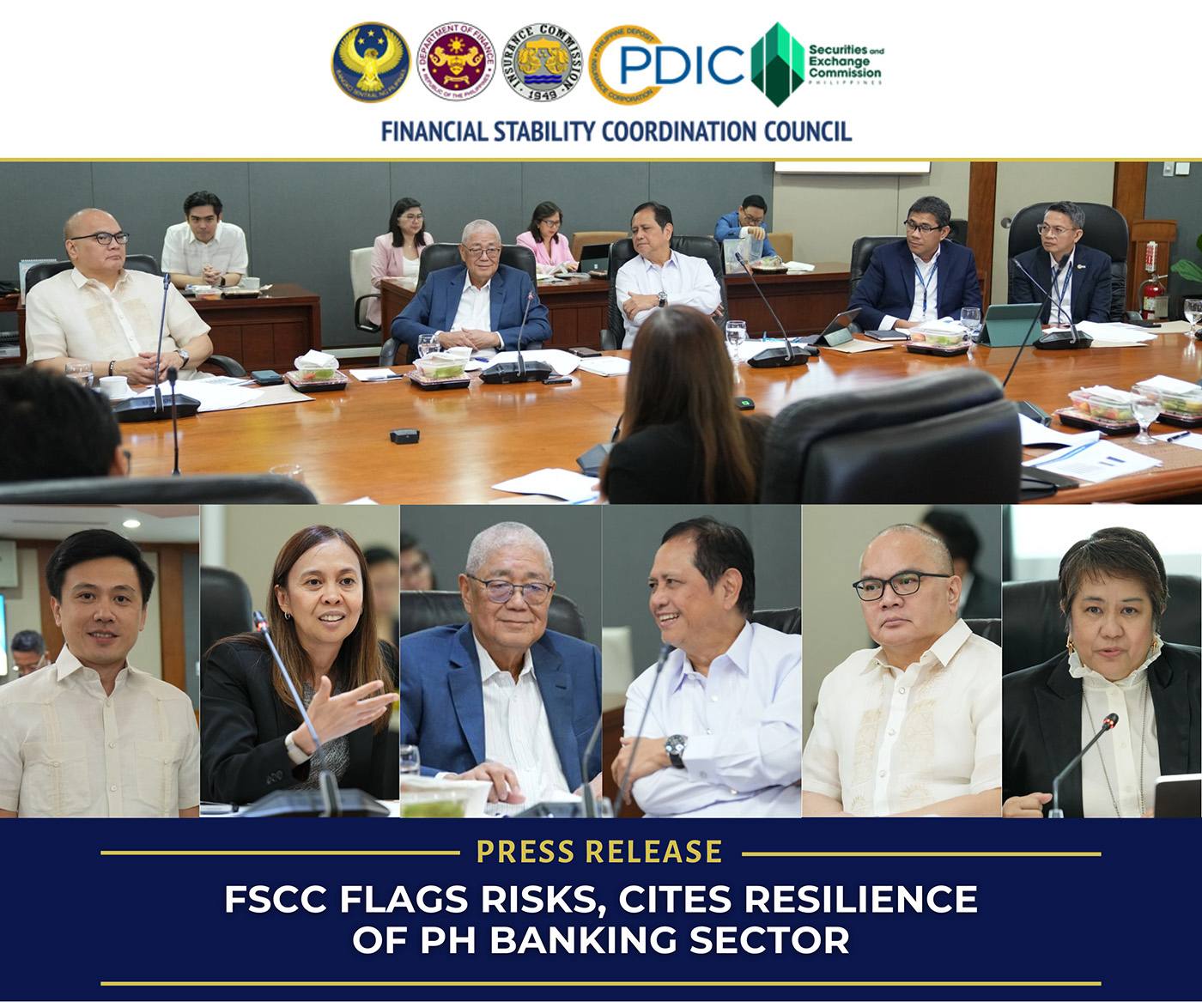
The Financial Stability Coordination Council (FSCC) confirmed on Monday that the Philippine banking system is stable and resilient, even as it flagged major risks that could directly affect businesses and households.
During its quarterly meeting at the Bangko Sentral ng Pilipinas (BSP), the council identified three main threats: the prolonged conflict in the Middle East, rising corporate debt risks, and growing household debt levels.
This matters particularly for businesses because higher oil prices from the Middle East war could raise operating costs and slow economic growth. Companies in energy-dependent sectors or those with variable-rate loans face heavier debt payments and tighter profit margins. Rising bond yields may also reduce the value of investments, while banks’ ability to lend depends on how well they manage these pressures.
For households, the Bangko Sentral ng Pilipinas (BSP) said that as interest rates climb, families with home, car, or personal loans will see higher monthly payments. It said the FSCC is closely monitoring whether borrowers can keep up with dues as debt levels rise.
BSP governor and FSCC chairman Eli M. Remolona, Jr. emphasized: “We see pockets of vulnerability… Nonetheless, the financial system remains on solid footing. Banks have enough capital and cash buffers to absorb shocks and continue lending to households and firms.”
To stay ahead, the FSCC — made up of the BSP, Department of Finance, SEC, Insurance Commission, and PDIC — is tightening supervision of non-bank financial firms (such as investment houses, pawnshops, and savings associations) and improving how it tracks risks across the entire financial network.
According to the BSP, the banking sector is strong enough to weather current challenges, but businesses and households should prepare for higher costs and tighter financial conditions ahead.