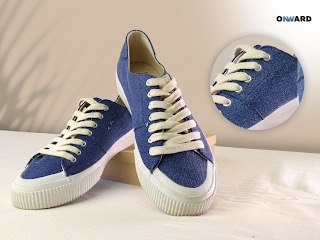
Nonwoven textiles made from agricultural waste are emerging as a promising growth area for the Philippine manufacturing sector as the Department of Science and Technology–Philippine Textile Research Institute (DOST-PTRI) ramps up efforts to commercialize the sustainable material across multiple industries.
Often overlooked despite their widespread use in products ranging from face masks and mattresses to vehicle interiors, footwear and medical supplies, nonwoven textiles are produced by bonding fibers mechanically, thermally or chemically instead of weaving or knitting them. The process allows manufacturers to produce lightweight, durable and versatile materials for applications in healthcare, automotive, construction, furniture, fashion, agriculture and infrastructure.
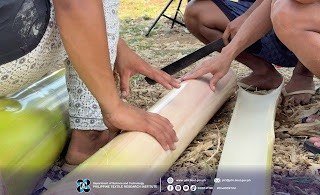
DOST-PTRI is betting that locally sourced natural fibers can give the country a competitive edge. Its drylaid and wetlaid nonwoven technologies use more than 75 percent natural fibers extracted from agricultural byproducts such as banana pseudostems, pineapple leaves, bamboo and water hyacinth, turning farm waste into high-value industrial materials while reducing dependence on petroleum-based plastics.
The institute is also moving beyond laboratory research by investing in specialized nonwoven equipment and innovation facilities while forging partnerships with manufacturers and designers to accelerate commercial adoption.
Among its collaborators are Sarao Motors for jeepney upholstery and headliners, Base Bahay Foundation for sustainable construction materials, Creative Definitions for footwear development, furniture makers Jed Yabut Furniture & Design and Junknot, Fivecent Global Corporation for technical textiles, the Fashion Accessory Makers of the Philippines, and clothing brand Renz Reyes.
To broaden industry awareness, DOST-PTRI is showcasing the technology through ONWARD: Philippine Nonwoven Textile Innovation, highlighting the expanding commercial applications of natural fiber-based nonwovens.
“We have already established ourselves in woven materials. We now want to leverage sustainability and technical innovation, and nonwovens are the perfect fit,” DOST-PTRI Director Dr. Julius L. Leaño Jr. said.
As manufacturers seek greener materials and circular production models, DOST-PTRI sees nonwoven textiles as a potential catalyst for higher-value manufacturing, stronger rural supply chains and a more globally competitive Philippine textile industry.