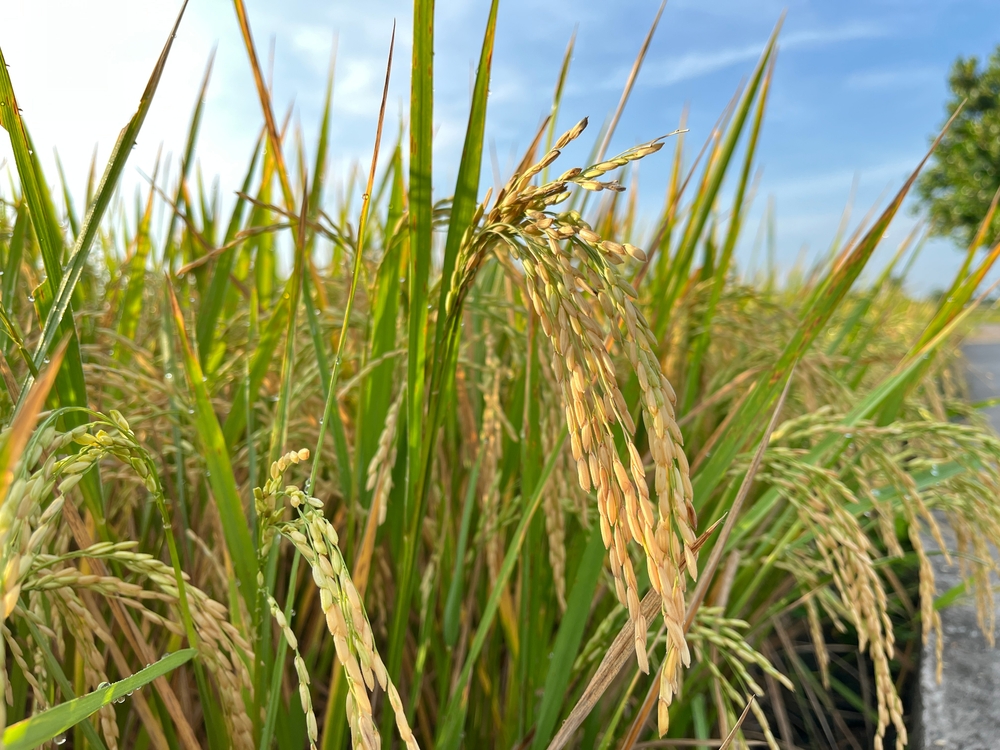
Rice has long been a symbol of resilience on the Filipino plate. Now, scientists are working to make the grain itself more resilient in the field.
Based on a story published by the Philippine Rice Research Institute (PhilRice), researchers from the Philippines and Thailand have identified rice breeding lines that can withstand two of agriculture’s toughest challenges, prolonged flooding and high salinity. The discovery could help pave the way for climate-ready rice varieties as extreme weather and saltwater intrusion put more pressure on farms.
The study, a collaboration between PhilRice and Khon Kaen University in Thailand, identified four promising breeding lines, SSal3, SSal15, SSal24, and SSal36, that showed tolerance to both submergence and salinity.
The significance is straightforward. Too much water can suffocate rice plants, while too much salt can disrupt growth and slash harvests. For farmers already dealing with unpredictable weather, these twin threats can turn a season’s hard work into a costly setback.
Researchers evaluated the breeding lines not only by how well they survived stressful conditions but also by examining the biological mechanisms that helped them endure.
Molecular analysis confirmed the presence of the Sub1 gene, which is associated with flood tolerance, and the Saltol quantitative trait locus, a genetic region linked to salinity tolerance. These genetic markers give breeders valuable clues in developing future rice varieties that can better handle climate stress.
Lead researcher Christopher C. Cabusora said the research addresses challenges that are no longer theoretical.
“There are already areas experiencing these combined stresses, and that is where many of our current varieties fall short,” Cabusora said.
The achievement, however, did not come from a quick laboratory shortcut. Developing the breeding lines required screening thousands of materials and repeatedly testing their performance, a painstaking process that relies heavily on traditional breeding methods.
“Our main limitations are human resources, breeding capacity, and resources. Much of our work relies on traditional, labor-intensive methods, requiring us to screen thousands of breeding materials and repeat evaluations for reliability,” Cabusora said.
The next step is taking these promising lines out of research plots and into real farms exposed to both flooding and salinity.
“For farmers, seeing is believing. That’s why we conduct field demonstrations in as many locations as possible,” Cabusora said.
The research also highlights the growing role of science in protecting food security. As climate change makes farming more unpredictable, the future of rice may depend not only on growing more grains, but on developing grains that can better survive the challenges ahead.