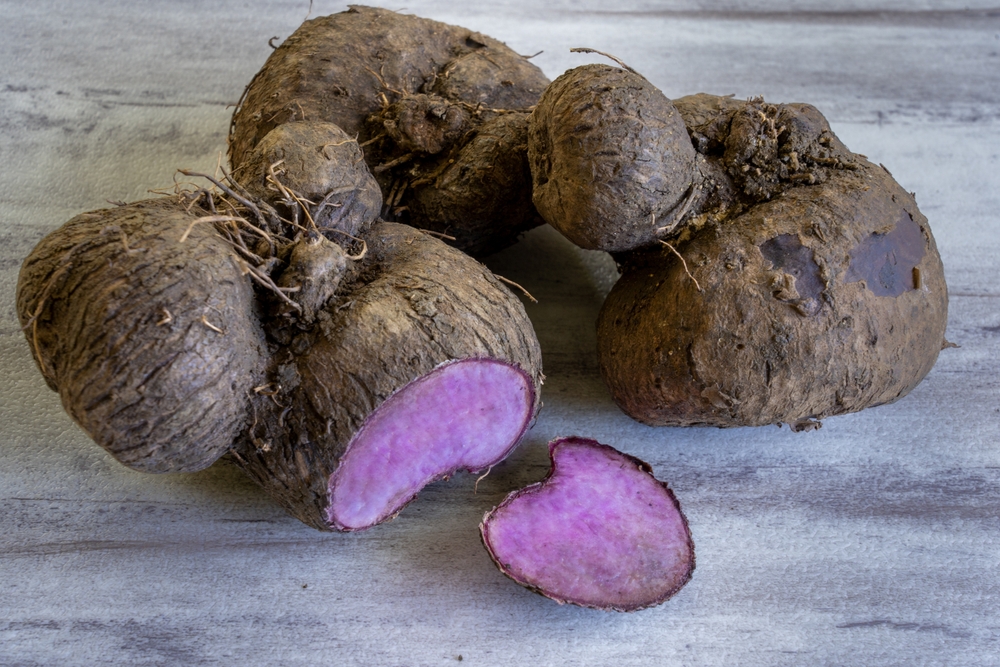
The Department of Agriculture (DA) is rolling out major policy changes to transform ube (purple yam) from a niche product into a leading global agricultural export, aiming to tap into the rising international demand for natural food ingredients.
Agriculture Secretary Francisco Tiu Laurel Jr. announced that the government will adopt an industry-led strategy rather than imposing top-down solutions. The DA’s role will focus on providing funding, policy support, and research based directly on priorities identified by farmers, processors, and exporters.
Overcoming Industry Bottlenecks
While ube has evolved into a globally recognized culinary staple, the local industry currently faces fragmented supply chains, inconsistent quality, and a lack of a unified marketing strategy. To address these challenges, the DA outlined several immediate priorities.
First, a new national ube federation will be formed to unify producers, processors, and exporters under a single agenda. The DA will also accelerate the production of high-quality planting materials using tissue culture and advanced propagation techniques. Proposed production sites include Quezon, Laguna, Pangasinan, and Aurora, with new processing hubs planned for Mindanao.
Additionally, stakeholders are pushing for a single “Philippine Ube” brand to compete with cheaper regional rivals. The DA plans to fund an independent market study to determine the best branding strategy. To ensure strict quality control, the industry will also develop a standardized color classification system for purple ube using scientific tools.
Room for Growth
A recent report by the United States Department of Agriculture (USDA) highlighted massive opportunities for growth in the sector, noting that current Philippine ube production remains modest.
According to the Philippine Statistics Authority, local ube production dropped 6.7% to 12,483 metric tons in 2025, down from 13,382 metric tons in 2024. Despite the dip, ube exports brought in $3.06 million in 2025, with over 60% consisting of fresh, chilled, frozen, or dried ube. The United States remains the top destination, accounting for 45% of exports, followed by the UK, Italy, and the Middle East.
Currently, ube production is highly seasonal—harvested between November and February—and concentrated heavily in Central Visayas (33%), Calabarzon (13%), and Cagayan Valley (12%).
The DA has already secured funding under its proposed 2027 budget to support ube development. The agency will host another major industry consultation on July 23, 2026, to finalize priority programs and the governance framework for the sector.