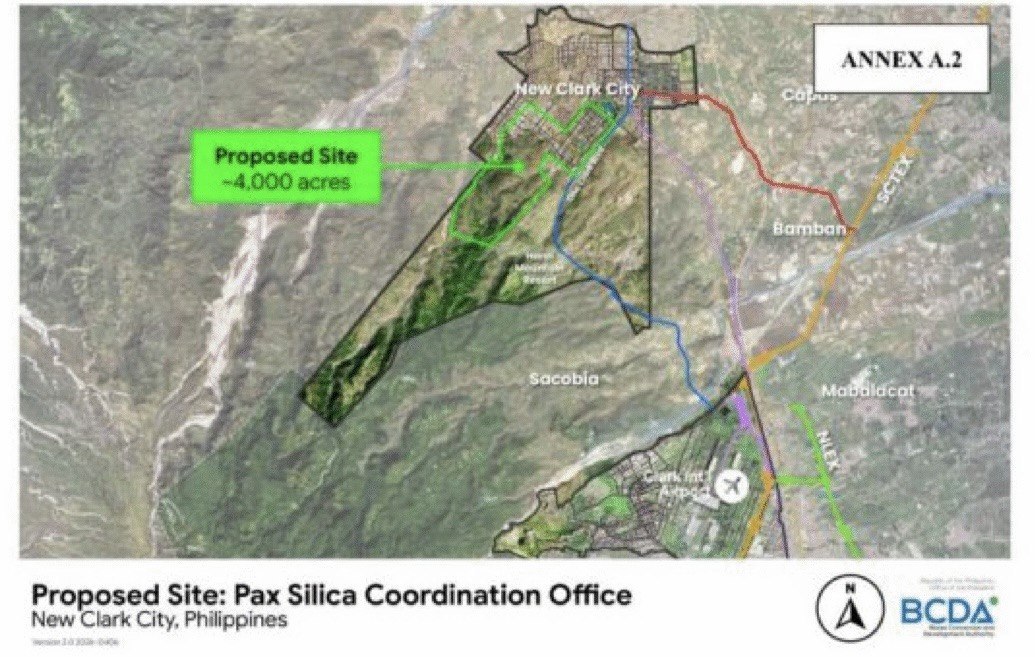
The Department of Energy (DOE) is urging the proposed Pax Silica development to build its own power plant instead of drawing electricity from the Luzon Grid, warning that the project’s massive energy demand could strain the country’s main power network if left unaddressed.
Energy Secretary Sharon Garin said hyperscale data centers require a constant, high-quality power supply that is both reliable and competitively priced, making dedicated generation the most viable long-term solution.
“For a data center, it needs huge power supply, steady, with no voltage fluctuations, and it needs cheaper rates. I think the best solution is to build a power plant for them,” Garin said in an interview on Gising Pilipinas on Tuesday.
She said the generating facility could be developed either by the project locator or within the economic zone, depending on the technology chosen and the scale of electricity demand.
The proposal also reflects a broader policy objective of protecting the national grid as large-scale digital infrastructure investments accelerate. Rather than diverting significant capacity from existing consumers, dedicated generation would allow new investments to expand without increasing pressure on the country’s electricity system.
“If we are talking about 200 or 500 megawatts, the Luzon Grid could go down. They have to have their own (power plant),” Garin said, emphasizing that Pax Silica should develop enough capacity to operate independently.
Among the technologies being considered, Garin pointed to small modular nuclear reactors as a strong candidate because they can provide the uninterrupted baseload power required by data centers while producing low carbon emissions. She noted, however, that any nuclear project would require extensive consultations with host communities.
If nuclear power proves unfeasible, Garin said the project could instead rely on liquefied natural gas, indigenous natural gas, or a hybrid energy system combining conventional fuels with renewable energy.
The recommendation highlights a growing challenge for the Philippines as it pursues investments in artificial intelligence and digital infrastructure. Attracting energy-intensive industries will increasingly depend not only on available land and incentives, but also on the country’s ability to deliver abundant, reliable and affordable electricity without compromising overall energy security.