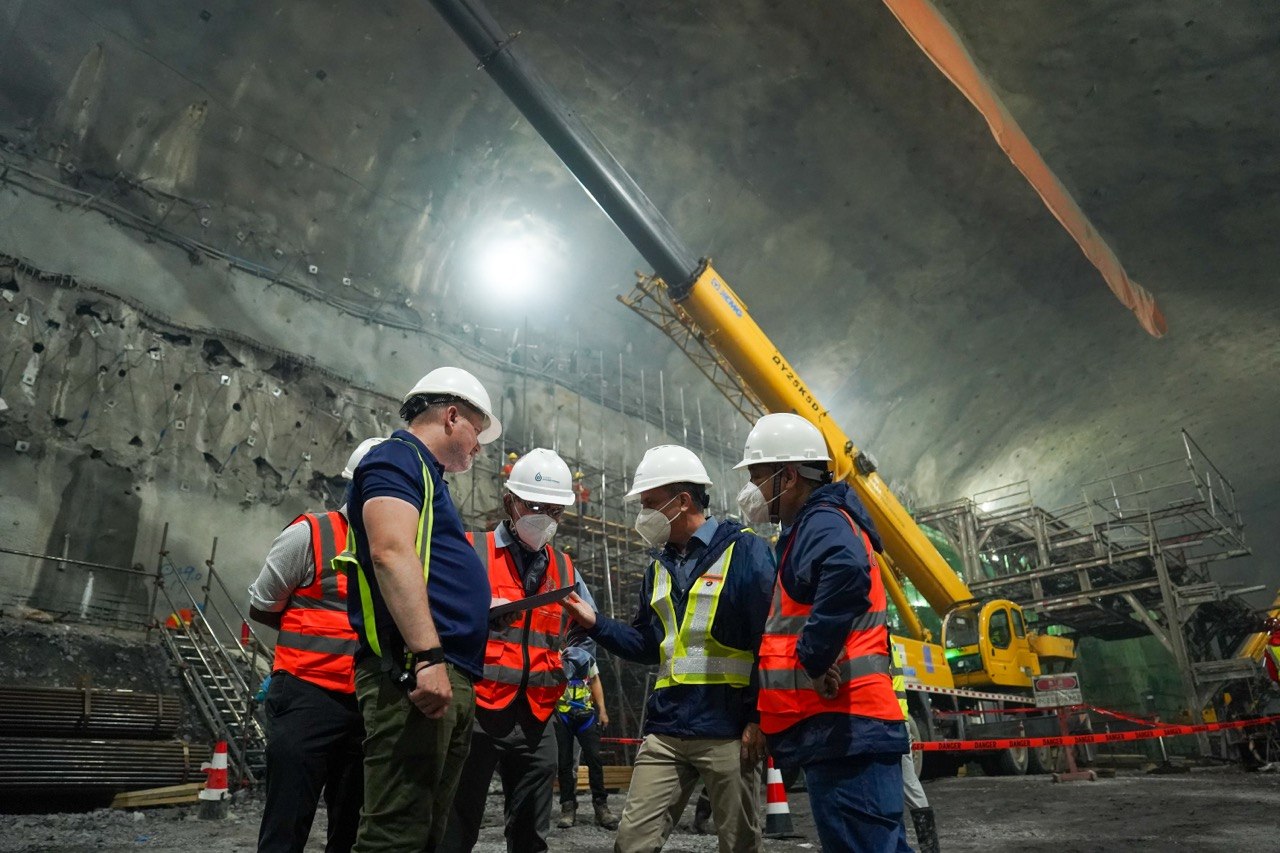
Prime Infrastructure Capital Inc. (Prime Infra) said construction of its 600-megawatt Wawa Pumped Storage Hydroelectric Power Project has reached 18.65 percent completion, as executives from Japan’s Kansai Electric Power Co. visited the site following their investment in the strategic energy storage facility.
The inspection underscores growing foreign investor confidence in the Philippines’ push to expand grid-scale energy storage as the country accelerates the integration of renewable energy into its power mix.
Prime Infra President and Chief Executive Officer Guillaume Lucci hosted KANSAI Hydropower Division General Manager Yuichi Yamane and Development Department General Manager Koichi Ohta at the Rizal project, accompanied by senior executives from Prime Infra.
The visit follows KANSAI’s agreement to acquire a 14 percent equity stake in PMJVCo Holdings Inc., the parent company of Olympia Violago Water & Power Inc., which owns and operates the Wawa pumped storage project.
Prime Infra said major construction milestones have already been achieved, including the completion of the main access road, emergency cable and ventilation tunnel excavations, the main access tunnel leading to the powerhouse and several construction adits, paving the way for the next phase of development.
Targeted for completion in 2030, the Wawa facility will provide 600 MW of generating capacity and 6,000 megawatt-hours of energy storage, allowing excess renewable electricity to be stored and dispatched during periods of peak demand, improving grid stability and energy security.
KANSAI, Japan’s second-largest electric utility, brings decades of experience in pumped storage hydropower, operating four such facilities with a combined installed capacity of 4,884 MW.
Wawa forms part of Prime Infra’s broader 2-gigawatt pumped storage portfolio alongside the 1,400-MW Pakil Pumped Storage Hydroelectric Power Project. Both developments have been designated as Energy Projects of National Significance, highlighting their role in supporting the country’s transition toward a cleaner, more resilient and renewable-powered electricity system.