The Philippines could join the ranks of high-income economies by 2053, but only if it shifts from an investment-led growth model to one driven by higher productivity, innovation and more effective implementation of reforms, according to the World Bank.
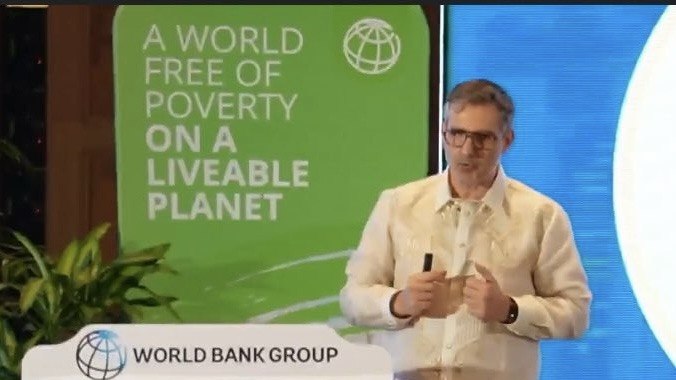
Speaking at the launch of the latest Philippine Economic Update, World Bank Lead Economist Gonzalo Varela said the country’s graduation to upper middle-income status on July 1 marked a major economic milestone, but also signaled the start of a more demanding phase of development.
“Investment and stability is what brought us here,” Varela said. “The next milestone will require productivity, and it will require implementation of reforms.”
Over the past 15 years, the Philippine economy has doubled in size, creating 11.7 million jobs through sound macroeconomic management, infrastructure spending and investment-friendly policies. But Varela warned that countries reaching upper middle-income status often experience slower growth unless productivity becomes the main engine of expansion.
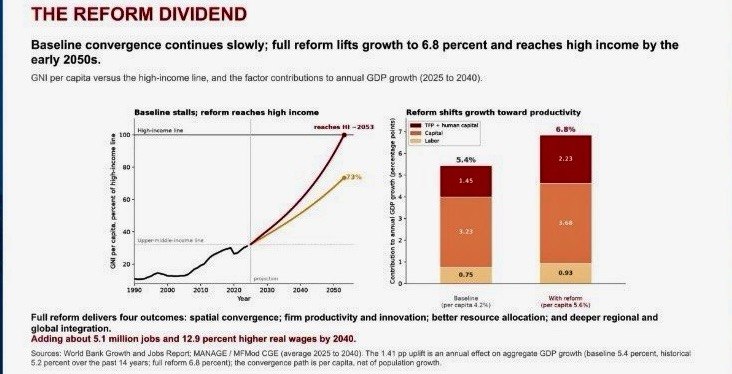
Under current conditions, the World Bank estimates the Philippines’ long-term growth potential at 5.4 percent, leaving the economy at only about 73 percent of the high-income threshold by 2050.
That trajectory changes significantly if reforms gather pace. Varela said improving firm productivity, deepening trade integration, strengthening policy execution and allocating resources more efficiently could lift potential growth to 6.8 percent, allowing the country to achieve high-income status by 2053.
The message underscores a broader shift in the country’s development agenda. Building more infrastructure and attracting investments remain important, but generating greater value from workers, businesses and technology is increasingly becoming the decisive factor in sustaining faster growth.
The long-term optimism comes against a weaker short-term backdrop.
World Bank Senior Country Economist Jaffar Al-Rikabi said Philippine economic growth is projected to slow to 3.7 percent in 2026, weighed down by softer public and private investment, higher energy costs linked to the Middle East conflict, slower household spending and a weaker labor market.
Still, Al-Rikabi said targeted government support has helped cushion vulnerable households, while continued structural reforms remain the key to restoring investor confidence and putting the economy back on a stronger, more sustainable growth path.