Philippine chief executives remain confident about business prospects, but many companies are struggling to turn growing investments in innovation and artificial intelligence into programs that can scale across their organizations.
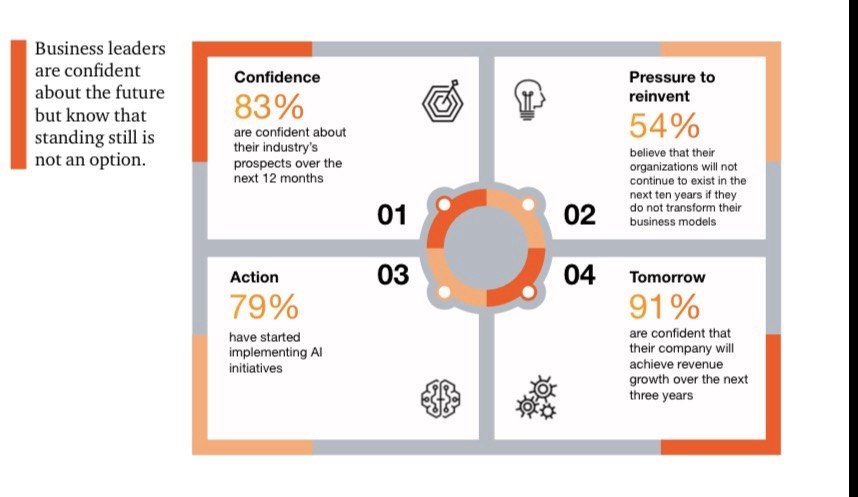
The 2026 Philippine CEO Survey by Isla Lipana & Co./PwC Philippines and the Management Association of the Philippines found that 83 percent of 176 CEOs are confident about their industries’ prospects over the next 12 months, unchanged from last year.
About 81 percent expect their companies’ revenues to grow over the same period, while 91 percent see revenue growth over the next three years.
That optimism persists despite a risk landscape that remains difficult to ignore. Regulatory uncertainty and climate change were cited by 93 percent of respondents, followed by geopolitical conflict at 92 percent. Technology disruption, supply-chain constraints, and skills shortages were also concerns for more than eight in 10 CEOs.
Companies are responding by placing innovation higher on the strategic agenda. Ninety-two percent said innovation is critical to their business strategy, while more than eight in 10 have incorporated AI into their strategies, up from 68 percent in 2025.
Nearly four in five, or 79 percent, have also begun implementing AI initiatives.
The bigger challenge appears to be turning those initiatives into durable capabilities.
Only 34 percent of CEOs said their companies have dedicated innovation centers, incubators, or venturing divisions. Just 38 percent have formal processes for terminating underperforming research and development initiatives, suggesting that many companies are better at starting innovation projects than deciding which ones deserve continued investment.
Risk appetite is another constraint. Only 40 percent reported a high tolerance for innovation risk.
“Innovation is not just about generating new ideas. It requires disciplined execution, investment, and a willingness to challenge traditional ways of doing business,” PwC Philippines Assurance Partner Pocholo Domondon said.
The findings point to a widening gap between ambition and execution. Philippine businesses are increasingly willing to experiment with AI and new technologies, but fewer have the structures, capital discipline, and risk tolerance needed to scale successful ideas.
For CEOs, the next challenge may therefore be less about embracing innovation and more about building organizations capable of making it pay off.