Unilever Philippines has cut its operational greenhouse gas emissions by 77 percent from 2015 levels as of end-2025, while expanding decarbonization efforts across its supply chain as the consumer goods company works toward its net-zero targets.
The company is targeting a 100 percent reduction in absolute Scope 1 and 2 emissions by 2030 from a 2015 baseline. Its strategy includes investments in renewable energy and the electrification of factory processes.
Unilever Philippines shifted to 100 percent renewable grid electricity through geothermal energy in 2019 and has since installed rooftop solar panels across its facilities. It has also electrified some thermal processes through heat pumps and boilers and committed to transitioning its owned fleet to 100 percent hybrid electric vehicles by 2030.
With a significant share of its climate footprint coming from its value chain, the company is increasingly focusing on Scope 3 emissions, which include emissions generated by suppliers and other activities beyond its direct operations.
Through Unilever’s Supplier Climate Programme, priority suppliers receive tools and resources to measure, report and eventually reduce their emissions.
In September 2025, Unilever Philippines also expanded its partnership with First Gen to provide renewable energy to priority sites and suppliers across Metro Manila, Cavite, Laguna and Batangas.
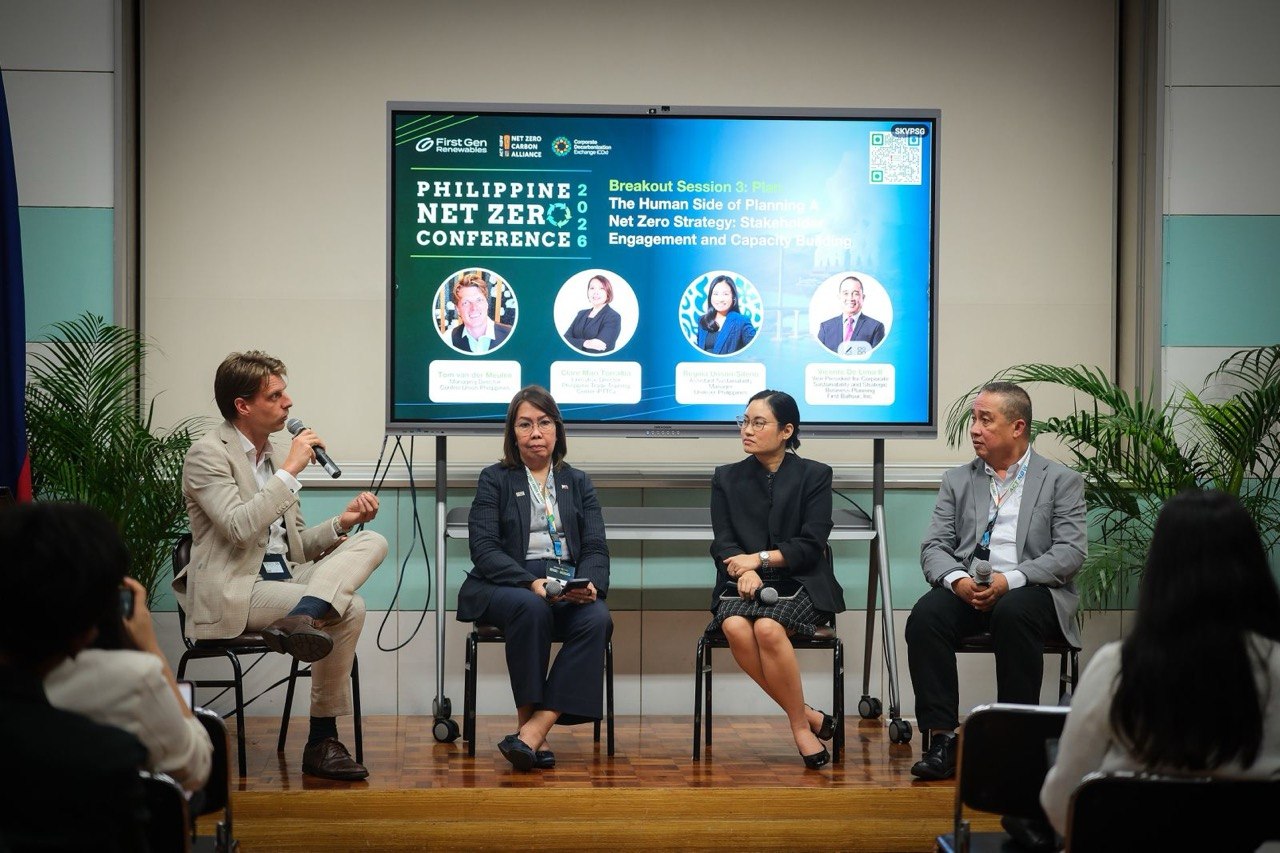
“Sustainability has to be embedded across the business, with clear ownership and accountability from the functions that can turn strategy into action,” Unilever Philippines Sustainability Manager Regina Unson-Silerio said at the Philippine Net Zero Conference 2026.
Unilever, an inaugural member of the Net Zero Carbon Alliance, said collaboration among businesses, government and industry groups will be critical to accelerating the Philippines’ low-carbon transition.