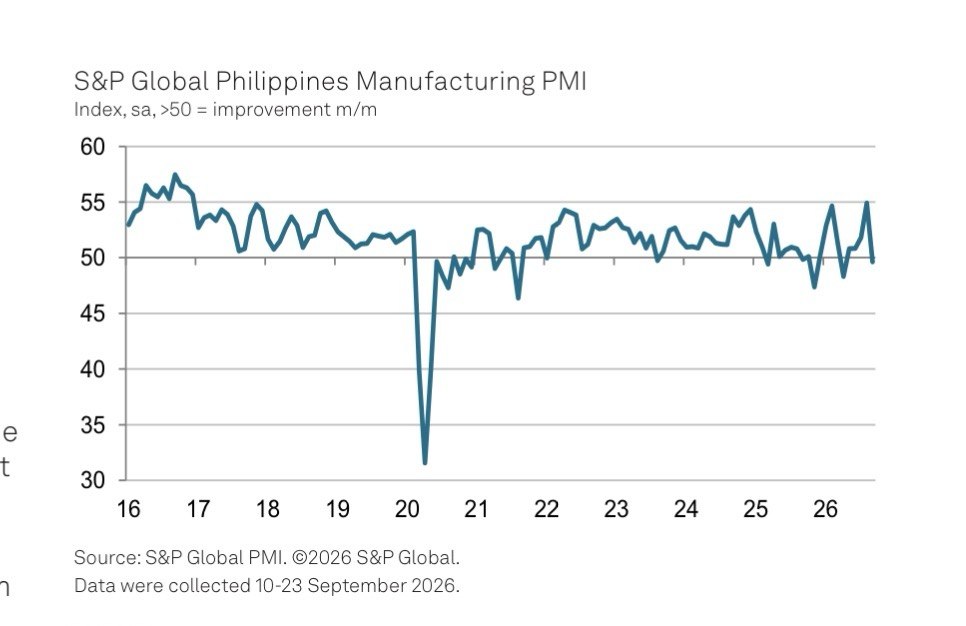
Philippine manufacturers shifted into “retrenchment mode” in September, cutting jobs, purchases and inventories as weak demand, high oil prices and international competition pushed the sector back into contraction, S&P Global Market Intelligence said.
The Philippines Manufacturing Purchasing Managers’ Index (PMI) dropped sharply to 49.6 in September from 54.9 in August, falling below the 50 threshold separating expansion from contraction. It was the first deterioration in operating conditions since April.
Production fell for the first time in nine months and at the sharpest pace since November 2025 as new orders declined. Export orders also returned to contraction amid strong international competition and resistance to higher prices.
“Filipino manufacturers reported a notable impact from high oil prices, strong international competition and weak demand during September,” S&P Global Principal Economist Siân Jones said.
“Firms also signalled moves into retrenchment mode via a fresh decline in input buying and a running down of inventories,” she added.
Manufacturers reduced employment as production requirements weakened, although job losses remained slight. Input purchases fell for the first time since May, while both pre- and post-production inventories declined.
Higher oil prices and unfavorable peso-dollar movements continued to raise operating expenses and disrupt logistics, with supplier delivery times deteriorating at one of the sharpest rates in nearly two years.
The weakening conditions also hit business confidence. Expectations for output over the next 12 months fell to their lowest level since January—an eight-month low—after reaching a 21-month high in August.
Jones said manufacturers’ ability to absorb higher costs while remaining competitive would be critical to reviving customer demand.