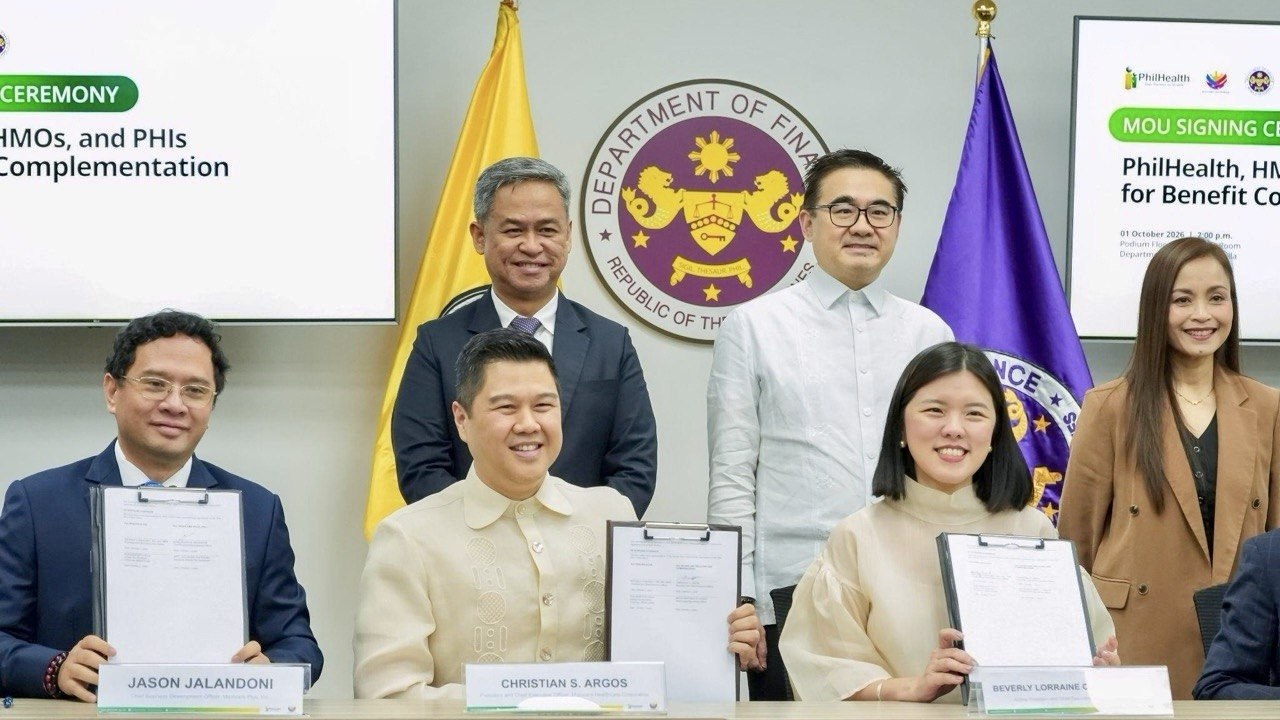
The Philippine Health Insurance Corporation (PhilHealth) and Maxicare Group have partnered to expand access to healthcare services, improve coordination between public and private providers, and reduce out-of-pocket expenses for Filipinos.
The agreement, formalized through a memorandum of understanding signed at the Department of Finance on October 9, is expected to allow PhilHealth members to access covered services at Maxicare Clinics nationwide as implementation progresses.
Potential services include medical consultations, animal bite treatment, maternal care and mental health services. Members enrolled in PhilHealth’s Yaman ng Kalusugan Program (YAKAP), which promotes preventive care and early diagnosis, are also expected to benefit from access to Maxicare Clinics and its accredited facilities.
The partnership comes as policymakers seek to strengthen primary healthcare and reduce the financial burden on patients who delay treatment because of cost. By coordinating public health coverage with private healthcare networks, the initiative aims to make preventive services more accessible before medical conditions become more serious and expensive to treat.
PhilHealth President and CEO Dr. Beverly Lorraine Ho said the agreement signals a move toward a more integrated healthcare financing system, with government and health maintenance organizations (HMOs) complementing rather than duplicating one another’s services.
“The goal is a more seamless patient journey, with less duplication, fewer administrative barriers, and greater accountability amongst us payors and the providers,” Ho said.
Maxicare Group President and CEO Christian Argos said the partnership supports the implementation of the Universal Health Care Act by improving coordination between public and private healthcare providers.
“PhilHealth and the HMOs have served the same Filipinos in parallel for decades,” Argos said.
He added that as PhilHealth assumes greater responsibility for primary care, HMOs could redirect resources toward expanding other benefits available to their members.
“As PhilHealth covers more of primary care, we will use that room to expand what our members receive. The value should go back to the member,” Argos said.
The arrangement could help streamline access to services and improve the use of existing healthcare networks. However, its impact on patients will depend on implementation, covered benefits, provider participation and how effectively the two organizations coordinate claims and payments.
The partnership represents a step toward a more connected healthcare system, although its success will ultimately be measured by whether Filipinos experience lower costs and more reliable access to care.