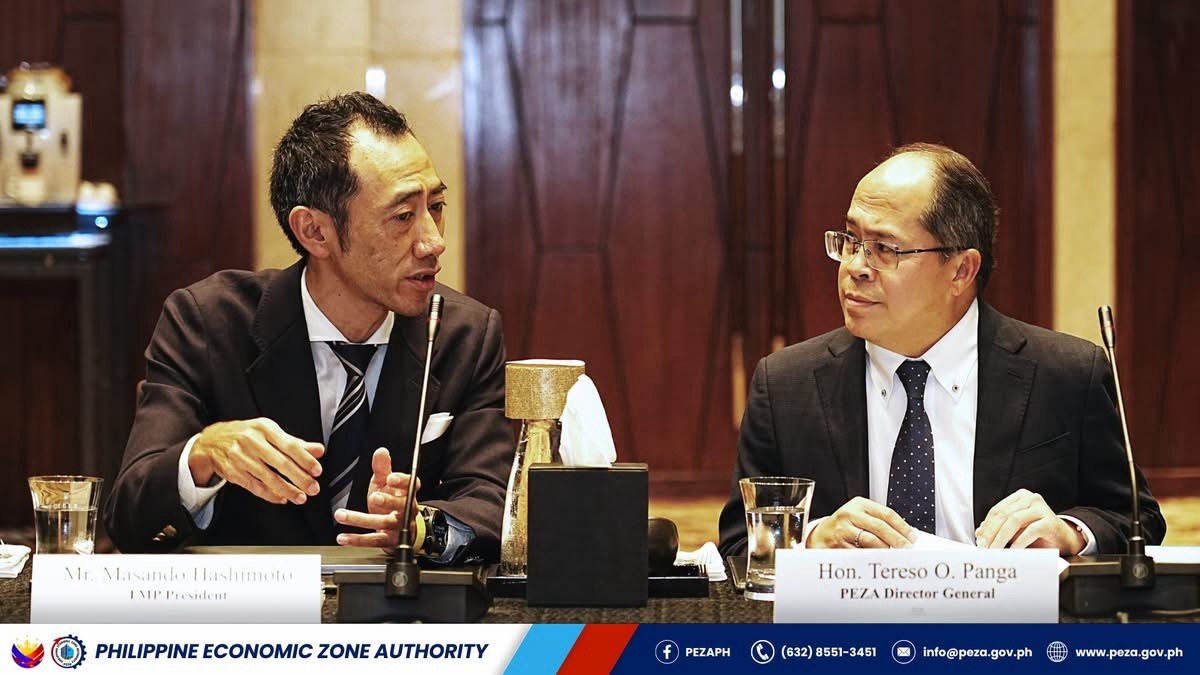
The Philippine Economic Zone Authority (PEZA) will help Toyota Motor Philippines Corp. (TMP) pursue outstanding incentives under the Comprehensive Automotive Resurgence Strategy (CARS) program, as the government seeks to sustain automotive manufacturing investments despite softer export prospects this year.
PEZA Director General Tereso Panga said the agency would coordinate with relevant government offices to address Toyota’s concerns, including incentive collections, customs accreditation and eligibility for new automotive industry support programs.
“We committed to help since the DTI Secretary sits as PEZA chair,” Panga said, referring to the Department of Trade and Industry.
Toyota’s export outlook has weakened amid lower vehicle demand in 2026. Shipments by Toyota Group export suppliers are projected to reach $1.06 billion this year, down 2.8 percent from $1.09 billion in 2025.
Panga nevertheless expects exports to recover in 2027, although the pace of any rebound will depend on market demand and the industry’s ability to sustain production and supply-chain activity.
Among the issues requiring government action are the release of CARS incentives, Toyota’s participation in the Revitalizing the Automotive Industry for Competitiveness Enhancement (RACE) program, and its qualification for Level 2 accreditation under the Bureau of Customs’ Authorized Economic Operator system.
The agency also plans to support efforts to strengthen local sourcing, a key consideration for the competitiveness of domestic vehicle manufacturing and its network of parts suppliers.
During the 27th Toyota Special Economic Zone Update Meeting, TMP President Masando Hashimoto underscored the importance of fulfilling CARS commitments to sustain the company’s manufacturing investments.
Toyota also intends to register its locally manufactured Tamaraw under the RACE program once its implementing guidelines are finalized, potentially opening another avenue of government support for domestic production.
Panga said Toyota’s 13 export suppliers had generated more than P34 billion in cumulative investments and created over 45,000 direct jobs, highlighting the wider economic stakes of maintaining the automotive supply chain.
The immediate challenge is to resolve outstanding incentive and regulatory concerns while export demand remains subdued. Whether the anticipated 2027 recovery materializes will also depend on external market conditions, beyond the reach of domestic policy support alone.