



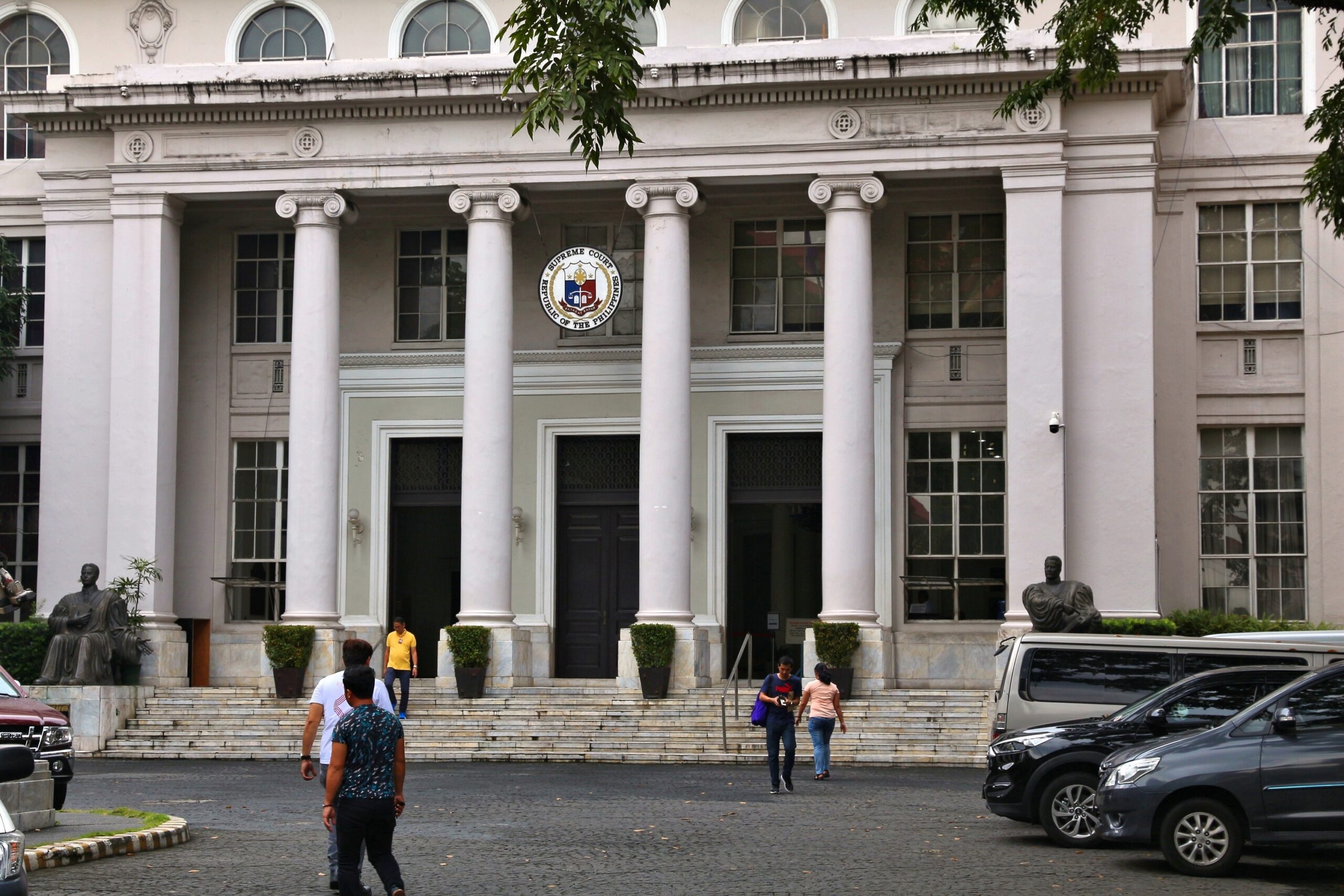
The Supreme Court has declared unconstitutional key provisions of the 2024, 2025 and 2026 national budgets, ruling that congressional increases beyond the President’s recommended appropriations violated constitutional limits and weakened safeguards over public spending.
In a decision written by Senior Associate Justice Marvic M.V.F. Leonen, the SC En Banc granted the petition of Edcel C. Lagman and others, partly granted a separate petition led by Senator Aquilino “Koko” Pimentel III, and granted a petition challenging the 2025 General Appropriations Act (GAA).
The Court invalidated the 2024 GAA after Congress increased unprogrammed appropriations by P449.5 billion, effectively raising the total appropriations recommended by the President. It also struck down the 2025 GAA over a P17.99-billion congressional increase in the Department of Public Works and Highways’ Special Road Fund.
For the 2026 GAA, the Court invalidated Special Provisions 1(a) and (b) governing unprogrammed appropriations, finding that their revenue conditions were overly broad and lacked sufficient safeguards. It permanently prohibited the Senate, House of Representatives, Office of the Executive Secretary and the Department of Budget and Management’s acting secretary from implementing the provisions.
The ruling clarified that unprogrammed appropriations are not unconstitutional per se. However, they must operate within the national fiscal program, contain clear spending priorities, and avoid lump-sum allocations that give the Executive excessive discretion. The Court said the constitutional spending ceiling covers both programmed and unprogrammed appropriations.
It also identified the P12.75-billion increase in certain agencies’ Special Accounts in the General Fund as inconsistent with the Administrative Code’s prohibition on increasing special-provision amounts beyond those proposed by the President.
The Court criticized the bicameral conference committee’s budget changes, noting inadequate documentation and a lack of transparency in explaining adjustments. It also identified the SAGIP allocation as a prohibited lump sum that enabled post-enactment identification of spending, including infrastructure projects.
The doctrine of operative fact will protect only irreversible programs benefiting recipients who acted in good faith. It does not automatically exempt those responsible from potential liability.
Chief Justice Alexander Gesmundo agreed that unprogrammed appropriations remain constitutionally permissible as limited standby funding, but said congressional increases must be matched by corresponding reductions in programmed appropriations.