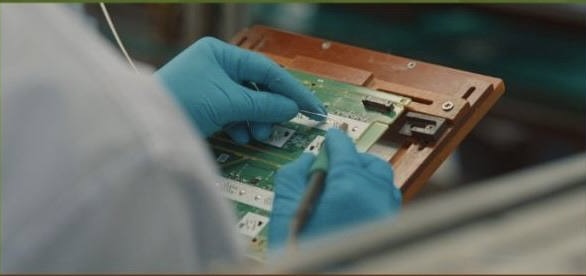
The Philippines is seeking a larger role in US technology supply chains as rising artificial intelligence (AI) demand creates fresh opportunities for the country’s semiconductor and electronics industry, with a weaker peso potentially improving exporters’ price competitiveness.
The Semiconductor and Electronics Industries in the Philippines Foundation Inc. (SEIPI) said local manufacturers supply critical components to American companies, complementing US manufacturing and supporting broader technology production.
The opportunity comes as electronics remain the backbone of Philippine merchandise exports. US-bound shipments reached USD2.17 billion in August 2026, accounting for 23.8 percent of total exports. Electronics shipments amounted to $6.20 billion, equivalent to 71.4 percent of the country’s merchandise exports.
A weaker peso could further benefit exporters earning dollars while paying some domestic expenses in pesos. However, the advantage is not automatic, as manufacturers also depend on imported equipment, raw materials and other inputs that become more expensive when the local currency depreciates.
“A weaker peso is challenging for the economy as a whole, and we should not minimize that. But dollar-earning export industries such as electronics can receive an additional competitiveness benefit,” Philippine Chamber of Commerce and Industry President Perry Ferrer said.
Ferrer stressed that businesses should convert any exchange-rate gains into sustained investment, improved productivity and stronger technological capabilities rather than rely on currency movements for competitiveness.
SEIPI President Dan Lachica also urged the industry to capitalize on the Philippines’ participation in the US-led Pax Silica initiative, positioning the country as a trusted technology partner rather than merely a component supplier.
“The long game is not simply to sell more electronics to America. It is to become one of America’s trusted technology partners,” Lachica said.
That ambition will depend partly on policy developments in Washington. SEIPI called for continued engagement with the US Department of Commerce as the government adjusts semiconductor tariffs under Section 232, including a 25-percent duty on certain advanced semiconductor products.
For Philippine exporters, stronger integration into US supply chains could open investment opportunities, but sustaining growth will require competitive production costs, technological upgrading and predictable trade conditions.