The Federation of Filipino Chinese Chambers of Commerce and Industry Inc. (FFCCCII) has donated more than 6,500 school buildings, equivalent to over 13,000 classrooms, across the Philippines over the past 65 years, supporting efforts to improve educational access in underserved communities.
Through its flagship Operation Barrio Schools program, launched in 1961, the federation has mobilized Filipino-Chinese entrepreneurs, families and businesses to help address classroom shortages, particularly in rural areas where school infrastructure remains a challenge.
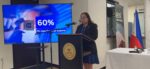
“Investing in education is investing in the future of our nation,” FFCCCII President Victor Lim said during the awarding ceremony of the federation’s “A Classroom for Every Dream” TikTok Video Competition in Quezon City on October 24.
The program typically funds the construction of two-classroom school buildings in communities identified as having urgent needs for educational facilities. Beyond providing physical infrastructure, the initiative seeks to create more conducive learning environments and expand opportunities for children in disadvantaged areas.
Lim said access to better school facilities can help children pursue education, improve their prospects and work toward breaking cycles of poverty.
The federation sustains the initiative by securing commitments for additional school buildings during its biennial conventions, drawing on private-sector contributions to support public education. Its decades-long operation illustrates how business groups and community organizations can complement government efforts to provide essential school infrastructure.
Education Secretary Sonny Angara joined Lim in recognizing winners of the TikTok competition, which featured stories highlighting the program’s effects on students and communities.
Jhon Henry Arquileta of Nueva Ecija received the P120,000 first prize in the My BarrioSchool Journey category. Ramil Carmona Salon Jr. of Davao City won the P120,000 Professional Grand Award in The BarrioSchools Story category.
The competition offered a platform for participants to share experiences associated with the program, bringing attention to the role of school facilities in local communities.
Lim encouraged continued private-sector participation in expanding educational opportunities, particularly in disadvantaged areas.
As classroom shortages remain a concern in many communities, FFCCCII’s long-running initiative highlights the potential of sustained private-sector support to help strengthen the country’s public education infrastructure.