A proposed P9.45-billion liquefied natural gas (LNG) power project could strengthen Aurora’s bid to attract data centers, hyperscalers and energy-intensive industries, although its development remains subject to a feasibility study.
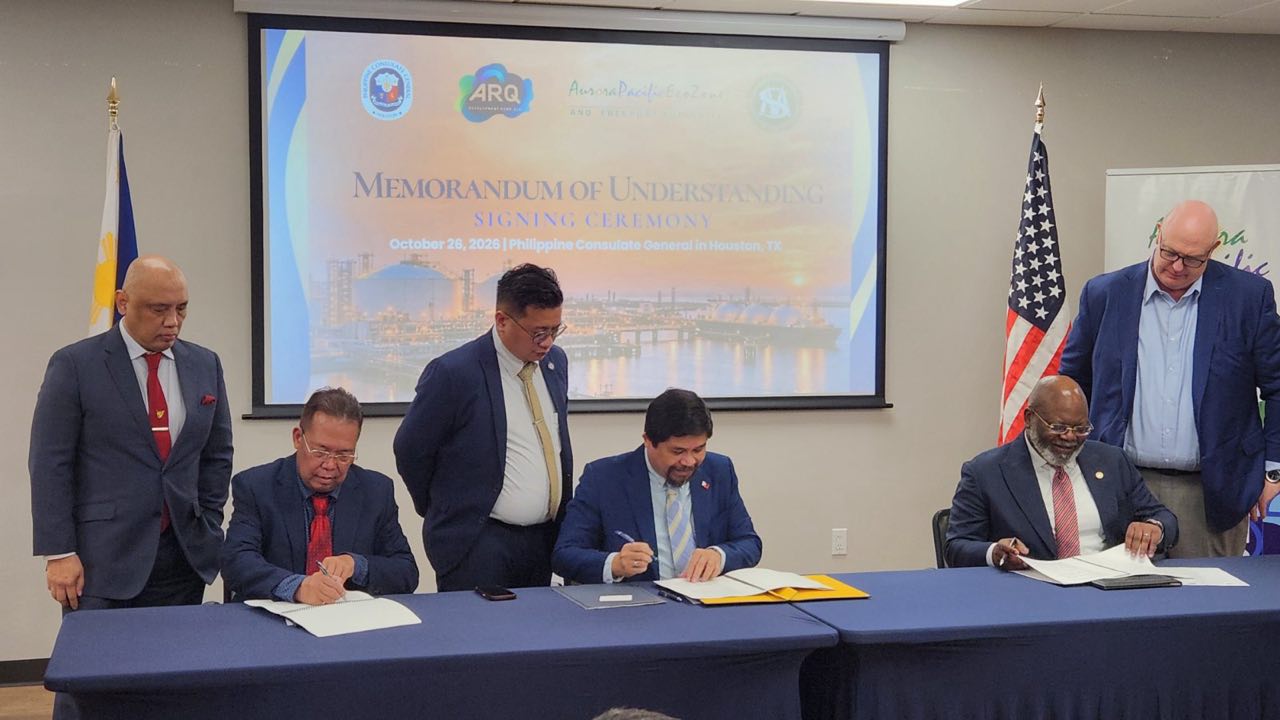
The Aurora Pacific Economic Zone and Freeport Authority (APECO) signed a memorandum of understanding with ARQ Development Corp. LLC, SC Megaworld Construction and Development Corp. and HML Technologies in Houston to explore the project’s development.
The initial $150-million investment would finance a 50- to 100-megawatt (MW) LNG-based generation facility and substation microgrid. Developers envision expanding capacity to 500 MW by the third year, with a longer-term target of 2,000 MW.
The proposed development would cover LNG supply, regasification and storage, as well as substation infrastructure and upgrades to the ecozone’s electrical network. The partners will form a joint working group to coordinate engineering, construction, permitting and arrangements with prospective electricity buyers.
APECO President and CEO Gil Taway IV said dependable utilities are critical to attracting investors whose operations require continuous power, including data centers, critical mineral processing facilities and defense-related industries.
“Investors look for more than just scalable land when seeking a location; they also look for the presence of reliable power sources, adequate water supply, and digital connectivity that can support their uninterrupted operations,” Taway said.
SC Megaworld will lead engineering, construction and local permitting, including interconnection facilities linking the proposed power barge to the substation.
APECO is also pursuing commercial arrangements to strengthen electricity distribution and serve demand both inside and outside the zone, potentially improving power availability and affordability in Aurora.
The proposed capacity expansion could position the Casiguran ecozone to accommodate larger industrial and digital infrastructure investments. However, the scale and timing of deployment will depend on the feasibility assessment, permitting, infrastructure requirements and the ability to secure buyers for the electricity generated.
The agreement signals for now an effort to address a key investment constraint in securing reliable power before energy-intensive businesses commit to locating in the province.