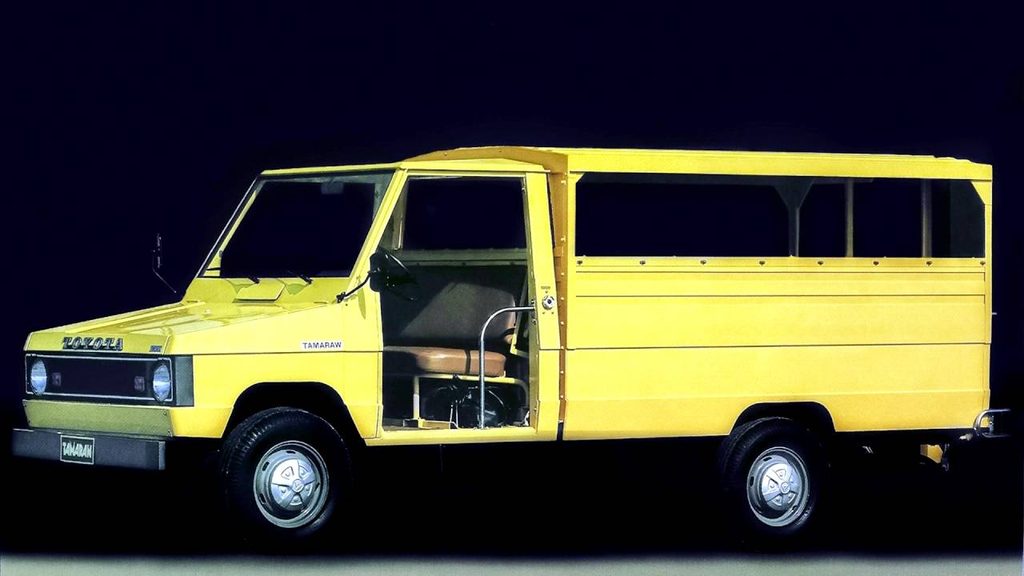
Fifty years after its Philippine debut in 1976, the Toyota Tamaraw is taking on a new mission: transforming public transportation while helping rebuild the country’s automotive manufacturing ecosystem.
From its early years as a basic utility vehicle to the Tamaraw FX that became a familiar fixture of public transportation, the nameplate has evolved into a platform for industrial investment, local employment and new mobility solutions. The Tamaraw is also the perfect example of a local model that has tied together the entire automotive ecosystem – from parts manufacturing and vehicle manufacturing to vehicle conversion, accessible financing and new mobility applications.
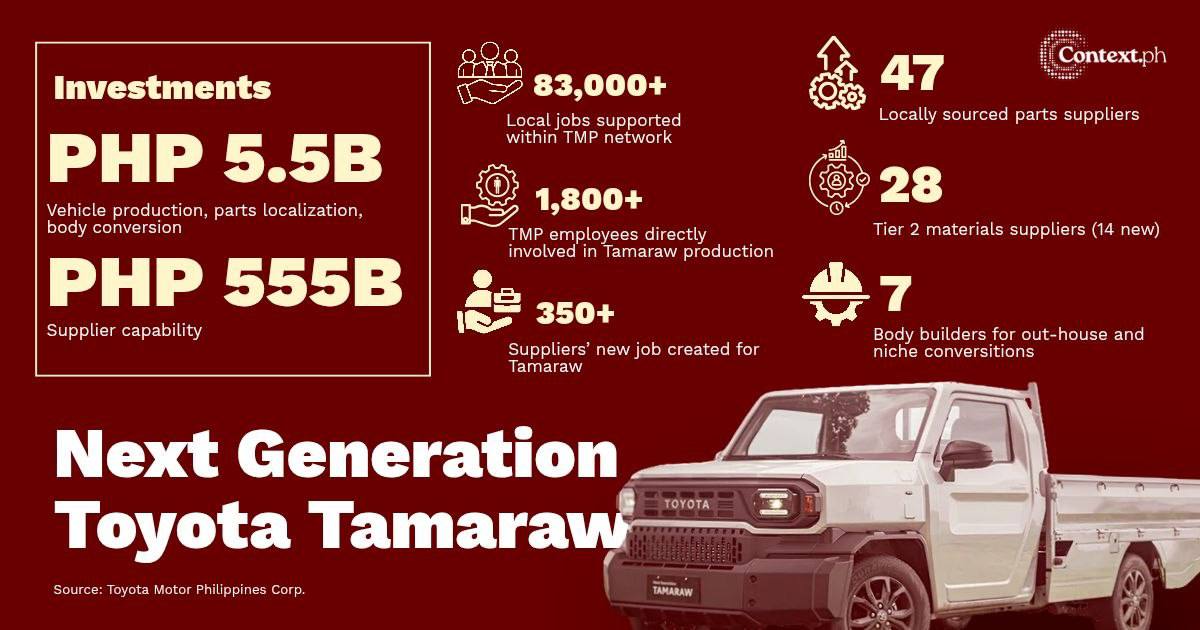
Its latest incarnation, the Next Generation Tamaraw, launched in 2024, represents Toyota Motor Philippines Corporation’s (TMP) ₱5.5-billion commitment to domestic vehicle manufacturing, parts localization and specialized vehicle conversions.
Now, with the introduction of its modern public utility vehicle (MPUV) variant in October 2026, Toyota sees another opportunity to expand production, stimulate demand for locally manufactured components and support the government’s public transport modernization program.
But the Tamaraw’s next chapter comes amid a challenging automotive market, with production declining 7 percent in the first nine months of 2026.
Building a stronger local supply chain
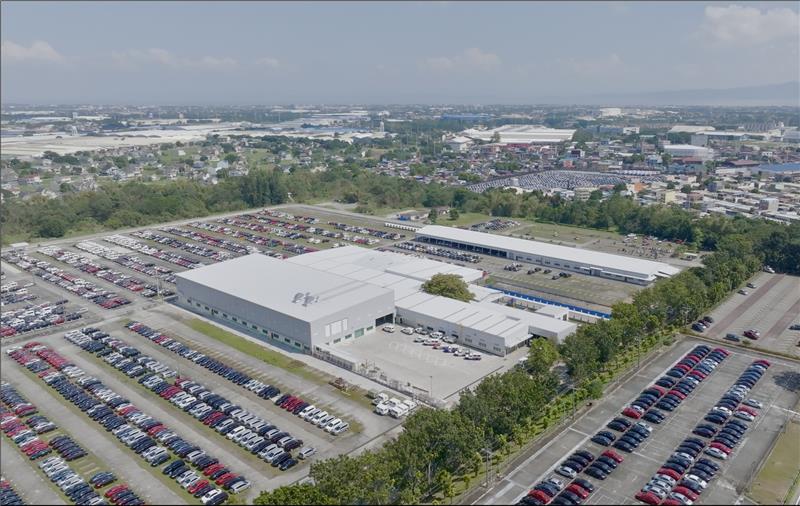
Toyota’s ₱5.5-billion investment covers ₱3.2 billion for vehicle production, ₱1.2 billion for parts localization and ₱1.1 billion for a 1.5-hectare conversion facility at its Santa Rosa, Laguna manufacturing complex.
Beyond Toyota’s direct investments, local suppliers and body builders have increased their planned investments in plant expansion, facilities and equipment to ₱555 million, from the ₱500 million announced during the Tamaraw’s 2024 rollout.
Investments in dies and product development have also increased to ₱1.38 billion from ₱1.36 billion.
Additional employment generated through the supplier development program has likewise increased to 353 workers from the previously reported 318.
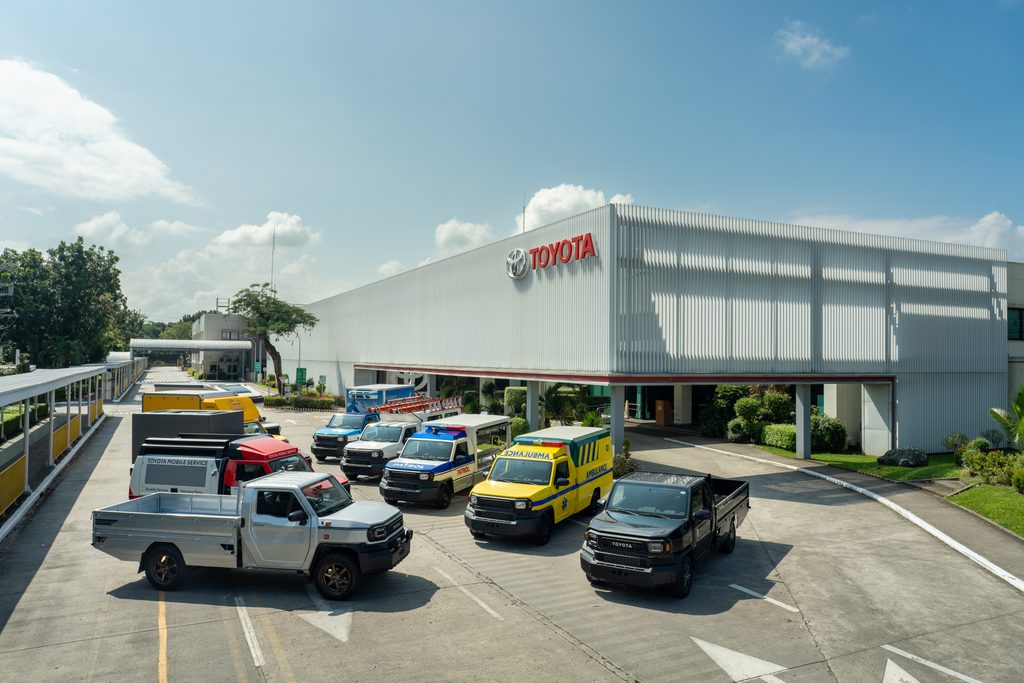
Aside from the investment on the conversion factory, Toyota also tapped the existing body building and conversion industry. This gave the company access to more in-house capabilities that in turn enables it to offer more vehicle body configurations for public services such as telco vans, ambulances, refrigerated vans, fire trucks etc. Out-house or external suppliers are also being tapped, enabling Toyota to cater to specialized conversions.
Aside from stimulating the local supply chain, the Tamaraw has also supported the business growth of seven local body builders, including Almazora Motors Corp., Globalmaxx Manufacturing Corp. and Autovention Corp., expanding the production of specialized commercial vehicles.
The Tamaraw’s impact extends to parts manufacturing. Toyota Aisin Philippines, Inc., based within the Toyota Special Economic Zone, has also benefited from localization, producing five-speed manual transmissions for export to Thailand and strengthening its role in the regional IMV 0 supply chain.
These developments demonstrate how the production of a single locally assembled vehicle can generate economic activity beyond the assembly plant, extending to component manufacturing, engineering, fabrication and vehicle customization.
Increasing Filipino content
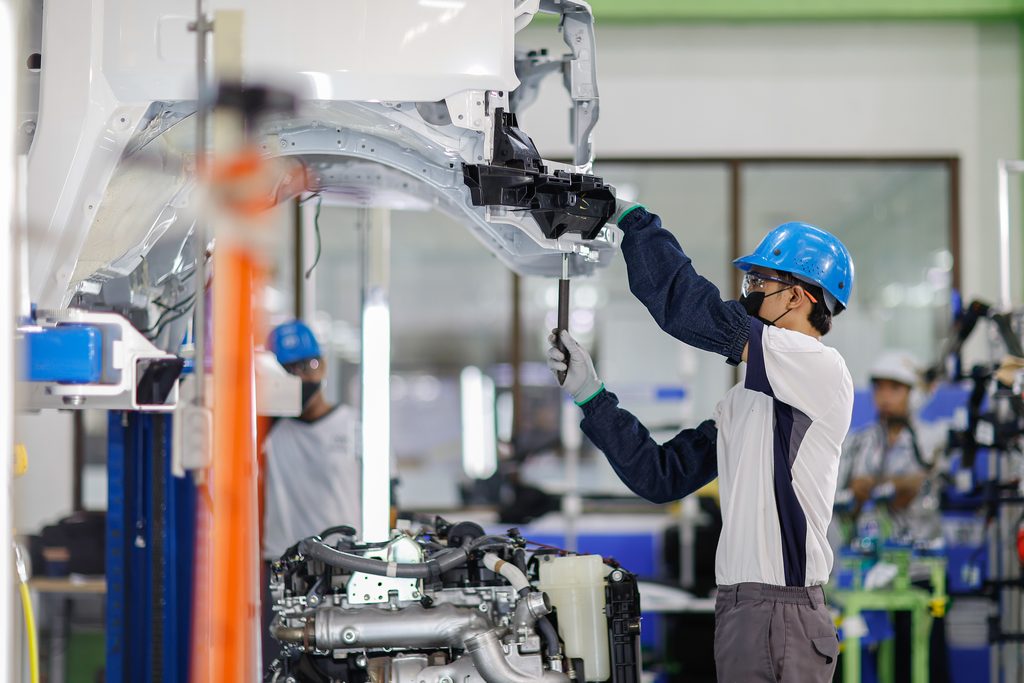
Toyota is also working to deepen the Tamaraw’s domestic manufacturing content.
The long-wheelbase utility vehicle currently has a localization rate of 39.5 percent, with ongoing studies identifying opportunities to increase local content by approximately two percentage points.
Successful implementation could bring the localization rate to around 42 percent.
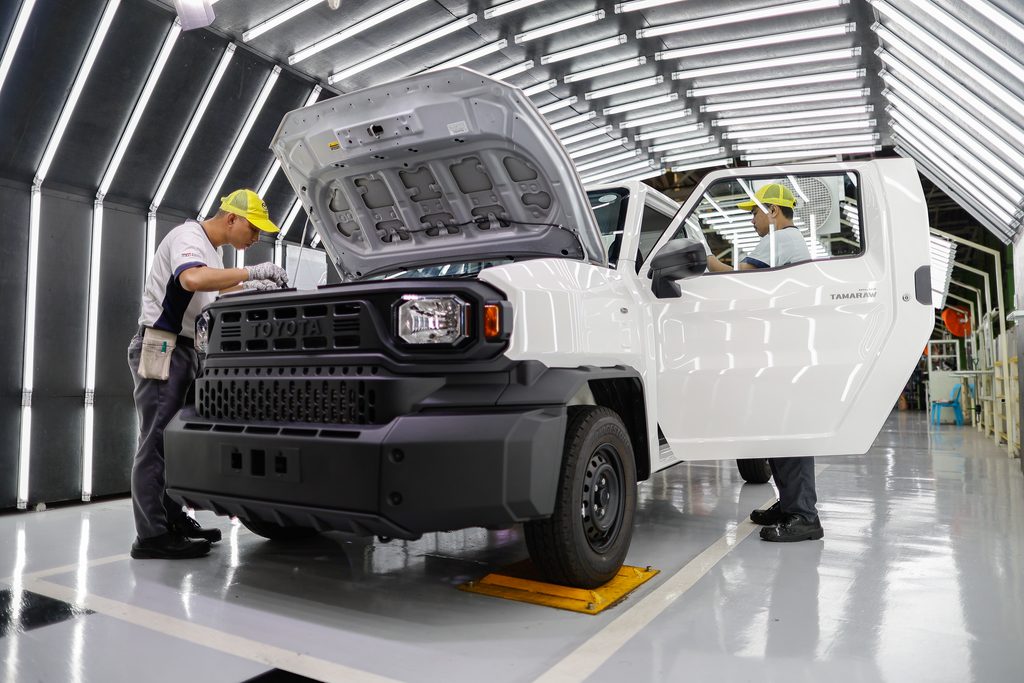
Increasing the share of domestically manufactured components would help sustain demand among Philippine parts suppliers and potentially strengthen their capabilities to participate in Toyota’s broader production network.
Toyota’s local manufacturing operations already form part of a substantial automotive supply chain.
In 2025, TMP recorded ₱17 billion in procurement from domestic suppliers, while its network of Toyota Group export suppliers generated approximately $1 billion in automotive parts exports, equivalent to 27 percent of the country’s total automotive parts exports.
These figures cover Toyota’s broader operations and supplier network, rather than the Tamaraw alone.
Restoring production growth
The immediate challenge is sustaining production volumes amid weaker vehicle demand.
This highlights the importance of expanding the vehicle’s commercial applications and rebuilding demand to maintain manufacturing and supplier utilization.
TMP Chairman Alfred V. Ty said the company sees opportunities to develop additional Tamaraw variants as demand emerges from businesses and public service operators.
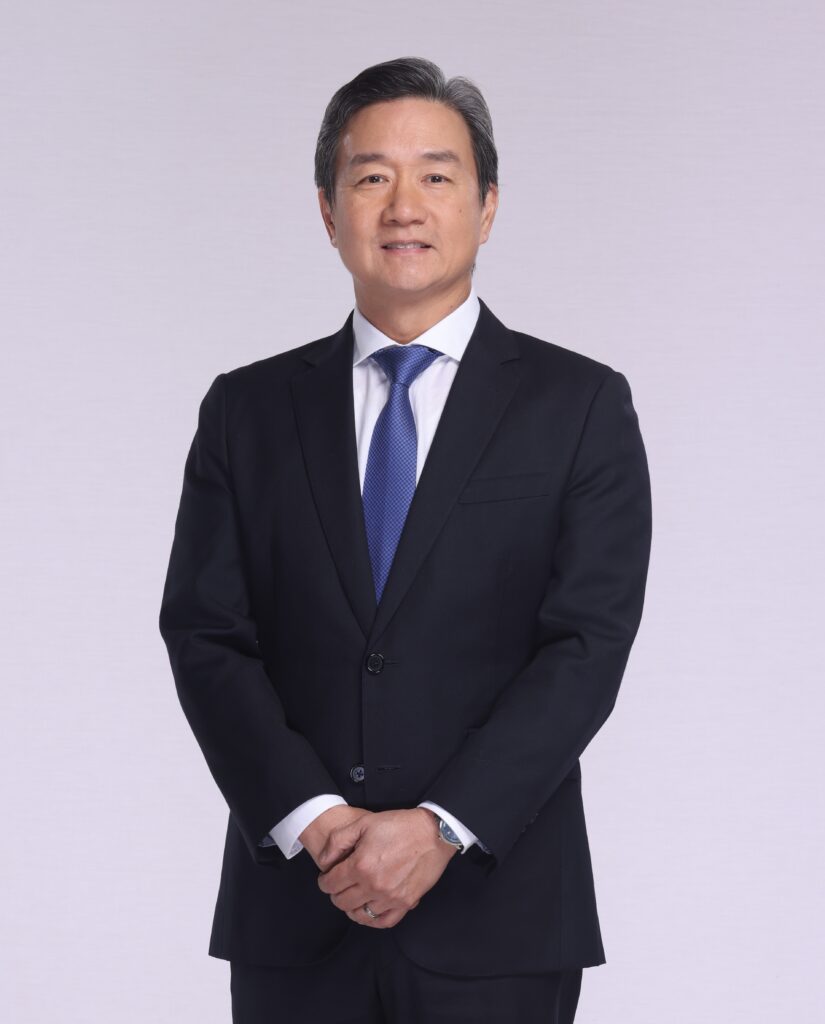
“When orders come in for different services, let’s say for delivery trucks, for conversion to telco trucks, more ambulances, so many potentials,” Ty said.
Toyota’s strategy centers on maximizing its existing manufacturing investments while expanding the range of commercial applications.
The Tamaraw is currently offered in six configurations through Toyota’s in-house conversion operations, with seven additional specialized body styles available through external conversion partners
Ty said the company remains open to further investments in conversion capabilities as the market develops.
“If necessary, we continue to look at the potential of the conversion business,” he said.
The company has not announced a specific timetable for restoring Tamaraw production to its 2025 level.
MPUV opens another growth market
The Tamaraw’s entry into the public transportation sector could provide another source of demand for locally assembled vehicles.
Certified as a Class 1 modern public utility vehicle, the Tamaraw MPUV represents Toyota’s attempt to bring the nameplate back into passenger transport, where the Tamaraw FX once established a strong presence.
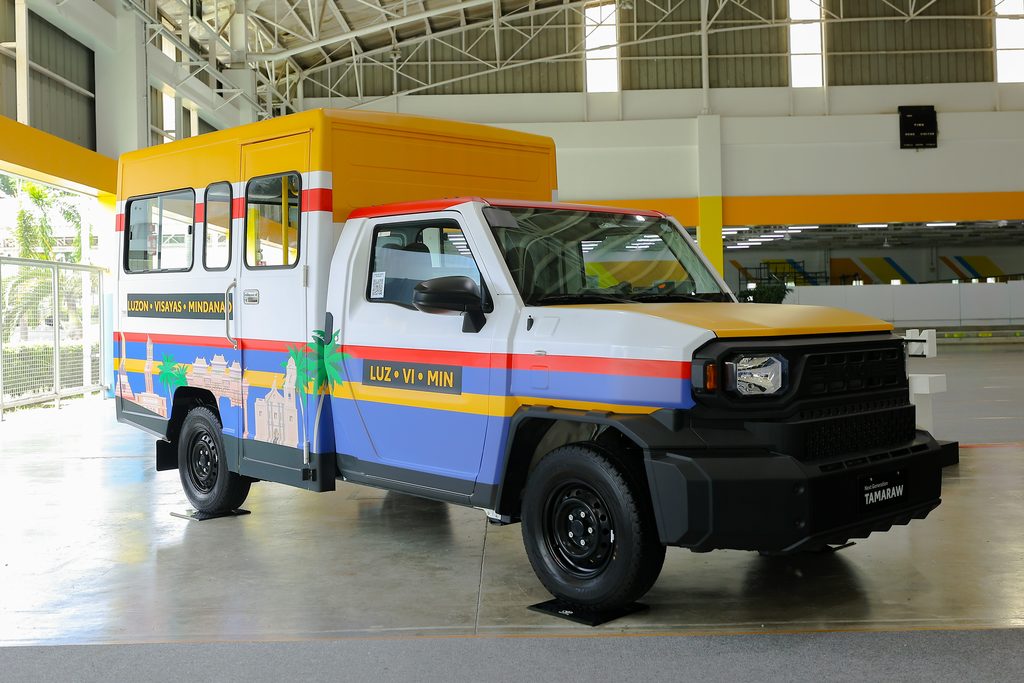
Toyota executives estimate that more than 100,000 Class 1 public utility vehicles are operating nationwide, representing a substantial potential replacement market as the government pursues transport modernization.
However, the figure represents the existing vehicle population, not confirmed orders or an official procurement target.
Toyota is initially targeting production of 15 Tamaraw MPUVs per month, with plans to increase output depending on market acceptance.
“I think the start of 15 units is a nice conservative volume to get it going. Of course, you have to be talking to the MPUV owners to try out this new product,” Ty said.
“Of course, we will adjust based on the demand,” he added.
Toyota’s overall Tamaraw production capability is estimated at 1,800 to 2,000 units monthly, providing room to accommodate additional MPUV demand within existing capacity.
The company has started engaging transport operators and cooperatives, including at least 10 groups in Metro Manila and Cebu.
However, the transition from inquiries to actual vehicle purchases depends partly on operators securing financing, completing documentation and accessing government modernization subsidies.
Toyota Motor Philippines executive Sherwin Chualim said transport groups have welcomed the vehicle, although financing and subsidy procedures remain important considerations.
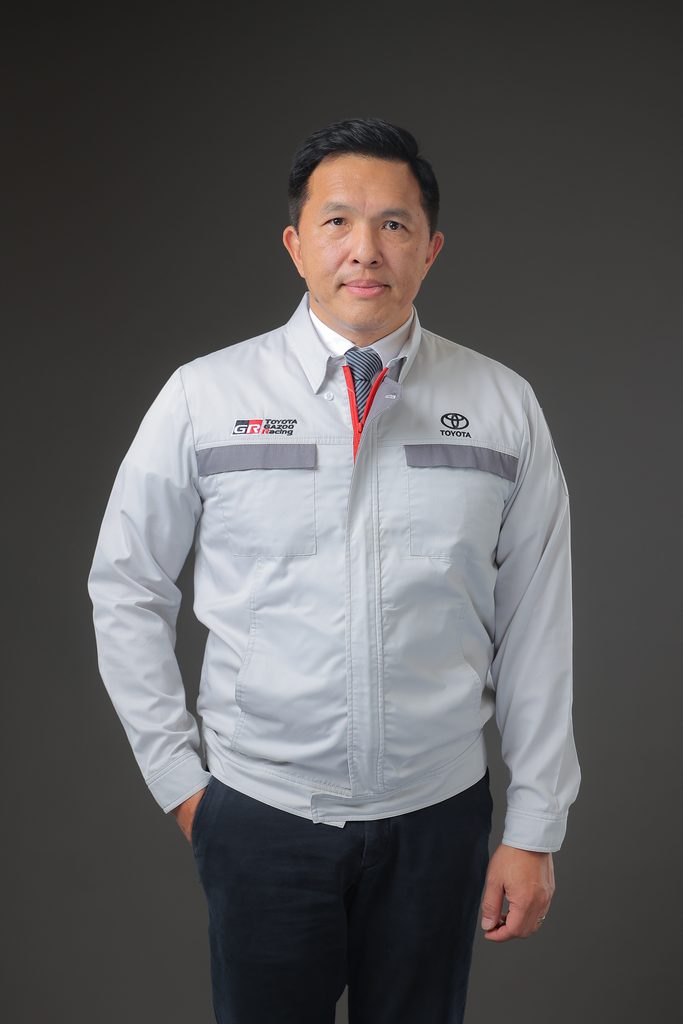
“The only thing is the process. Of course, to claim the subsidies, financing approvals, which will take time,” he said.
The government has announced a ₱210,000 subsidy under its public utility vehicle modernization initiatives, although eligibility and actual assistance depend on applicable program requirements.
Toyota is also coordinating with transport organizations as they navigate modernization requirements and government processes.
“We are always in communication with the transport sector. We are actually helping them if they really need any support from us,” Chua Lim said.
Nevertheless, Ty sees potential for the Tamaraw to regain its place in everyday Filipino transportation.
“It’s a game-changer. A Toyota Tamaraw as an MPUV for public transportation, wow, that gives peace of mind to the users and to the owners, to the drivers of the vehicle,” he said.
A platform for future manufacturing
Beyond the MPUV, Toyota sees the Tamaraw as a flexible platform capable of supporting more specialized commercial vehicles.
The company has already developed applications ranging from ambulances and telecommunications service vehicles to food trucks, patrol vehicles and utility vans.
This flexibility could encourage additional investments among local body builders, parts manufacturers and conversion specialists.
The Tamaraw uses Toyota’s IMV 0 platform, developed for Asian markets, providing a foundation for potential product diversification.
Toyota’s broader automotive manufacturing network also offers opportunities for domestic suppliers to strengthen their capabilities and participate in international supply chains.
However, the company has not announced plans to export Philippine-assembled Tamaraw vehicles or confirmed additional local models based on the platform.
For now, Toyota’s priorities remain expanding local demand, improving localization and maximizing existing manufacturing capacity.
As the Tamaraw marks its 50th year, its significance extends beyond the revival of a familiar vehicle.
Its next challenge is to demonstrate that locally assembled commercial vehicles can remain competitive, generate sustained demand for Filipino-made components and create new opportunities for Philippine manufacturers.
If the MPUV gains traction and commercial conversions continue expanding, the Tamaraw could become an increasingly important pillar of Toyota’s local manufacturing operations—and a catalyst for the country’s automotive industry revival.