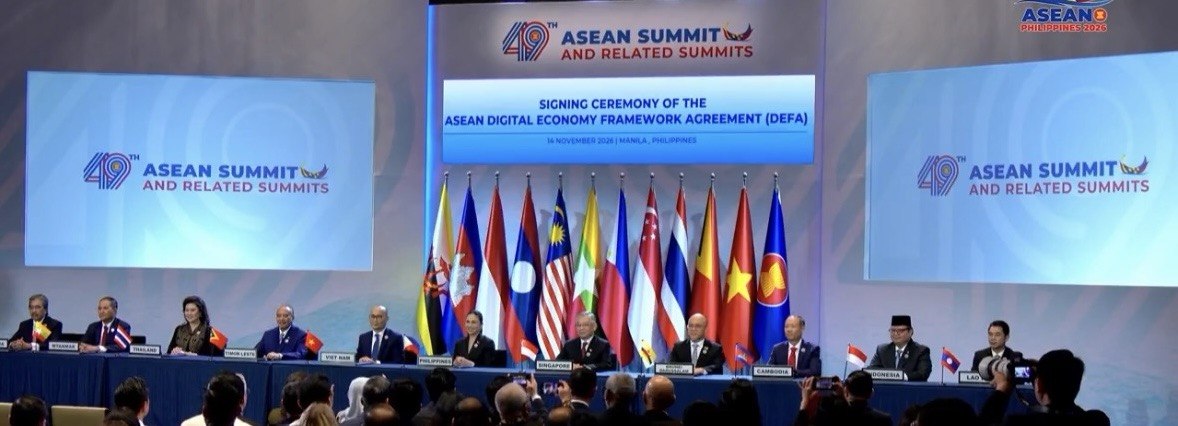
ASEAN trade ministers have signed a landmark Digital Economy Framework Agreement (DEFA), establishing common rules for online commerce, digital payments and cross-border data flows in a bid to double Southeast Asia’s digital economy to USD2 trillion by 2030.
The signing in Manila by ministers comprising the ASEAN Economic Community Council marked a major economic deliverable under the Philippines’ 2026 ASEAN chairship, positioning digital integration as a key driver of regional trade and investment.
Trade Secretary Cristina Roque, who chairs the council, said the agreement would connect markets serving nearly 680 million people and expand opportunities for businesses, particularly micro, small and medium enterprises (MSMEs).
“Our real task now is to translate these commitments into practical outcomes,” Roque said.
DEFA establishes a common framework covering digital trade and cross-border e-commerce, electronic payments, digital identity, cross-border data flows, data protection, cybersecurity, online consumer protection and emerging technologies, including artificial intelligence.
The framework is intended to reduce friction in cross-border transactions, improve trust in digital services and make it easier for businesses to reach customers across ASEAN markets.
For smaller enterprises, the agreement could widen access to regional customers and digital platforms, allowing businesses to expand beyond their domestic markets without the costs traditionally associated with physical expansion.
Workers could also benefit from increased demand for skills in e-commerce, information technology and business process management, digital services and creative industries.
But the scale of these opportunities will depend on how quickly member economies align regulations, improve digital infrastructure and put effective safeguards in place.
Roque urged governments to establish the policies, infrastructure and systems needed to make the agreement work, stressing that smaller businesses must be able to participate alongside larger companies.
She also called on private enterprises to invest in digital solutions, deepen regional partnerships and help MSMEs integrate into regional digital supply chains.
The agreement’s signing marks an important step toward a more integrated ASEAN digital market. Delivering its projected economic gains, however, will require more than common rules. Businesses must be able to access affordable technology, reliable connectivity, secure payment systems and the skills needed to compete across borders.