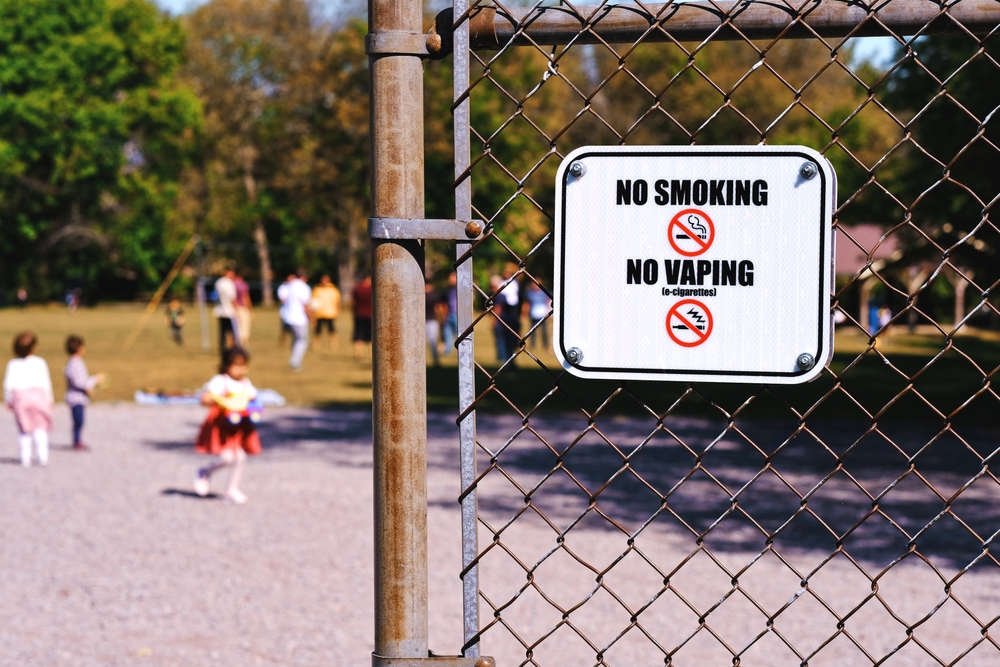
Indoor smoking and vaping areas could be eliminated, and smoke-free zones expanded nationwide under a bill approved by a panel of the House of Representatives. The bill is proposed to tighten restrictions on tobacco and vape use to protect the public, particularly children, from involuntary exposure to harmful emissions.
The House Committee on Health approved House Bill 9603 on November 11, advancing a proposal to establish uniform national standards for smoke-free and vape-free public spaces and workplaces.
The Philippine Legislators’ Committee on Population and Development (PLCPD), which convenes the Child Rights Network, welcomed the approval and urged the rest of Congress, particularly the Senate, to move the measure forward.
“Many of our legislators recognize the importance of protecting children and the public from something they have no choice over, such as exposure to secondhand smoke,” PLCPD Executive Director Au Quilala said.
Authored by Albay Rep. Krisel Lagman and other lawmakers, HB 9603 proposes the RELATE framework, drawing on implementation practices in Baguio, Iloilo, and Davao, which have adopted local smoke-free and vape-free ordinances.
The framework calls for removing indoor designated smoking and vaping areas, standardizing outdoor smoking zones, expanding smoke-free spaces, allocating local health budgets for tobacco control, recognizing local government innovations, establishing enforcement task forces, and imposing tougher penalties.
Beyond restricting where people can smoke or vape, the bill seeks to provide dedicated funding for tobacco control and establish consistent enforcement standards across local governments, in line with the World Health Organization’s Framework Convention on Tobacco Control, to which the Philippines is a party.
Quilala said the government should take the lead in creating healthier public spaces rather than placing the burden on people to avoid exposure to cigarette smoke and vape emissions.
The urgency is underscored by the 2024 Global Youth Tobacco Survey, which found that six in 10 Filipino students aged 13 to 15 are exposed to secondhand smoke in enclosed and outdoor public spaces.
A separate Global Burden of Disease study published in The Lancet Public Health attributed 1.66 million deaths worldwide in 2023 to secondhand smoke exposure.
The House committee’s approval is an initial legislative step, with the measure still needing action by the full House and Senate before it can become law.