Nestlé Philippines is betting on commercial incentives to make low-value flexible plastic packaging recyclable, connecting household waste collection with financing and committed buyers while developing paper-based alternatives.
The food and beverage company is co-leading the National Plastic Action Partnership’s (NPAP) “From Bin to Buyer” Sandbox, launched on November 23, to test the commercial viability of an integrated recycling value chain over 12 months.
A funded pilot will be awarded in 2027, with the initiative seeking to address persistent gaps in the economics of collecting, processing, and recycling low-value flexible plastics.
These materials, commonly used in sachets and other packaging, are difficult to recycle because their recovery and processing costs often exceed their market value.
Meg Ann Santos, Nestlé Philippines head of sustainability, said the company was also exploring alternative packaging through a global industry consortium convened by the Ellen MacArthur Foundation.
The consortium brings together multinational companies to develop fiber-based alternatives to flexible plastics, with potential innovations to be evaluated for their suitability in individual markets.
Santos said, however, that replacing existing packaging must not compromise food safety, product quality, or affordability, particularly for essential goods such as coffee, dairy products, and infant formula.
“We need to be able to protect the product, especially our products are critical products,” she said.
She also underscored the importance of industry collaboration and community participation in developing practical solutions.
“We are not gatekeeping solutions. We try to involve as many people as we can,” Santos said.
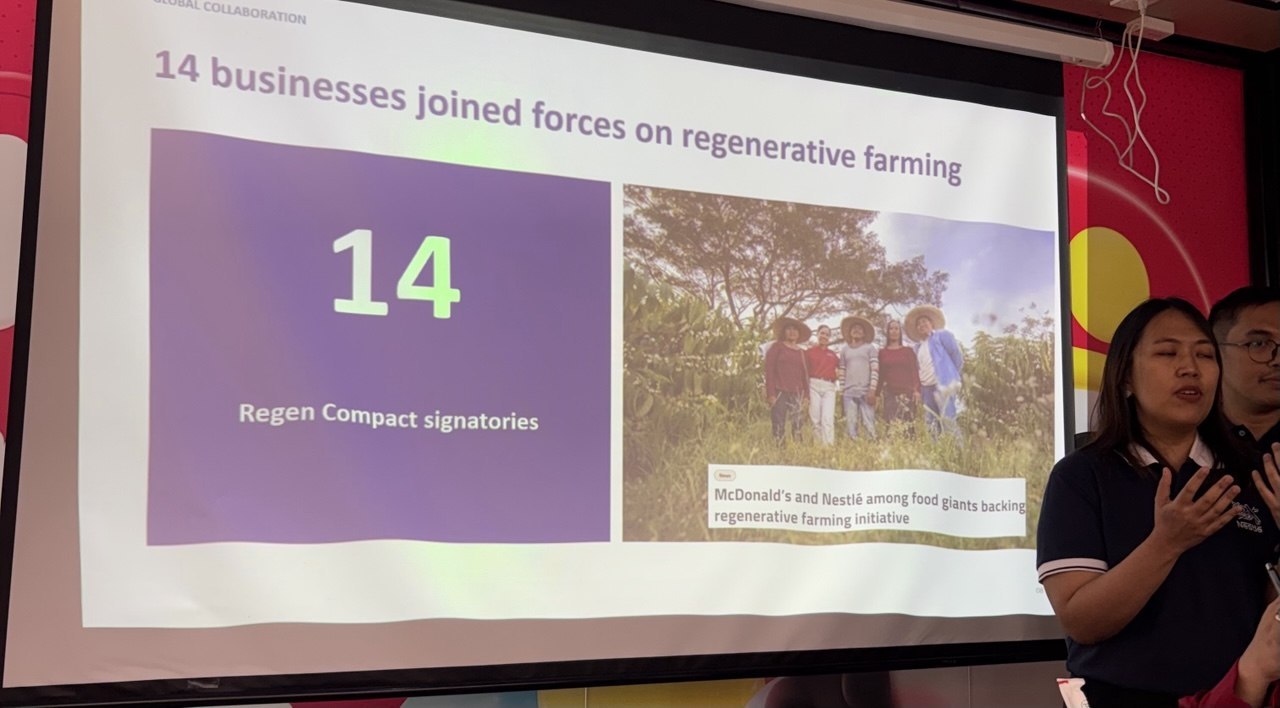
Nestlé Philippines is adapting its parent company’s global sustainability strategies to local conditions, with efforts aimed at improving waste recovery while supporting livelihoods and creating economic and environmental value.
The pilot reflects a broader industry challenge of making plastic recovery financially viable rather than relying solely on collection drives and recycling commitments.