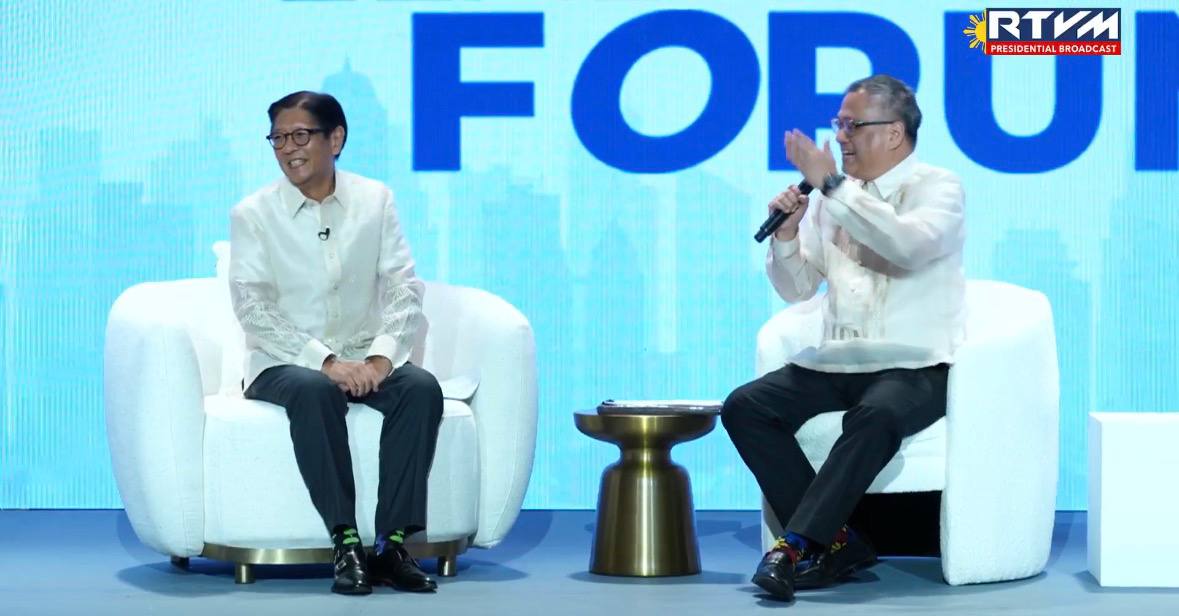
As the Philippines prepares to chair the Association of Southeast Asian Nations in 2026, President Ferdinand Marcos Jr. is calling for deeper regional economic integration to restore the bloc’s role as a global growth engine.
Speaking at the ASEAN Editors and Economic Opinion Leaders Forum in Makati City, President Marcos stressed the urgency of reinforcing ASEAN centrality amid geopolitical tensions, supply chain shifts and an uneven post-pandemic recovery. He said the region must act collectively to regain its pre-COVID momentum through unity of direction rather than rigid policy alignment.
ASEAN economies vary widely in size and development, from advanced manufacturing centers to fast-growing consumer markets. President Marcos said their shared goal of expanding trade and competitiveness provides strong ground for closer coordination. Flexible but aligned strategies would allow member states to pursue domestic priorities while strengthening the bloc’s broader economic agenda.
Supply chain resilience figured prominently in his message. Pandemic disruptions exposed vulnerabilities in production networks and heavy dependence on markets outside the region. Intra-ASEAN trade accounts for only about 23 percent of total trade within the bloc, leaving significant room to expand cross-border commerce and reduce external reliance.
The President cited plans for a common ASEAN power grid and greater regulatory coordination to streamline importation and cross-border business. Improving logistics, cutting red tape and enhancing digital and energy connectivity would boost efficiency and reinforce ASEAN’s competitiveness as an investment destination.
At home, President Marcos linked regional ambitions to structural reforms designed to make the Philippines more investment friendly. He warned that political divisiveness and policy reversals could erode gains in investor confidence. While reforms are beginning to show positive results, he said sustaining them beyond 2028 will be essential to securing long-term growth.
For ASEAN, the path to resilience lies in deeper integration backed by steady leadership.