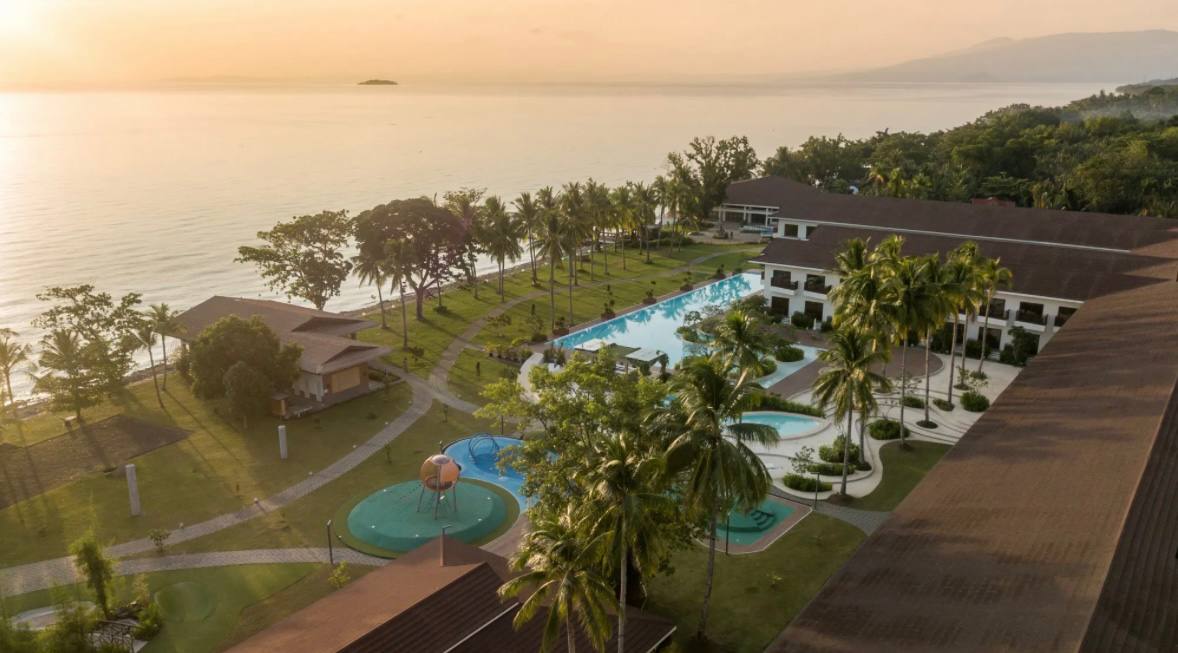
Authorities have issued closure and show cause orders against Nouveau Resort, a high-end beachfront property in Camiguin, after inspectors found multiple environmental violations, officials said.
The Environmental Management Bureau (EMB)–Region 10 and the municipal government of Mahinog cited the resort for allegedly exceeding approved construction limits and violating wastewater standards. Local officials have begun proceedings to suspend or revoke the resort’s business permits.
In a notice dated February 10, the EMB said the resort built 150 guest rooms, despite its approved environmental compliance certificate covering only 54 rooms. Inspectors also flagged additional structures not included in the original environmental study, including four function rooms, a yacht berth with a floating dock, a 130-meter sea wall or breakwater, and a helipad.
Authorities further reported that the resort’s wastewater discharge exceeded national limits. Tests showed fecal coliform levels of 790 most probable number (MPN) per 100 milliliters—almost double the allowable standard of 400 MPN per 100 milliliters.
The EMB also cited the resort for operating generator sets and fuel storage tanks without proper permits, failing to submit required monitoring reports, and not securing accreditation for its designated pollution control officers.
The resort, owned by businessman Albino Limketkai and formerly known as Camiguin Nouveau Resort and Villas, is widely regarded as a premier luxury destination on the island. It occupies a 400-meter shoreline in Mahinog facing Mantigue Island.
Camiguin governor Xavier Jesus Romualdo expressed disappointment over the findings, stressing that large-scale tourism projects must strictly follow environmental laws.
“Camiguin is small, fragile and highly dependent on its natural environment,” Romualdo said. “We want investors to succeed, but success must be sustainable.”
The possible closure of the resort highlights growing regulatory scrutiny on tourism developments in environmentally sensitive areas. For investors and resort operators, the case underscores the financial and reputational risks of non-compliance, including potential permit revocation, operational shutdowns, fines, and long-term damage to brand credibility.
The move also signals that local governments are prepared to enforce environmental standards strictly, even against prominent luxury developments, as part of efforts to balance tourism growth with environmental protection.