The Department of Finance (DOF) has officially greenlit fresh fundings to revitalize the Metro Rail Transit Line 3 (MRT-3), signaling a bold leap forward for commuter convenience and urban mobility.
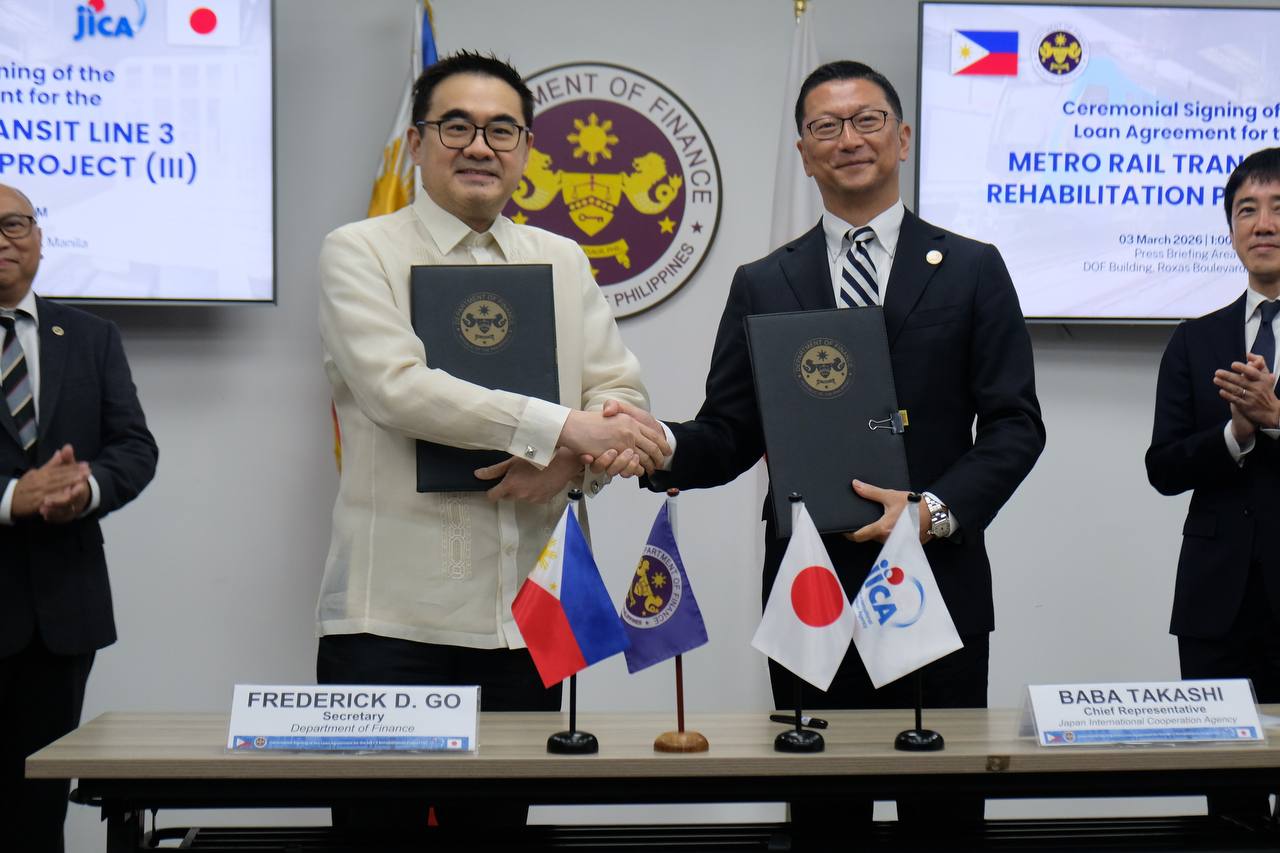
On March 3, Finance Secretary Frederick D. Go formalized the latest financing agreement with the Japan International Cooperation Agency (JICA), sealing an P8.2-billion third-tranche loan for the long-awaited overhaul.
Go highlighted what commuters will feel immediately. “Fewer delays. Shorter waits. A more predictable, comfortable ride to work, school, and home,” he said.
JICA Chief Representative Baba Takashi framed the project as more than infrastructure: “It’s a symbol of the Philippines-Japan partnership delivering safe, efficient, high-quality transport,” he noted.
The rehabilitation plan leaves nothing untouched. Tracks, signaling, power supply, overhead lines, station facilities, communications, and maintenance hubs are all set for a comprehensive upgrade.
A marquee improvement—the introduction of four-car train sets—will boost capacity by 394 passengers per train, promising noticeable relief during rush hours.
Beyond easing commutes, the DOF sees strategic value in the MRT-3 upgrade. “Time saved equals productivity gained,” Go said. “Faster travel translates into stronger businesses, higher output, and improved quality of life for Filipino families.”
The move underscores a growing trend: governments and international partners investing in transport infrastructure not just to move people, but to accelerate economic momentum.
The MRT-3 overhaul isn’t just an upgrade, it is a promise to train commuters of reliability, efficiency, and a daily commute that finally keeps pace with a fast-moving city.
As trains get longer, waits get shorter, and cities move smarter, the MRT-3 rehabilitation shows how timely financing and international collaboration can turn daily frustration into tangible opportunity.