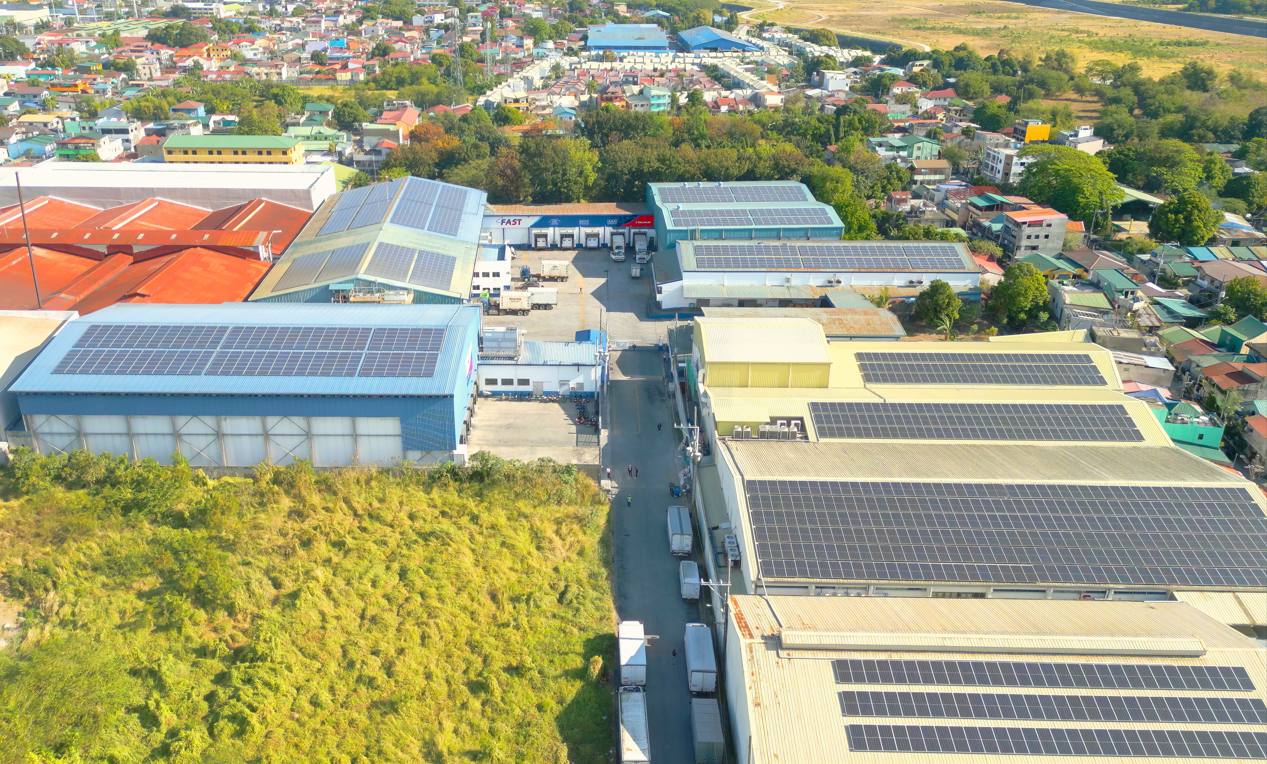
FAST Logistics Group is ramping up its renewable energy investments, unveiling plans to install solar power systems across its nationwide warehouse network as it pushes to build a greener and more resilient supply chain.
Speaking at Solar & Storage Live Philippines, FAST Logistics chief executive officer for Logistics Manuel L. Onrejas Jr. said the company intends to maximize rooftop space in its facilities for solar generation and eventually integrate battery storage systems.
The strategy forms part of a broader effort to create a closed-loop electrification ecosystem that will power warehouse operations, support electric vehicle charging stations, and eventually fuel fully electric delivery fleets.
The expansion comes as logistics companies worldwide face increasing pressure to reduce carbon emissions, contain rising energy costs, and strengthen operational resilience amid supply chain disruptions. Sustainability has also become a key requirement for multinational clients seeking lower-carbon logistics partners.
FAST’s initiative stands out because of the scale of its operations. The company manages more than 160 dry and cold-chain facilities nationwide, spanning over 2 million square meters of warehouse space, while operating a fleet of more than 3,100 trucks and working with over 900 trucking partners.
The company has already recorded gains from its early solar investments. Its ColdChain Hub in Cavite generated more than 565,000 kilowatt-hours of solar energy in 2025, while its Laguna facility produced over 424,000 kilowatt-hours.
Both projects helped cut emissions and lower electricity costs. The Laguna hub also hosts solar-powered charging stations that support FAST’s growing electric truck operations.
As the first Philippine end-to-end logistics provider to commit to net-zero emissions by 2050, FAST is positioning renewable energy and fleet electrification as long-term growth drivers. The planned expansion suggests the company is betting that sustainability investments can deliver both environmental benefits and operational savings as demand for greener supply chains accelerates.