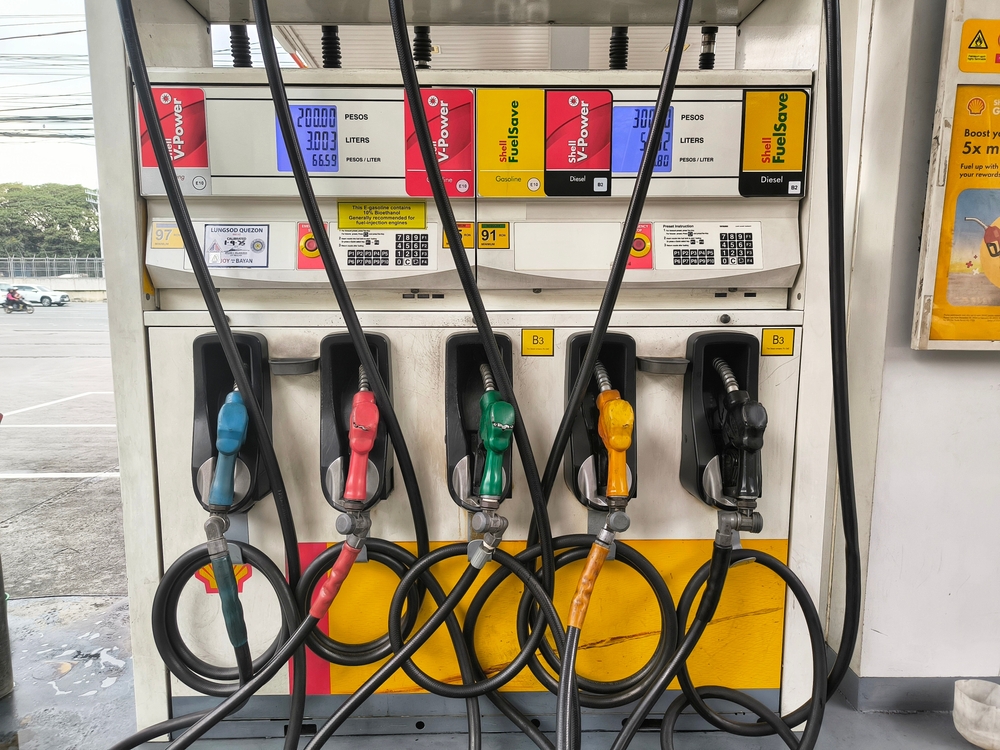
The Department of Energy (DOE) on Tuesday assured the public that the country has enough fuel supply despite the ongoing conflict in the Middle East.
Energy Secretary Sharon Garin said the country’s fuel inventory is well above the required minimum. Oil companies are required to maintain at least 15 days of supply for finished petroleum products, 30 days for crude oil, and seven days for liquefied petroleum gas (LPG). However, the country’s inventory now averages 45 days, with some companies holding up to 60 days’ worth of supply.
Garin said that even if the Strait of Hormuz — a key global oil route — remains closed for up to two weeks, the Philippines has enough fuel запас. She stressed that the government is preparing contingency measures to ensure continuous supply of this essential commodity.
The agency noted that possible fuel price increases may occur due to higher shipping costs and risk premiums caused by tensions in the Middle East. However, final price adjustments for next week will depend on global crude oil prices at the end of trading.
The DOE is set to meet with fuel companies to discuss ways to ease the impact of possible price hikes, including staggered increases and continued discounts for public utility vehicle drivers.
The agency is also studying alternative fuel sources outside the Middle East. Currently, 98 percent of the country’s crude oil imports come from the region, while most finished petroleum products and LPG are sourced from Asia.
The Philippines has only one operating crude oil refinery, owned by Petron Corporation, located in Limay, Bataan.
Latest DOE data showed that from February 24 to March 2, 2026, pump prices in the National Capital Region average P53 per liter for RON 91 gasoline, P60.79 for diesel, and P84.67 for kerosene.
Fuel firms recently implemented price hikes of P1.90 per liter for gasoline, P1.20 for diesel, and P1.50 for kerosene. This marks eight straight weeks of increases for gasoline and nine weeks for diesel and kerosene. Year-to-date, prices have risen by P6.70 per liter for gasoline, P9.40 for diesel, and P7.70 for kerosene.
The DOE also said the impact of the Middle East conflict on power supply is limited, as only around 3 percent of the country’s petroleum supply is used for electricity generation. While supply is not expected to be affected, price adjustments may occur, particularly in off-grid areas served by the National Power Corporation.
The agency urged the public to practice fuel conservation and efficiency measures, including proper vehicle maintenance and shifting to electric or hybrid vehicles, in support of the government’s goal to reduce fuel consumption by at least 10 percent.