The Department of Energy (DOE) has cracked down on fuel retailers that allegedly ignored the government-backed staggered fuel price increase scheme, issuing at least 55 show cause orders to stations suspected of irregular pricing practices.
Energy Secretary Sharon Garin said the agency has received 87 reports of violations from across the country as fuel prices surge due to tensions in the Middle East. Of these, 78 cases have already been reviewed, leading to the issuance of orders requiring the concerned fuel retailers to explain within 24 hours why they should not face penalties.
Most of the reported violations came from stations in Metro Manila, particularly in Mandaluyong, Manila, Parañaque, Pasay, Pasig, and Quezon City.
The DOE said some stations were reported for immediately implementing large price increases, refusing to sell fuel, hoarding supplies, or failing to follow the staggered pricing schedule—moves that could worsen the burden on motorists and the commuting public.
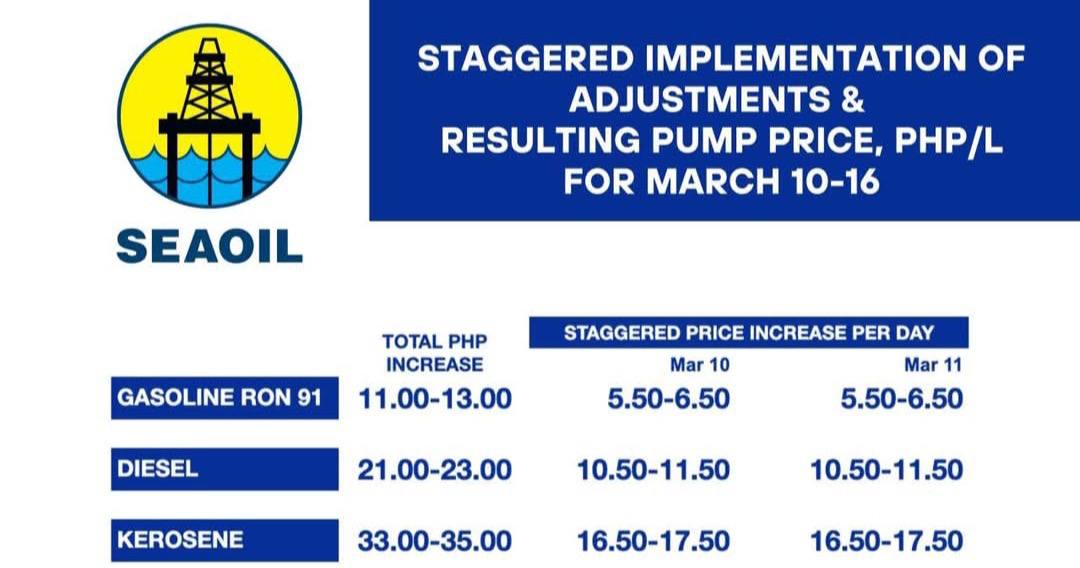
To soften the blow of what the DOE described as possibly the largest single-week fuel price increase on record, major oil companies agreed to spread their price adjustments over several days instead of implementing them all at once.
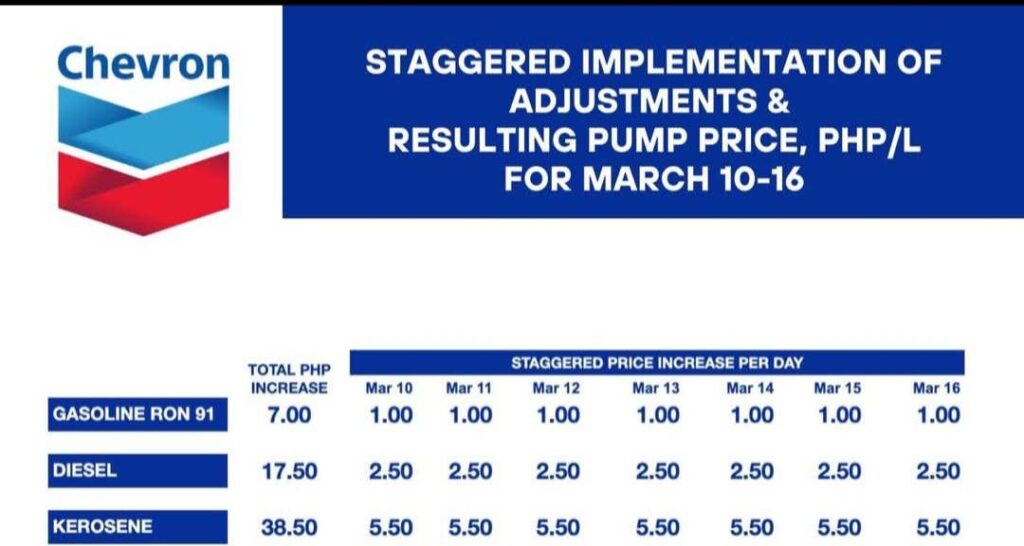
Among those adopting staggered increases are Pilipinas Shell Petroleum Corporation, Petron Corporation, Chevron Philippines, which markets the Caltex brand, Seaoil Philippines, Total Philippines, and Jetti Petroleum.
Under the arrangement, price hikes for gasoline, diesel, and kerosene will be implemented in phases from Tuesday through the rest of the week, rather than a one-time adjustment.
The DOE stressed that the staggered scheme is intended to prevent sudden price shocks for motorists, public transport operators, delivery services, and other sectors heavily dependent on fuel.
Authorities warned that stations that defy the staggered implementation or take advantage of the situation could face sanctions.
The agency also urged the public to report irregularities through the eGov PH Super App, where consumers can upload photos or videos of suspected violations such as unauthorized price hikes, panic buying, or fuel hoarding.
Despite the staggered rollout, the DOE warned that fuel price pressures are far from over, as global oil prices continue to climb, with Brent crude oil exceeding $114 per barrel.
To help secure supply, the government is studying a proposal for the Philippine National Oil Company (PNOC) to procure about one million barrels of diesel as a contingency reserve.
So far this year, gasoline prices have increased for nine consecutive weeks, while diesel and kerosene have risen for ten straight weeks, underscoring the growing strain on consumers already grappling with rising transport and commodity costs.