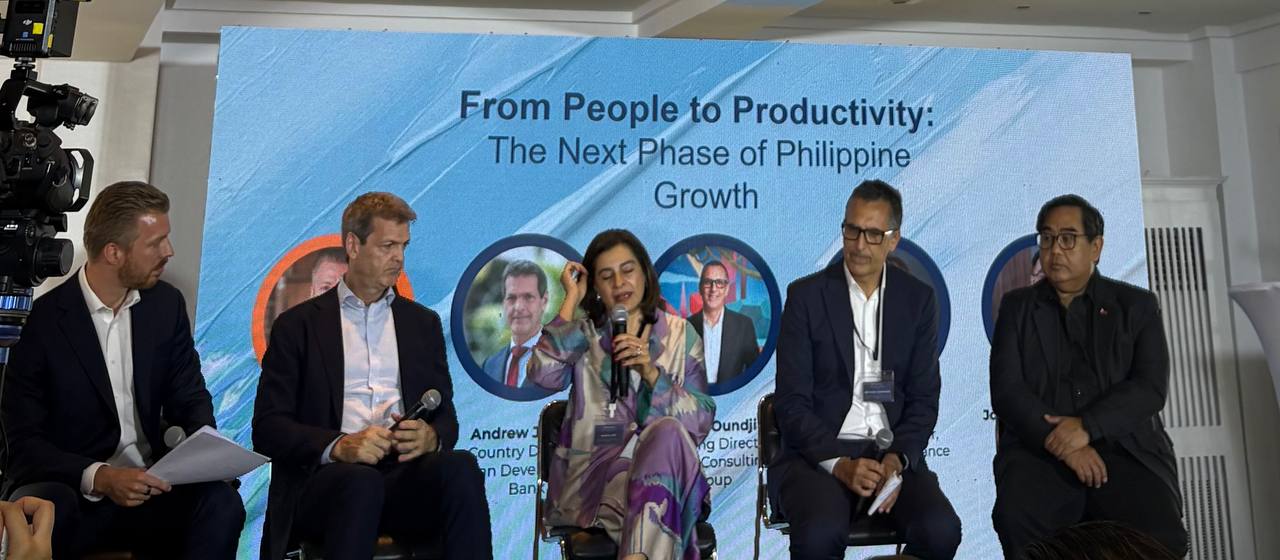
The Philippines is approaching an economic inflection point and without a stronger wave of investment, it risks falling short of its full potential.
That is the central message of the 2026 Philippine Private Capital Report by Foxmont Capital Partners, which argues that capital deepening, not just resilience, will determine whether the country can sustain faster and more inclusive growth.
Gross fixed capital formation stands at just 21 percent of gross domestic product, well below the 30 to 40 percent typical of faster growing economies. This leaves an annual investment gap estimated at 40 billion dollars to 90 billion dollars.
Put simply, the Philippines is not underperforming. It is underinvesting, and the bill for that gap compounds over time.
There is, however, a notable bright spot. Even as Southeast Asia’s venture funding cooled in 2025, with sharp contractions in Indonesia and Vietnam, the Philippines managed to post 34 percent growth in private capital.
The divergence points to investor confidence anchored on demographics, consumption growth, and long term expansion potential. In a region where capital has become more selective, the Philippines is still making the shortlist.
The challenge is converting that confidence into measurable productivity gains.
The report underscores that capital deepening, or investing more per worker, is essential to lifting output. While productivity has grown at a steady 3 to 4 percent annually over the past two decades, that pace may prove insufficient as regional peers accelerate and climb the value chain. Growth that relies mainly on consumption can only stretch so far without parallel gains in efficiency and production.
According to Jelmer Ikink, the constraint is not talent but utilization. The Philippines has a capable workforce, yet gaps in manufacturing depth, higher value services, and institutional capacity limit its ability to capture more value even in complex industries such as semiconductors.
Private capital remains modest at just 0.3 percent of GDP, a level that underscores both the opportunity and the urgency. Without deeper and more sustained investment, growth may remain steady and resilient, but it risks stopping short of becoming truly transformative.