Economic Planning Secretary Arsenio Balisacan cautioned lawmakers that a prolonged Middle East conflict could trigger a severe economic shock in the Philippines, with surging oil prices threatening to reverse gains in poverty reduction.
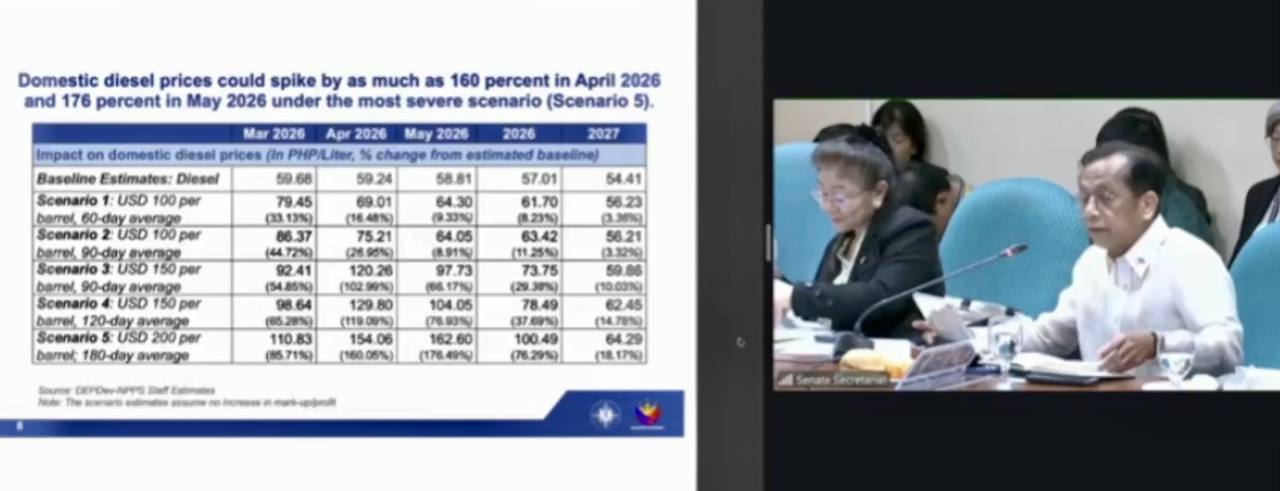
In a Senate briefing on Tuesday, Balisacan outlined a worst-case scenario in which global oil prices average USD200 per barrel for six months. Such a spike, he said, would cascade through the economy—driving up fuel and food costs, squeezing business margins, and eroding household purchasing power. The combined pressure could lead to higher unemployment, particularly among vulnerable sectors.
While he stressed that this scenario remains unlikely, Balisacan said it illustrates the scale of risk posed by sustained geopolitical tensions. Elevated energy costs would feed directly into inflation through transport and production channels, while also dampening job creation and potentially forcing the repatriation of overseas Filipino workers.
Government projections show poverty incidence could rise to 12.55 percent under this scenario, higher than the baseline estimate of 11.9 percent for 2026. Inflation, meanwhile, could average 8.6 percent—more than double the current forecast of 3.6 percent—and may even breach double-digit levels in some moths this year.
The outlook underscores the Philippines’ vulnerability to external shocks, particularly its dependence on imported fuel and inorganic fertilizer. Higher oil prices not only strain consumers but also widen fiscal risks, as pressure mounts for government intervention.
Lawmakers have proposed suspending excise and value-added taxes on fuel to ease the burden, but Balisacan urged caution. He warned that revenue losses could force spending cuts and widen the budget deficit, potentially undermining the country’s medium-term recovery.
“The response must not weaken our ability to recover,” he said, emphasizing the need to balance immediate relief with long-term fiscal stability.