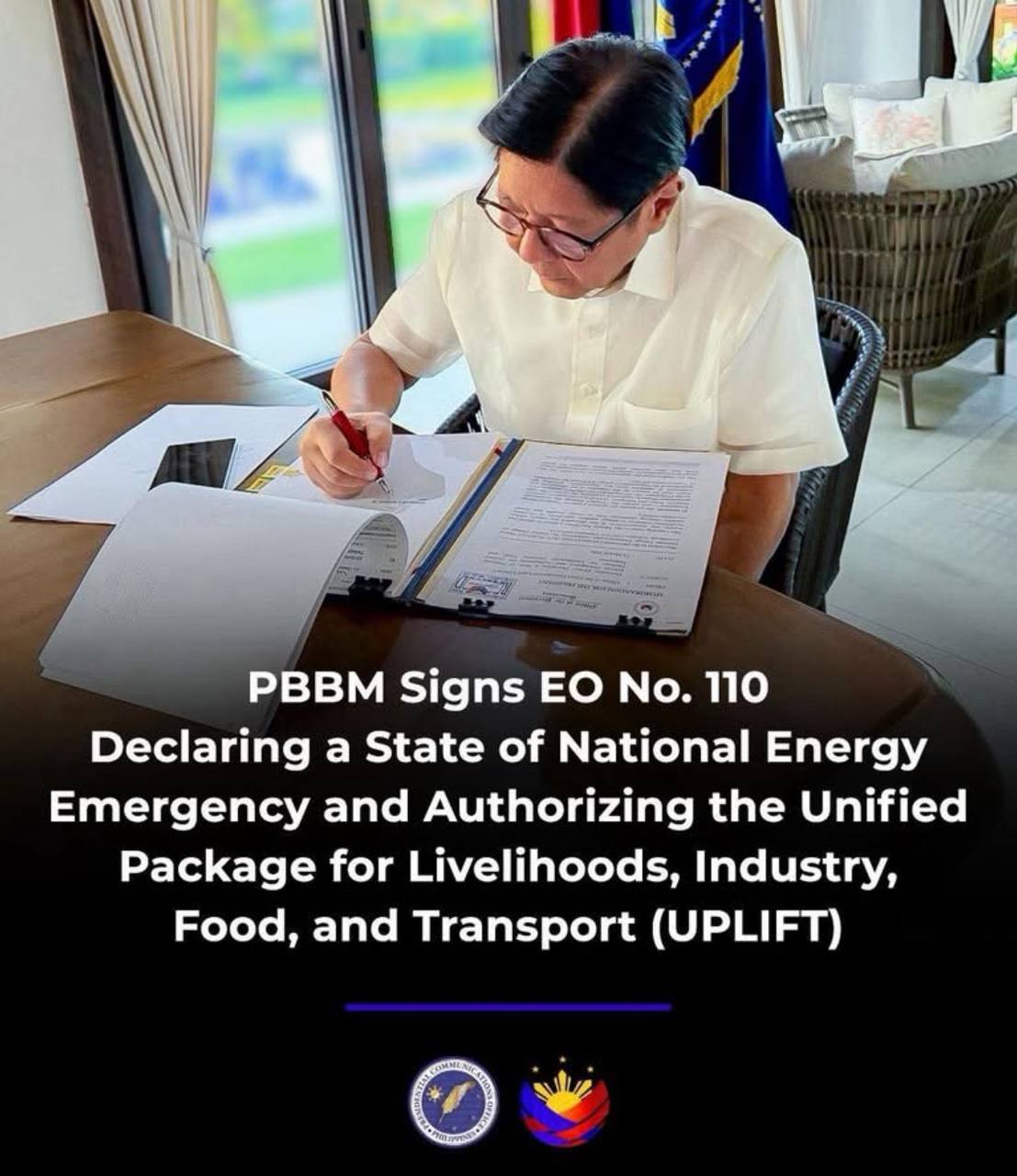
President Ferdinand Marcos Jr. on Tuesday declared a state of national energy emergency through Executive Order No. 110, citing the growing economic risks posed by escalating geopolitical tensions in the Middle East.
The order comes amid intensifying hostilities involving the US, Israel, and Iran, which have disrupted global oil markets and heightened uncertainty in energy supply chains. A key concern highlighted in the directive is the reported closure of the Strait of Hormuz, a vital passageway for global oil shipments, which has significantly constrained fuel supply and driven up international oil prices.
In his order, Marcos underscored the Philippines’ vulnerability as a net importer of petroleum products. He warned that prolonged disruptions could severely impact the country’s ability to maintain stable and adequate energy resources necessary for economic activity and public services.
The Department of Energy (DOE) earlier determined that the situation poses an imminent danger of critically low energy supply, prompting the President to take urgent action.
Under Executive Order No. 110, the government is authorized to implement energy allocation plans and conservation measures to stabilize supply.
Central to the response is the adoption of the Unified Package for Livelihoods, Industry, Food, and Transport (UPLIFT), a whole-of-government framework designed to cushion the impact of rising fuel costs. The program aims to ensure uninterrupted delivery of essential services, protect vulnerable sectors, and sustain economic operations.
The declaration empowers government agencies and local governments to coordinate closely in enforcing energy-saving strategies and mitigation measures.
Malacañang assured the public that the government is taking proactive steps to manage the crisis, maintain energy security, and minimize the economic burden on Filipinos as global tensions continue to unfold.
Read the Executive Order here: https://www.officialgazette.gov.ph/2EmBqZ