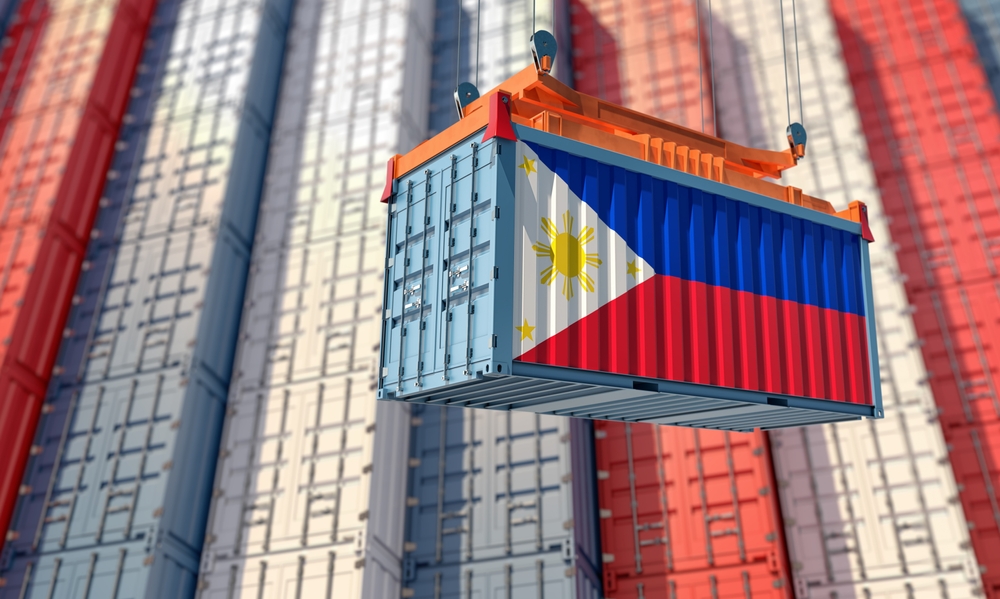
The Philippines’ external trade in goods rose 10.7 percent year on year to USD18.34 billion in February 2026, driven by solid export growth but a faster expansion in imports that widened the trade deficit.
Data released Friday by the Philippine Statistics Authority showed imports accounted for 60 percent of total trade, outpacing exports at 40 percent. Total trade also eased slightly from January levels, marking the lowest monthly tally since December 2025.
Export sales climbed 8.0 percent to USD7.33 billion, the strongest since October, supported mainly by electronics, gold, and machinery.
Electronic products remained the country’s top export, contributing USD4.23 billion or 58 percent of total shipments, underscoring the sector’s continued dominance in the Philippines’ export basket.
The US was the largest export destination, accounting for 19 percent of total shipments, followed by Hong Kong, Japan, China, and the Netherlands. By region, East Asia remained the top market, while exports to Asia-Pacific Economic Cooperation (APEC) economies comprised more than 80 percent of total outbound trade.
Year-to-date exports reached a record USD14.47 billion for January to February, up 8.3 percent from a year earlier—the highest since data tracking began in 1991.
However, stronger import growth continued to weigh on the trade balance. Imports jumped 13 percent to USD11.01 billion, fueled by higher purchases of electronic products, telecommunications equipment, and power-generating machinery.
Electronics alone accounted for 27 percent of total imports.
This pushed the trade deficit to USD3.68 billion, up 23 percent year on year, although slightly narrower than recent months.
The data reflects a familiar pattern: resilient external demand supporting exports, but heavy reliance on imported inputs and capital goods sustaining the deficit.
The surge in electronics imports, in particular, suggests continued expansion in manufacturing activity, even as it highlights structural dependence on foreign supply chains.
With global conditions still uncertain, sustaining export momentum while managing import-driven imbalances remains a key challenge for policymakers.