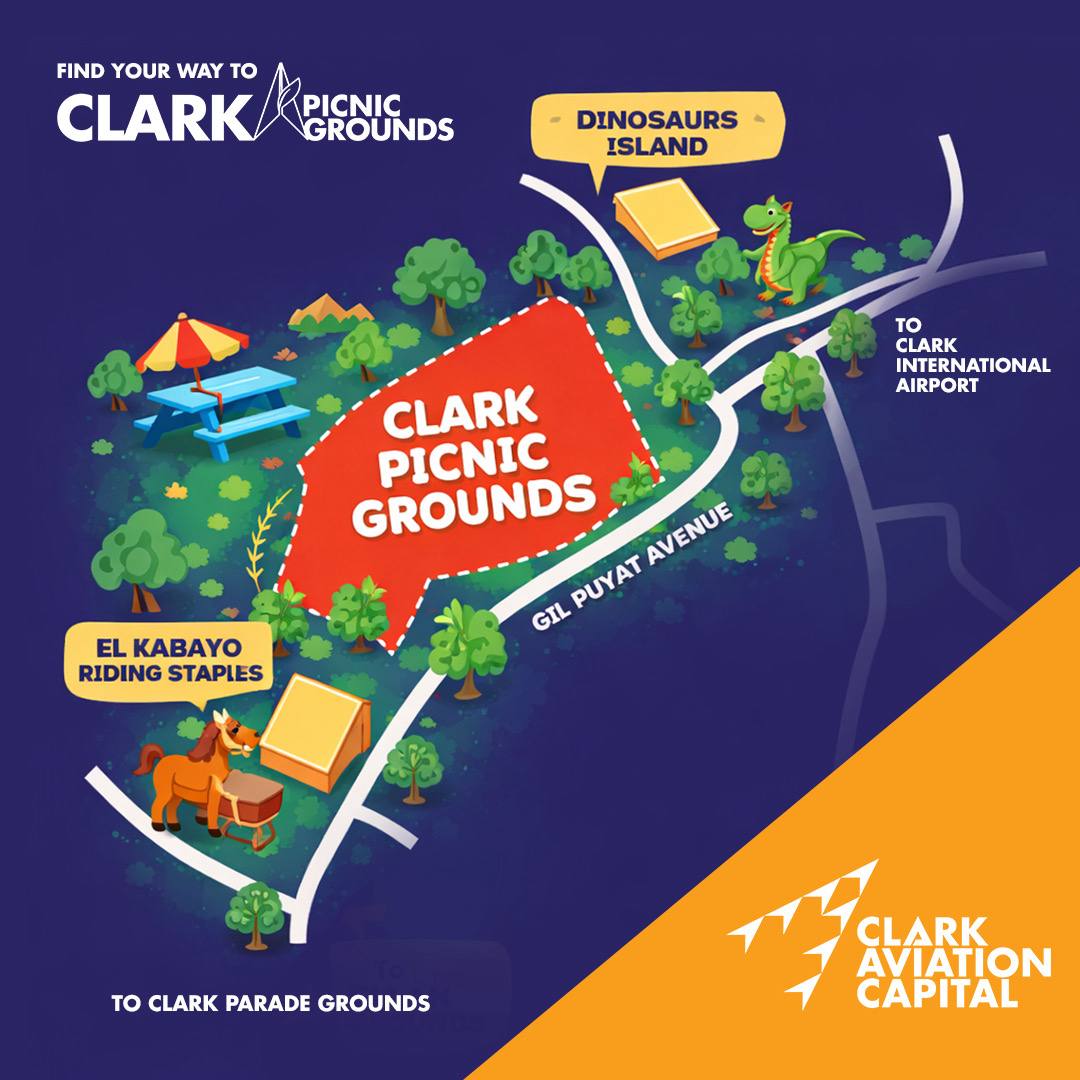
The Clark Picnic Grounds is set to open to the public on April 18, marking a new addition to the expanding network of recreational spaces inside the Clark Freeport Zone as part of a broader urban renewal push.
The project is one of seven flagship developments under the Clark International Airport Corp. (CIAC) Urban Renewal and Heritage Conservation Program, which aims to modernize public infrastructure while preserving the area’s historical and ecological assets.
The initial five-hectare phase of the Clark Picnic Grounds will be opened free of charge to visitors. It features a mix of recreational and wellness-oriented amenities, including jogging and walking paths, open lawns, an amphitheater, a playground, a pet park, and designated areas for community gatherings and leisure activities.
CIAC said the development is designed to strengthen public engagement and improve quality of life within the Clark Freeport Zone, positioning it as a more accessible destination for families, workers, and tourists seeking open green space.
Once fully developed, the Clark Aviation Capital Picnic Grounds is expected to complement nearby attractions such as the Clark Parade Grounds, Bicentennial Park, and Air Force City Park, strengthening Clark’s identity as a hub for outdoor recreation and leisure-based tourism.
The project also integrates infrastructure elements such as a stormwater reservoir intended to support flood mitigation efforts, along with parking facilities, benches, coffee shops, community gardens, and food and beverage stalls to support longer visitor stays.
A key feature of the site is the preservation of century-old acacia trees planted during the early 1900s American colonial period, with CIAC confirming that no trees were cut during construction.
“As we develop the Clark Aviation Capital, we are committed to creating sustainable and inclusive public spaces that improve quality of life and foster stronger communities,” CIAC president Jojit Alcazar said.
The wider CIAC program covers a nine-hectare property and is nearing completion, reflecting a growing emphasis on combining heritage conservation with modern, climate-resilient urban design.