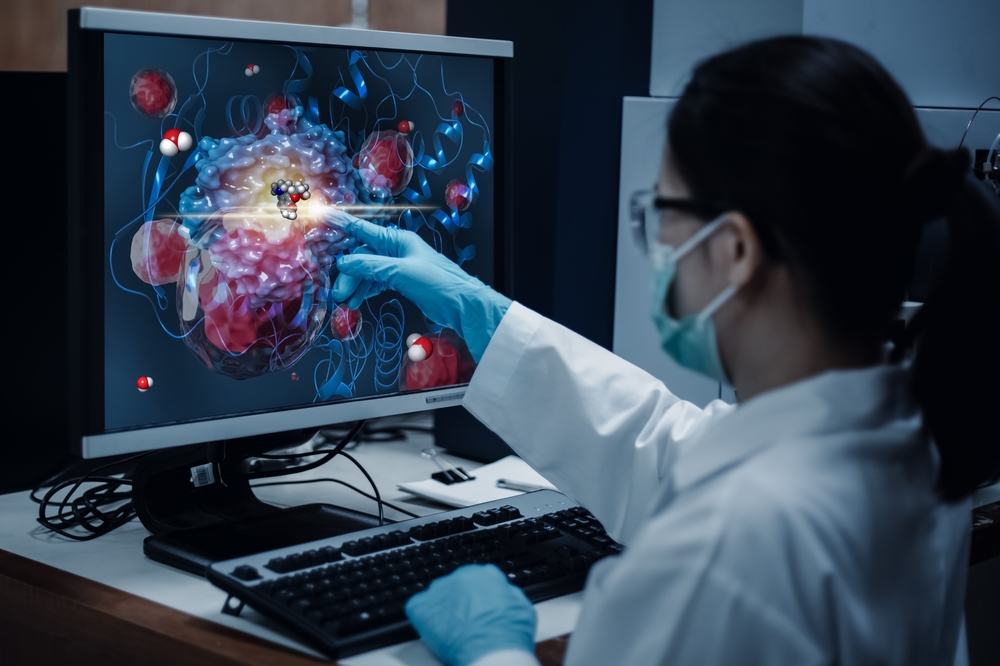
A new study highlights an emerging class of drug design that could sharpen the fight against infections, cancer, and neurological diseases by turning the body’s own chemistry against itself.
Conducted by an international team of researchers, the study focuses on enzymes—microscopic “machines” that drive essential biological processes—as prime drug targets. With antimicrobial resistance on the rise and diseases like cancer and neurodegeneration continuing to grow globally, scientists are racing to develop more precise and effective treatments.
Traditional drugs often work by blocking enzymes directly, either by competing with natural molecules or by shutting down activity from the sidelines. Some of the most widely used medicines, including aspirin and penicillin, are known as “suicide inhibitors,” which are compounds that appear harmless at first but are activated by the enzyme itself, ultimately disabling it.
The new research published in Cell Reports spotlights a more nuanced approach dubbed “reaction hijacking.” Instead of attacking enzymes head-on, these compounds allow the enzyme to begin its normal function, only to intercept the process midway. Acting as molecular decoys, they react with helper molecules inside the enzyme’s active site, forming a stable complex that effectively stalls the system.
This approach offers a key advantage: selectivity. Because the compounds remain inactive until processed by a specific enzyme, they are less likely to interfere with other biological functions, potentially reducing side effects. They are also typically small, stable, and easier to manufacture—traits that could make them cost-effective and widely accessible.
Still, the study underscores that designing these “hijackers” is far from straightforward. Unlike conventional drugs, their behavior doesn’t always follow predictable structure–activity rules, making them harder to engineer using standard methods.
Researchers say a deeper understanding of enzyme mechanics—down to the level of molecular geometry and chemical reactivity—will be crucial, potentially requiring advanced computational modeling to guide development.
That complexity, however, comes with upside. Because these compounds only become strongly active once they form a stable complex inside the enzyme, they can be modified more flexibly to improve performance without losing effectiveness. Scientists also see potential for designing drugs that target multiple enzymes within a pathogen at once, a strategy that could help slow the rise of drug resistance.
As more structural data becomes available, researchers expect clearer design rules to emerge. If successful, reaction hijacking could open the door to a new generation of therapies—ones that are not only precise and potent, but also scalable and affordable in the face of evolving global health threats.