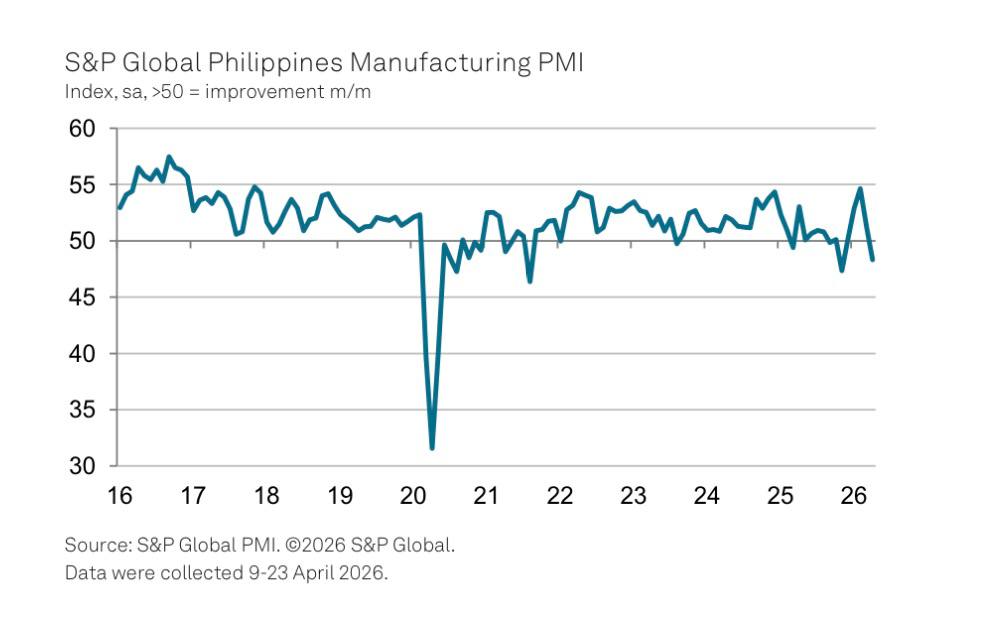
The Philippines’ manufacturing sector slipped into contraction in April, its first downturn since November, as weakening demand and rising costs weighed on output, according to S&P Global Market Intelligence.
The Manufacturing Purchasing Managers’ Index (PMI) fell to 48.3 from 51.3 in March, dropping below the 50-point line that separates expansion from contraction. The decline was driven by a sharp fall in new orders—the first in five months and the steepest since August 2021—alongside flat production.
External demand worsened markedly, with export orders shrinking at the fastest pace since mid-2020. Firms pointed to disrupted trade routes and shipping delays that eroded client confidence and triggered cancellations or deferred orders.
Output stalled after steady growth in the first quarter of 2026. Facing softer demand and mounting costs, manufacturers cut back on purchasing and drew down inventories, leading to steep declines in both raw materials and finished goods stocks.
Price pressures intensified, with input costs rising at their fastest rate since December 2022, largely due to higher energy and freight expenses tied to geopolitical tensions in the Middle East. Companies passed on these increases, pushing selling prices up at the quickest pace in 41 months.
Rising costs also hit employment, with firms trimming payrolls for the first time this year, though reductions were modest. Supplier performance deteriorated further, as delivery times lengthened.
Despite the slowdown, sentiment improved. Manufacturers expressed cautious optimism that demand and output will recover over the next 12 months.