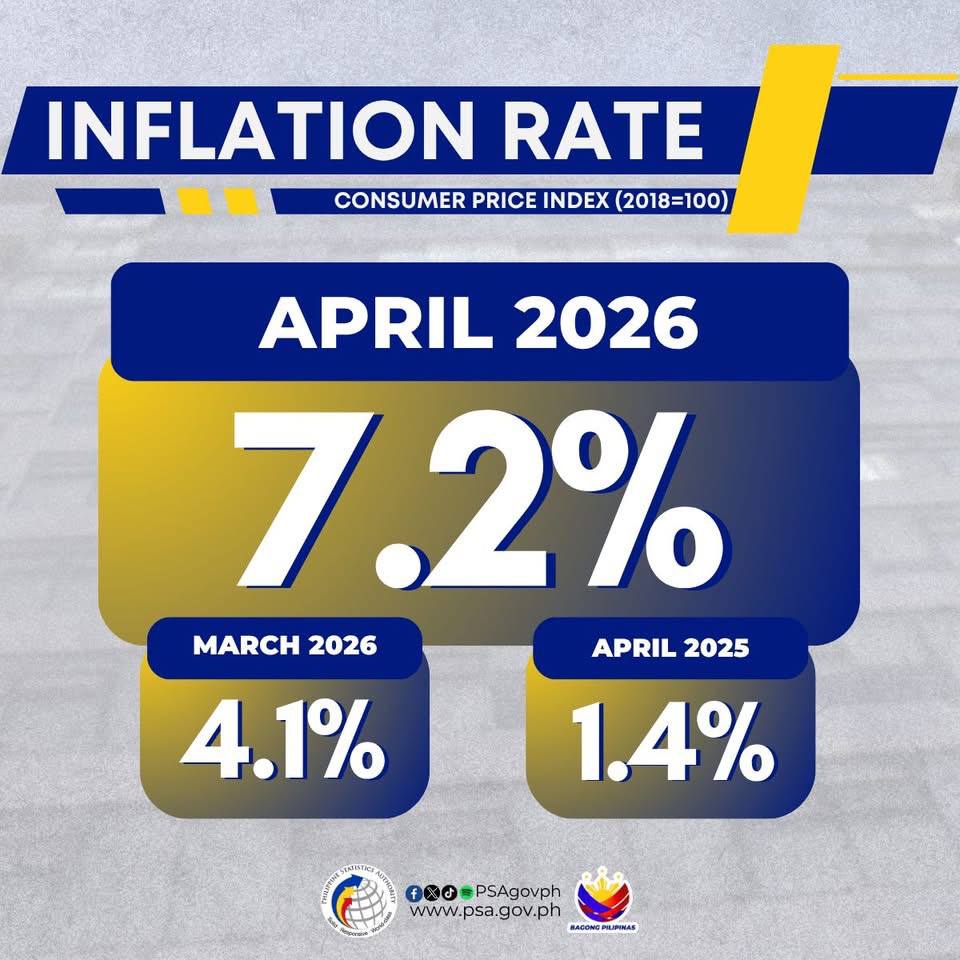
Philippine inflation surged to a three-year high in April, exceeding expectations and strengthening the case for further monetary tightening, according to data released by the Philippine Statistics Authority.
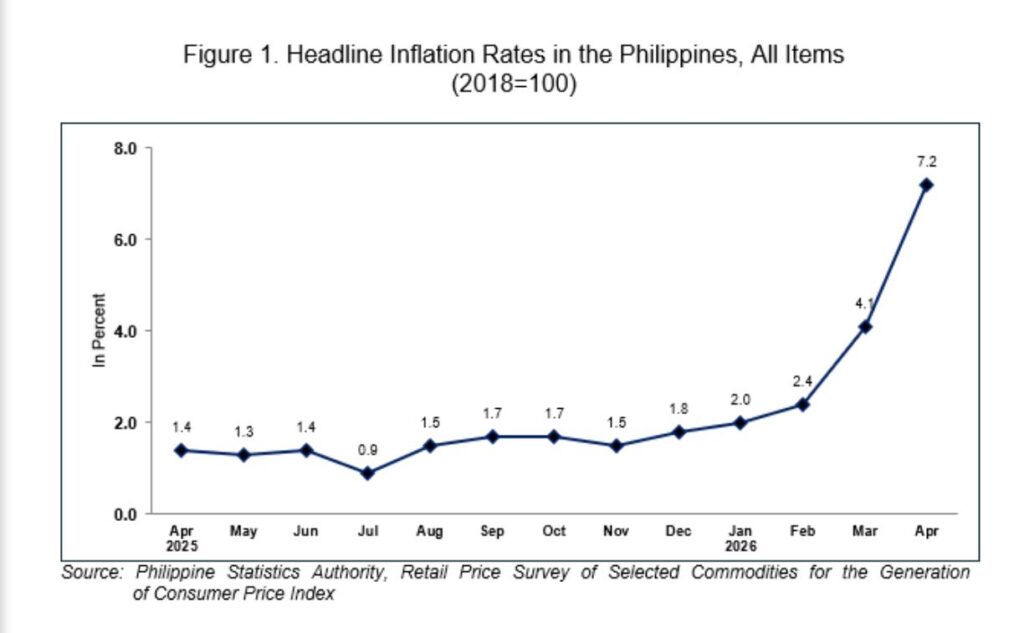
Headline inflation jumped to 7.2 percent in April from 4.1 percent in March, well above the Bangko Sentral ng Pilipinas forecast range of 5.6 percent to 6.4 percent. The latest print marks a sharp acceleration and the fastest pace since 2023, bringing year-to-date inflation to 3.9 percent.
Inflation was at 7.6 percent in March 2023, when consumer prices started their downward trajectory.
Core inflation, which strips out volatile food and energy items, also edged higher to 3.9 percent from 3.2 percent, suggesting that underlying price pressures are beginning to build beyond temporary supply shocks.
For the bottom 30 percent of income households surged to 8.5 percent from 0.1 percent in April 2025 and 4.2 percent last March due to higher food and fuel prices.
The spike was driven largely by food and transport costs, with broad-based price pressures spreading across key sectors. Food and non-alcoholic beverages inflation rose to 6.0 percent from 2.9 percent, while transport costs surged 21 percent from 10 percent previously, reflecting higher fuel prices. Housing and utilities also picked up, rising 8 percent from 5 percent.
Food inflation alone climbed to 6.1 percent, more than double the 2.7 percent recorded in March, highlighting mounting pressure on household budgets. Rice prices were a major driver, jumping 13.7 percent from 3.5 percent, alongside sharp increases in corn, fish, and vegetables. Cereals accounted for more than half of food inflation’s contribution, underscoring the sensitivity of overall prices to staple supply.
Together, food, transport, and housing accounted for the bulk of April’s inflation, contributing more than 80 percent of the overall rate. The breadth of increases across categories, from restaurants to personal care, points to a more entrenched inflation environment.
The stronger-than-expected reading complicates the policy outlook. With inflation now running above forecasts, the BSP may face pressure to maintain or even tighten its policy stance further to prevent second-round effects.
For now, the data signal that inflation risks are intensifying, with supply constraints and elevated fuel costs continuing to push prices higher in the near term.