Return-to-office momentum is building across Metro Manila, but companies are still keeping a tight grip on expansion plans, tempering what could have been a stronger office market recovery, according to Colliers Philippines.
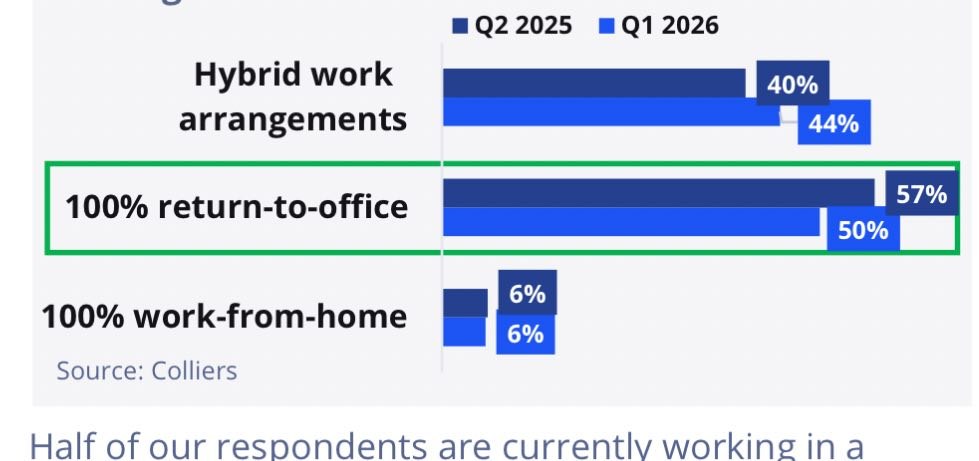
The property consultancy’s latest Metro Manila survey shows workplace strategies settling into a new normal, with almost half of respondents now operating fully on-site. While this is down from 57 percent in the second quarter of 2025, hybrid work remains firmly established at 44 percent, suggesting employers are refining rather than abandoning flexible work arrangements.
The findings also reinforce the growing importance of the workplace itself. Employees continue to report higher productivity in traditional office settings, prompting companies to rethink offices as tools for collaboration, talent retention and performance instead of simply places to house staff.
For landlords, that means quality matters more than quantity.
Despite the improving return-to-office trend, business sentiment remains guarded. About two-thirds of occupiers plan to retain their current office footprint as geopolitical risks and economic uncertainty keep expansion decisions on hold.
That cautious stance is slowing leasing activity even as vacancies continue to tighten in key business districts such as Makati, Bonifacio Global City and Ortigas.
Colliers said landlords should seize the opportunity to modernize older buildings, invest in sustainability upgrades and reposition properties in emerging business hubs to attract tenants seeking higher-quality office space.
The consultancy also urged occupiers to adopt longer-term workplace strategies instead of making piecemeal adjustments, arguing that a clearer plan will help businesses navigate an uncertain operating environment.
A broader return to offices could also deliver benefits beyond commercial real estate. Higher workplace attendance is expected to boost demand for nearby retailers, restaurants and residential developments, strengthening the office sector’s role as an engine of urban economic activity even as hybrid work becomes a permanent feature of the corporate landscape.