The country’s balance of payments (BOP) — the measure of all economic transactions between the country and the rest of the world, and essentially what remains after foreign earnings are offset against external obligations and outlays — recorded a deficit of US$5.3 billion in the first quarter of 2026. This is equivalent to 4.5 percent of gross domestic product (GDP), wider than the US$3.0 billion deficit, or 2.6 percent of GDP, posted in the same period last year.
The larger gap stems from weaker financial inflows and higher import expenses. Outflows rose due to external debt repayments, while foreign direct investment (FDI) moderated amid cautious investor sentiment. Banks repaid foreign loans and non-residents pulled funds from local accounts, reducing net inflows in other investment categories. Though direct investments still came in, the pace slowed. Portfolio investment outflows eased slightly as local investors cut foreign holdings, but this was partially offset by foreign investors withdrawing from Philippine debt papers.
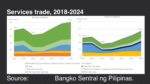
The current account deficit also expanded, driven mainly by a bigger trade gap. While goods exports grew steadily on strong global demand for electronics, the value of imports rose even faster due to higher global commodity prices. Income flows softened as dividends and earnings from investments and reserves declined, and the surplus in services trade narrowed — payments for technical, trade, and travel services grew faster than receipts.
Still, there were stabilizing factors. Revenues from tourism, manufacturing services, and business process outsourcing continued to support the economy, while remittances from overseas Filipino workers remained resilient. These inflows help cushion external pressures and provide a reliable source of foreign currency, even as the BOP position reflects the broader balance between the country’s international earnings and spending.