The Philippines’ biggest property developers are placing greater emphasis on malls as retail continues to outperform other real estate segments, supported by resilient consumer spending and the appeal of stable recurring rental income.
That shift is reshaping investment priorities. According to Santos Knight Frank, large developers are increasingly channeling capital into shopping centers while taking a more measured approach to residential projects, where higher construction costs and lingering condominium inventories have tempered returns.
“Moving forward, we continue to project a positive outlook for the retail sector,” said Virgilio Velasco, manager for Investment & Capital Markets at Santos Knight Frank.
The consultancy said the strategy reflects a broader change in the property market. While housing remains a core business, malls have emerged as dependable income-generating assets, benefiting from sustained tenant demand and long-term lease revenues.
“If you look at the financial performance of the major property groups, retail assets are generally performing better than residential developments,” Velasco said. “Because of that, many are prioritizing retail expansion, which provides more stable recurring income.”
The trend is evident beyond Metro Manila. Projects such as SM City General Trias, SM Tagum, SM City Iligan, SM Nuvali, and Ayala Mall Gatewalk Cebu highlight how big developers are expanding organized retail into fast-growing provincial markets, where rising incomes and urbanization are creating new commercial hubs.
Developers are also redefining the role of malls. More floor space is being allocated to restaurants, cafés, wellness facilities, fitness centers, entertainment venues, and recreational concepts such as pickleball courts, reflecting consumers’ growing preference for experiences alongside shopping.
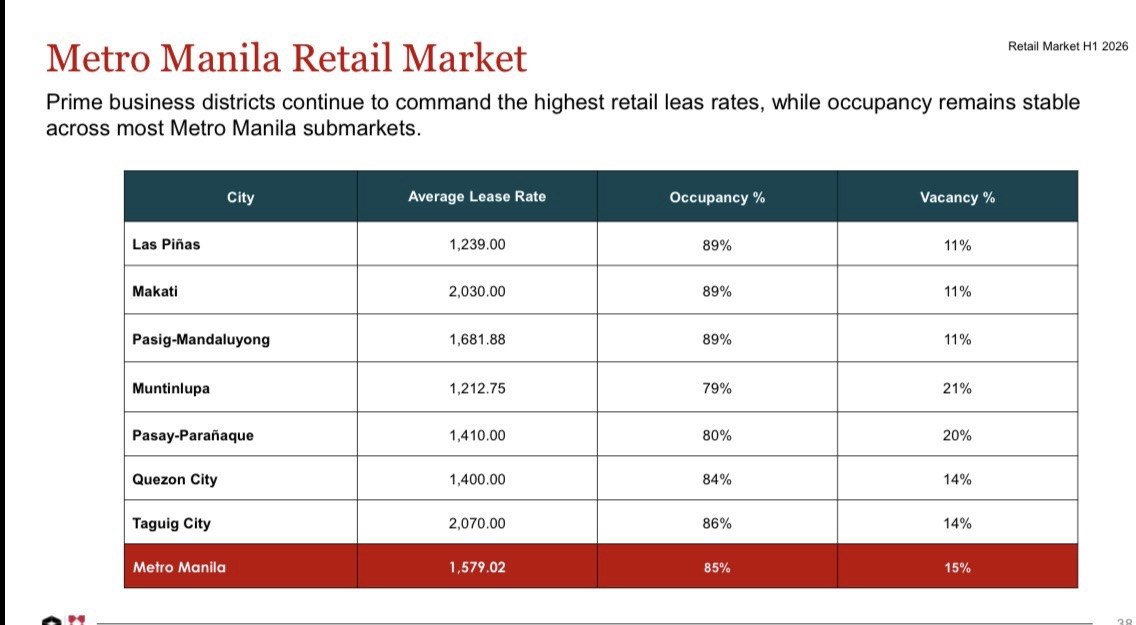
Premium international brands continue to choose Bonifacio Global City for their first Philippine locations, reinforcing
demand for prime retail space.
For developers, the appeal is increasingly clear. As long as household spending remains supported by resilient overseas Filipino remittances, easing inflation, and improving purchasing power, malls offer the predictable cash flow that helps cushion the cyclical nature of residential development, making retail one of the industry’s strongest growth drivers through the rest of 2026.