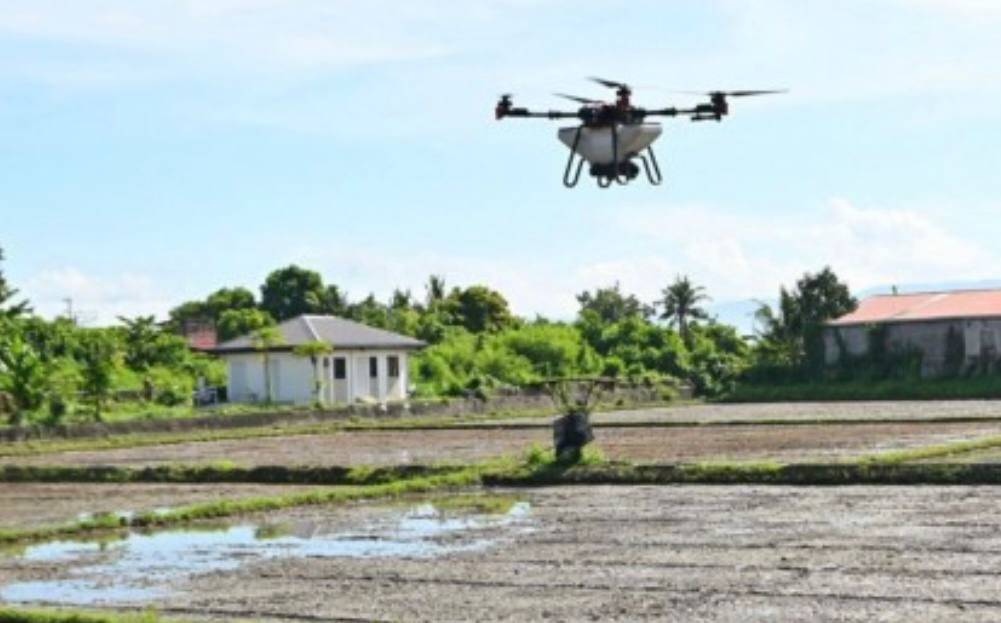
The Department of Agriculture (DA) is exploring drones and artificial intelligence to foresee and address crop concerns, aiming to raise farm output and strengthen the country’s food security.
In a statement, the agency explained the system combines real-time environmental data collected by drones with historical weather records and machine-learning tools to anticipate pest infestations and other risks to crops.
Introduced by Japanese technology firm E-SupportLink (ESL), the initiative aims to provide farmers and authorities advance notice before problems worsen, and could change how agricultural risks are managed in the Philippines. Instead of acting only after pests or diseases have caused harm, the technology lets farmers use up-to-date aerial information to spot issues sooner and take steps to stop them.
ESL has started testing its AI-powered aerial imaging system on three banana farms in Davao del Norte and Davao de Oro, following an agreement with the DA’s Davao Regional Field Office. The project is currently under ground checks to confirm its accuracy. The system uses drones, aerial photos and AI analysis to track crop growth, count plants, estimate harvests, make better use of farm supplies, and spot early signs of disease.
“This technology can help us move from reacting to problems to preventing them,” said DA undersecretary Cheryl Natividad-Caballero. “Its value goes beyond just flying drones — it includes prediction and analysis. We can spot where trouble may start before it grows into a bigger issue.”
Early detection can also cut costs, since farmers can step in before problems spread widely, Caballero added. “When you know about an issue early, you can act faster, and it costs less to manage.”
ESL noted similar systems are already in use in Japan, where they help spot risks early and prevent outbreaks. The Davao trial has also drawn interest from private banana growers who want to use aerial data for planning and disease checks.
Agriculture Secretary Francisco Tiu Laurel Jr. said the technology holds promise, but its full benefit will depend on whether it can be made affordable and available to all farmers. “This is a promising tool, but we must ensure it is within reach — not just of big businesses, but most of all of small farmers,” he said.
The DA is also looking into applying the technology to sugarcane and coconut, two key export crops facing production difficulties. “We want to see how this can help with urgent challenges in sugar and coconut. Catching problems early means better decisions and more stable earnings for farmers,” Tiu Laurel added.
Under the proposed partnership, ESL will help train drone pilots, set up aerial imaging systems, and provide AI-based output assessments. The DA is reviewing possible government support, including training help through the Agricultural Training Institute and potential funding options.