SteelAsia Lemery Works Inc. has secured investment incentives for a P19-billion project in Batangas that will produce medium steel sections locally, marking a shift in government policy toward using incentives to fill specific gaps in the domestic industrial base.
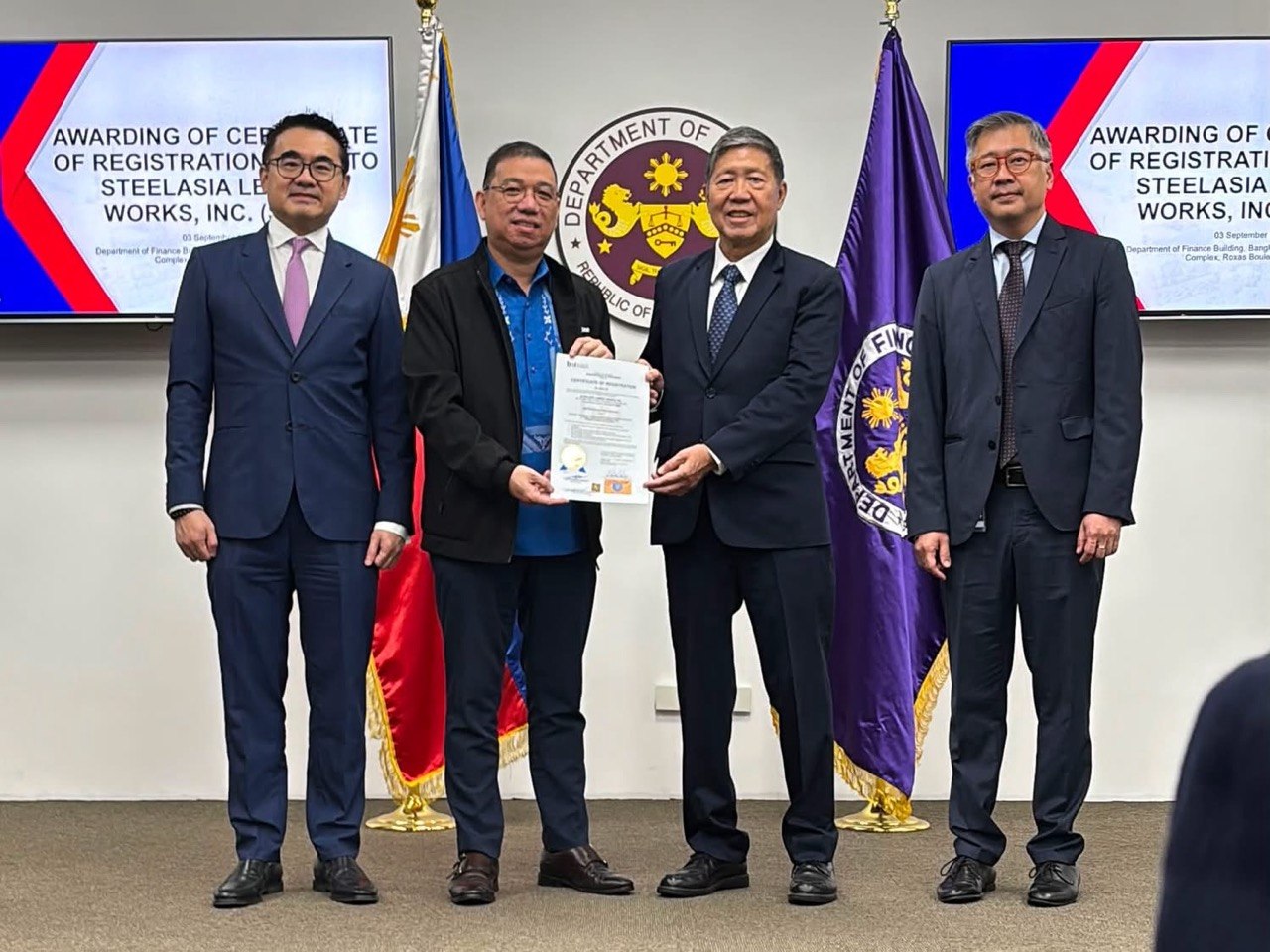
The Board of Investments formally awarded the company its Certificate of Registration, making the project the Philippines’ first investment registered as a High-Value Domestic Market Enterprise under Tier II of the Strategic Investment Priority Plan.
It is also the country’s first domestic manufacturing project for medium steel sections, a key input for construction and industry that is partly sourced from abroad.
The government sees the project as a test case for a more targeted investment strategy under the Strategic Investment Priority Plan, directing fiscal incentives toward projects that build capabilities the domestic economy currently lacks rather than simply adding capacity.
Trade Undersecretary and BOI Managing Head Ceferino S. Rodolfo said the project demonstrates how the investment framework can support investments that “address specific needs and gaps in the Philippine economy.”
The HVDME framework covers large investments serving mainly the domestic market but considered strategically important because they address supply-chain deficiencies or develop critical local capabilities.
Qualified Tier II HVDMEs can receive an income tax holiday followed by the Enhanced Deductions Regime, giving capital-intensive projects longer-term tax support.
For policymakers, the rationale is straightforward. If an important industrial input can be produced competitively in the Philippines, targeted incentives can help overcome the initial cost disadvantage of building domestic capacity while reducing exposure to imported supply.
The SteelAsia registration also provides a template for other domestic-oriented projects in industries where the country remains dependent on imports, including metals, chemicals, and specialized manufacturing.
The policy, however, ultimately hinges on whether these projects create durable productive capacity rather than simply receiving tax support. The payoff comes if incentives translate into competitive local production, stronger supplier networks, and greater value retained in the economy.
That makes the SteelAsia project significant beyond its P19-billion price tag. It is an early test of whether the Philippines can use its investment regime more selectively to build the industrial capabilities needed to support long-term growth.