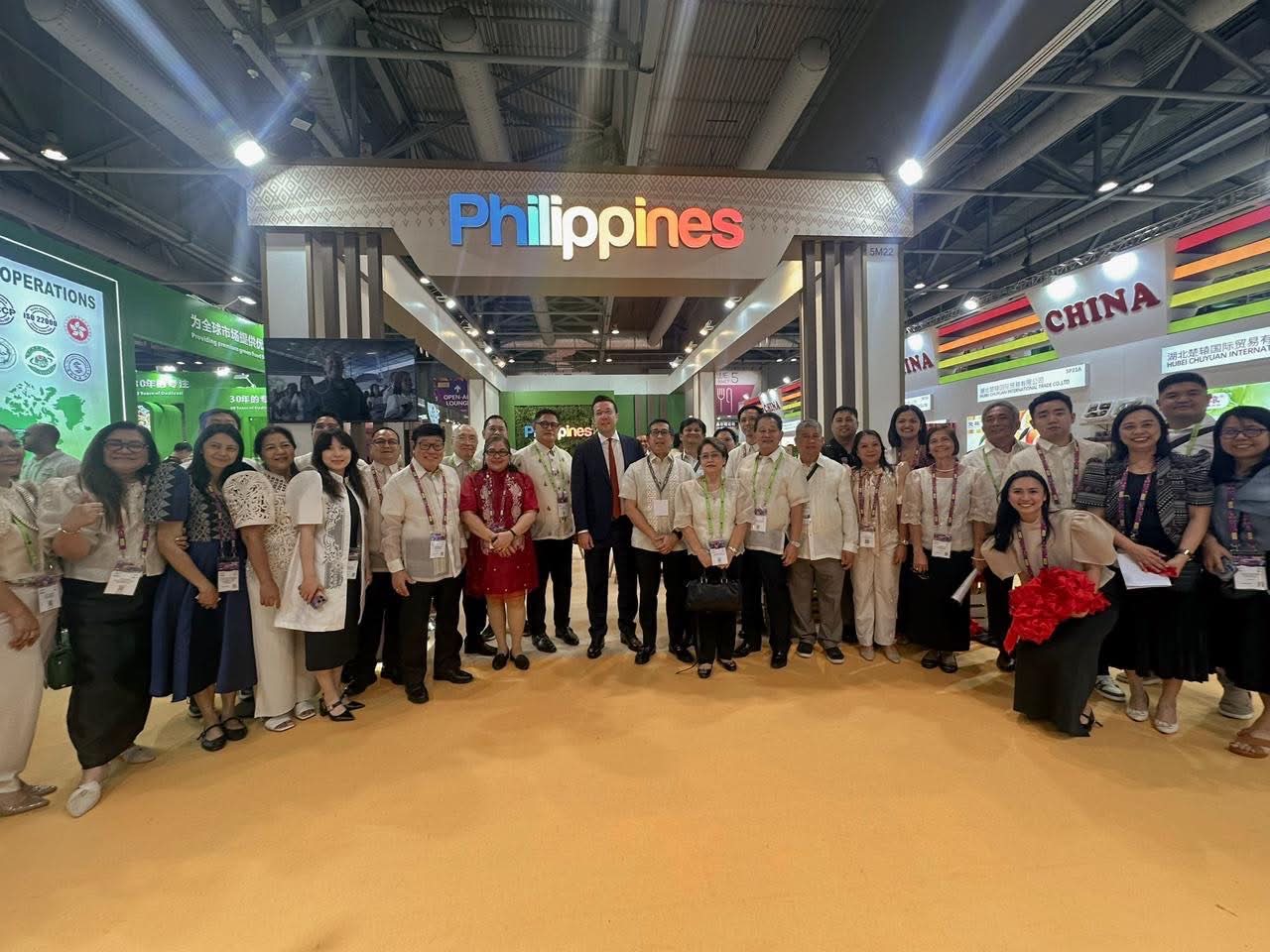
The Department of Agriculture (DA) has renewed its drive to expand agricultural exports by returning to Asia Fruit Logistica after nearly ten years, reconnecting local fruit sellers with key buyers across the continent’s major fresh produce market. Led by Undersecretary Philip C. Young, the delegation joined the September 2 to 4 event at Hong Kong’s AsiaWorld-Expo, marking a clear shift from past limited engagement toward more active global participation. This renewed focus aims to open new markets for high-value crops, build lasting business ties, and gather critical market information to help exporters meet international standards and demands.
Asia Fruit Logistica spans the entire fresh produce supply chain, bringing together exhibitors, distributors, retailers, and industry partners. The 2026 edition drew over 760 exhibitors and roughly 14,000 buyers from 80 countries, offering a high-impact platform for market expansion. Agriculture Secretary Francisco P. Tiu Laurel emphasized that this effort goes beyond increasing trade figures, noting that it seeks to secure larger, more stable markets for farmers, raise product values, and boost rural incomes. He highlighted the country’s persistent annual agricultural trade deficit of about USD 11 billion—funds that could otherwise support key improvements like irrigation systems—and stressed that growing exports will make local farming more productive and competitive.
The event was formally opened by Hon. Raymond Democrito C. Mendoza during a ribbon-cutting ceremony attended by Undersecretary Young, Philippine Consul General Romulo Victor M. Israel Jr., and Agricultural Counsellor Marlito C. Cabuños, alongside industry leaders and exporters. Mendoza pledged continued support for the export program to ensure greater assistance reaches the sector. The Philippine pavilion displayed top commodities including Cavendish and Cardava bananas, durian, fresh and frozen mangoes, dragon fruit, and pomelo, with industry associations presenting their respective products to highlight local quality and diversity.
Undersecretary Young stated the return is designed to turn displays into concrete business results, reflecting strong government commitment to elevating Philippine produce in global trade. He noted the participation is focused on securing market share, building reliable partnerships, and demonstrating the quality of priority crops. Beyond trade, the initiative targets improved competitiveness through alignment with international grading and quality norms, better market intelligence, and stronger public-private collaboration.
Addressing logistical and post-harvest issues, Young held discussions with logistics and shipping representatives to adopt advanced handling and preservation methods, starting with dragon fruit and potentially expanding to other crops. A virtual training program is also being organized for DA personnel involved in high-value crops, research, and standardization. Early feedback showed strong buyer interest, though some orders could not be fulfilled due to supply limits—underscoring the need to expand production and export capabilities. This effort forms part of a broader government strategy covering 16 priority export commodities, designed to open new opportunities for farmers and agribusinesses worldwide.