Philippine mall developers are easing off rapid expansion and putting more capital into redevelopments, upgrades and premium lifestyle concepts as changing consumer preferences reshape the retail landscape.
The shift is particularly evident in Metro Manila, where Colliers Philippines expects new mall supply to average just 113,000 square meters annually from 2026 to 2028—about a third of the 332,000 square meters delivered each year between 2017 and 2019.
Rather than simply adding floor space, developers are reworking existing properties to make them more compelling destinations, with upgraded architecture, curated tenant mixes and a heavier emphasis on dining, entertainment and specialty retail.
The strategy reflects a broader change in how Filipinos use malls. Shopping remains important, but consumers increasingly seek places where they can eat, socialize, be entertained and discover new brands—giving developers a reason to prioritize dwell time and experience over sheer retail capacity.
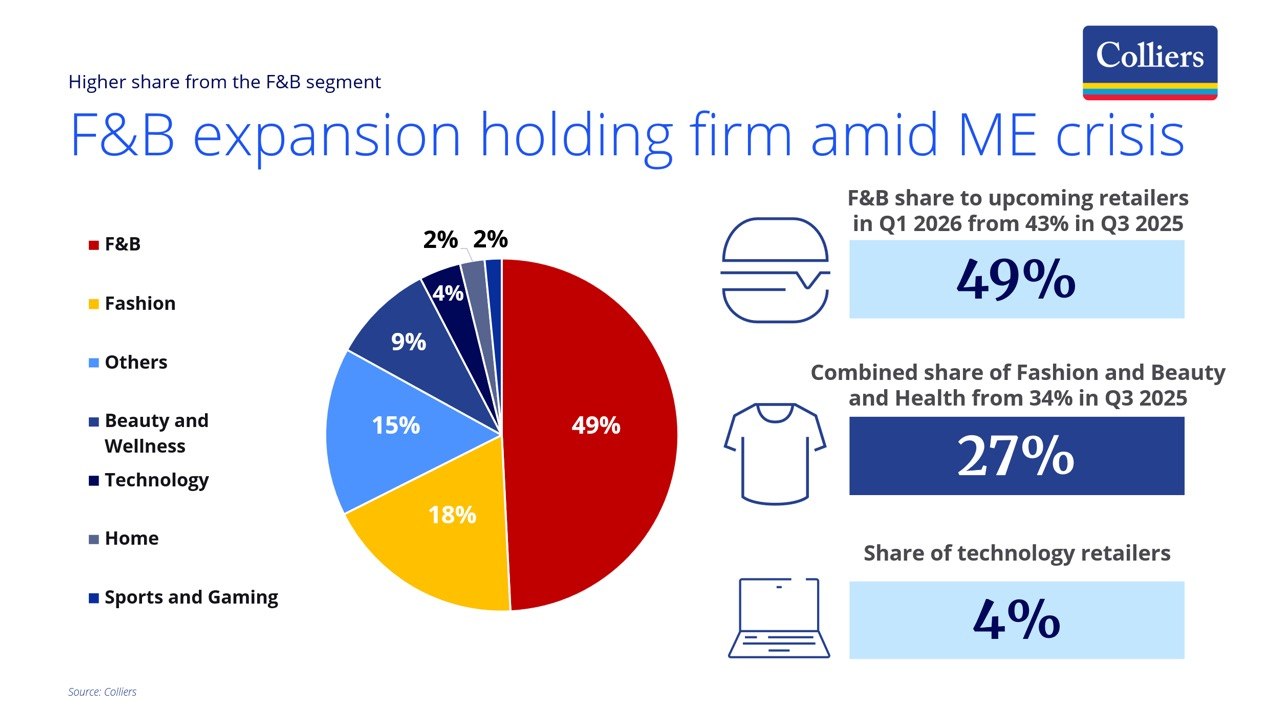
Food and beverage is emerging as a major driver. Colliers expects F&B establishments to account for nearly half of mall space absorption through 2028, underscoring the role of dining in generating repeat visits and sustained foot traffic.
Projects such as the redevelopment and expansion of Glorietta and Greenbelt, alongside SM Harrison Plaza and Ayala Malls Parklinks, illustrate the market’s move toward more differentiated retail environments.
International retailers are reinforcing the trend, with some taking larger spaces for flagship stores and experiential formats, including cafés and specialty food concepts designed to deepen customer engagement.
The supply restraint is also helping tighten market conditions. Colliers expects mall vacancy to fall below 10%—roughly its pre-pandemic level—by the first half of 2027.
For mall operators, however, the recovery is not simply a matter of filling space. As competition for consumers intensifies, the winners may be those that create reasons to visit even when shoppers have nothing specific to buy.
The mall, in other words, is becoming less a marketplace—and more a destination.