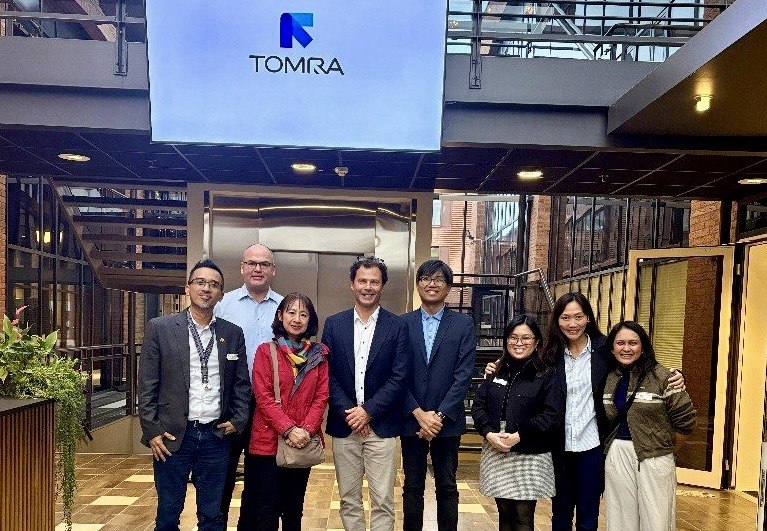
The Philippines is exploring Norway’s deposit-return system for beverage containers and advanced recycling technologies as it seeks to close gaps in plastic waste recovery and help businesses meet obligations under its Extended Producer Responsibility (EPR) law.
A Philippine delegation led by Department of Environment and Natural Resources Undersecretary Jonas R. Leones visited Norway on October 4–9 to study waste management models that could inform improvements in domestic collection, sorting and recycling infrastructure.
The visit comes as manufacturers and brand owners face growing pressure to recover plastic packaging waste under the EPR framework, increasing the need for effective collection mechanisms, recycling capacity and private-sector investment.
Organized by the Royal Norwegian Embassy in Manila, the study tour included visits to Infinitum, operator of Norway’s deposit-return system, recycling technology provider TOMRA, and waste management organizations ROAF, OMRÅ and Grønt Punkt Norge.
The delegation also met with Norway’s Ministry of Climate and Environment and development finance institution Norfund to discuss potential cooperation on technology and investment.
Participants included Evergreen Labs, Philippine Spring Water Resources, manufacturer of Nature’s Spring, the Philippine Alliance for Recycling and Materials Sustainability, GIZ Philippines and the Philippines–Norway Business Council.
Norway’s model offers a potential reference point for the Philippines, where improving the recovery of discarded packaging remains a key challenge. Deposit-return systems typically encourage consumers to return beverage containers by attaching a refundable deposit to purchases, helping create a more structured stream of recyclable materials.
However, adapting such a system locally would require more than importing technology. Collection infrastructure, consumer participation, industry coordination and the economics of recycling would all influence its effectiveness.
Norwegian Ambassador Kristian Netland emphasized that building a circular economy requires cooperation among governments, businesses and communities.
The discussions could create opportunities for Norwegian technology providers and investors while helping Philippine companies improve packaging recovery and comply with rising recycling obligations.
Whether the exchange translates into measurable gains will depend on how lessons from Norway are adapted to Philippine conditions, particularly the country’s collection networks and recycling capacity.