The Philippine automotive market is beginning to look like a family reunion where everybody has arrived in a different vehicle, but everyone wants to talk about electricity. There are fully electric sedans, plug-in hybrid pickups, hybrid SUVs, and battery-powered crossovers competing for attention. The gasoline engine has not been invited to leave, but it is beginning to notice that the conversation has changed.
Consider Nissan’s latest move. The company has brought back the Primera, this time as a fully electric executive sedan, while also introducing the Navara Pro Plug-in Hybrid. The contrast is interesting. One is designed for people who want the traditional comfort of a premium sedan without paying a visit to the pump. The other is a pickup that retains its four-wheel-drive credentials while adding an electric motor to the equation. The auto manufacturer is effectively acknowledging that there is no single way to convince motorists to embrace electrification.
The Primera comes with a claimed range of up to 500 kilometers, while the Navara Pro PHEV boasts a locally certified combined range of up to 1,150 kilometers on a full tank and fully charged battery. Those numbers will certainly attract attention, but the more interesting development is the choice now available to Filipino buyers. We are no longer talking about electric mobility as an idea reserved for early adopters with large garages and charging stations conveniently located along their routes.
The arrival of the VinFast VF 8, the growing presence of BYD, and the introduction of Mazda’s CX-80 plug-in hybrid also show how quickly the market is changing. Even traditional manufacturers are being forced to reconsider how they approach the next generation of automobiles. The competition is no longer simply about horsepower, fuel consumption, or how many screens can be fitted into a dashboard. It is about how efficiently a vehicle can move people without making ownership more complicated.
Having driven and owned a Toyota bZ4X for the past several months, I can appreciate the appeal of the new dynamic. The absence of engine noise, the immediate response, and the smooth delivery of power make ordinary journeys less tiring. I also enjoy not having to line up for fuel. To be sure, owning an electric vehicle has taught me that the technology itself is only part of the equation. Charging access, travel distances, driving habits, and the availability of reliable service support matter just as much.
This is where hybrids and plug-in hybrids make a compelling case. They offer a middle ground for motorists who like the idea of electric driving but are not yet prepared to reorganize their lives around charging infrastructure. A plug-in hybrid pickup is an interesting proposition in a country where vehicles are expected to handle city traffic on Monday and rough provincial roads over the weekend. It may not be the final destination of automotive technology, but it could be a practical stop along the way.
There is also a lesson here for the manufacturers. Selling electrification does not merely involve announcing bigger batteries, longer ranges, or more impressive acceleration figures. Filipino buyers are practical. They want to know whether the vehicle can survive EDSA traffic, climb the steep ramp of a parking building, negotiate flooded streets, and find a competent service center when the warning light comes on. A futuristic dashboard will not compensate for an inconvenient ownership experience.
The industry is moving fast, and alarmingly faster than the infrastructure that is supposed to support it. That gap needs attention. More charging stations, dependable aftersales support, transparent battery warranties, and sensible pricing will do more to persuade ordinary motorists than another round of spectacular launch presentations.
The Auto Focus Multi-Brand Test Drive Festival at the SM Mall of Asia Concert Grounds this weekend is a welcome opportunity for buyers to compare different technologies behind the wheel.
Reading specifications is one thing. Experiencing the difference between a conventional engine, a hybrid, a plug-in hybrid, and a fully electric motor is quite another. Buyers should take advantage of these opportunities before making decisions that involve millions of pesos.
For years, the question was whether electric vehicles could replace conventional cars. Now, the more relevant discussion revolves around which technology makes the most sense for a particular driver, household, or business. The future of motoring will not belong to one powertrain alone. There will be room for gasoline engines, hybrids, plug-in hybrids, and fully electric vehicles for as long as each serves a genuine purpose.
Which, all things considered, is the most encouraging development in the Philippine car market. We are finally moving beyond the argument over whether electric cars are ready for us. The manufacturers are bringing us choices. Now they have to make sure those choices work on our roads. After all, the best car is not the one with the most impressive technology brochure. It is the one that gets you where you need to go without giving you another reason to complain about traffic.
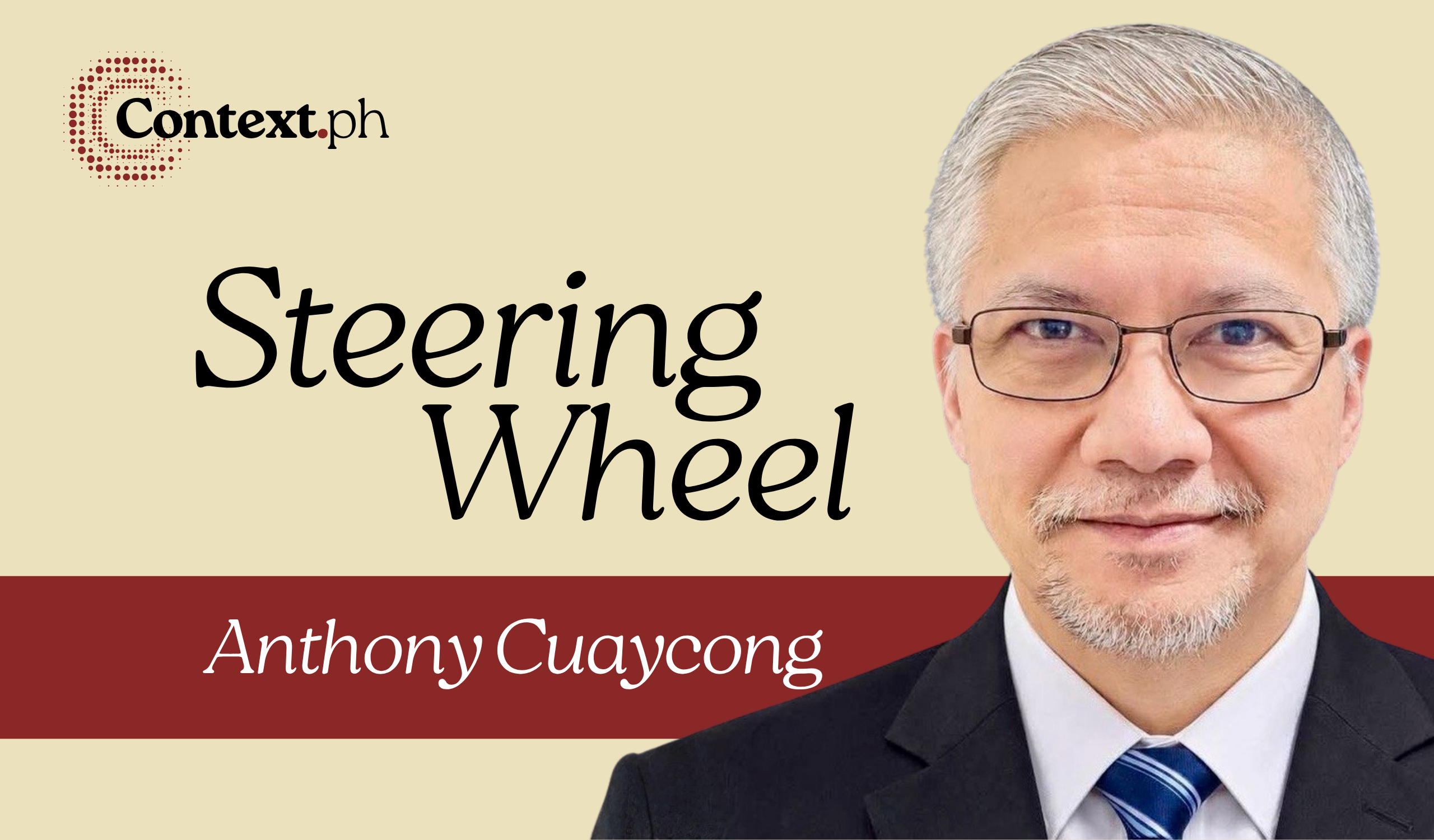
Steering Wheel is a commentary from Anthony Cuaycong, publisher of Context.ph and a longtime motorist who believes cars are meant to get us somewhere, although getting there is often the most complicated part. He follows cars, roads, traffic, technology, and the peculiar habits of people behind the wheel. His views are entirely his own, including the ones formed while looking for parking.