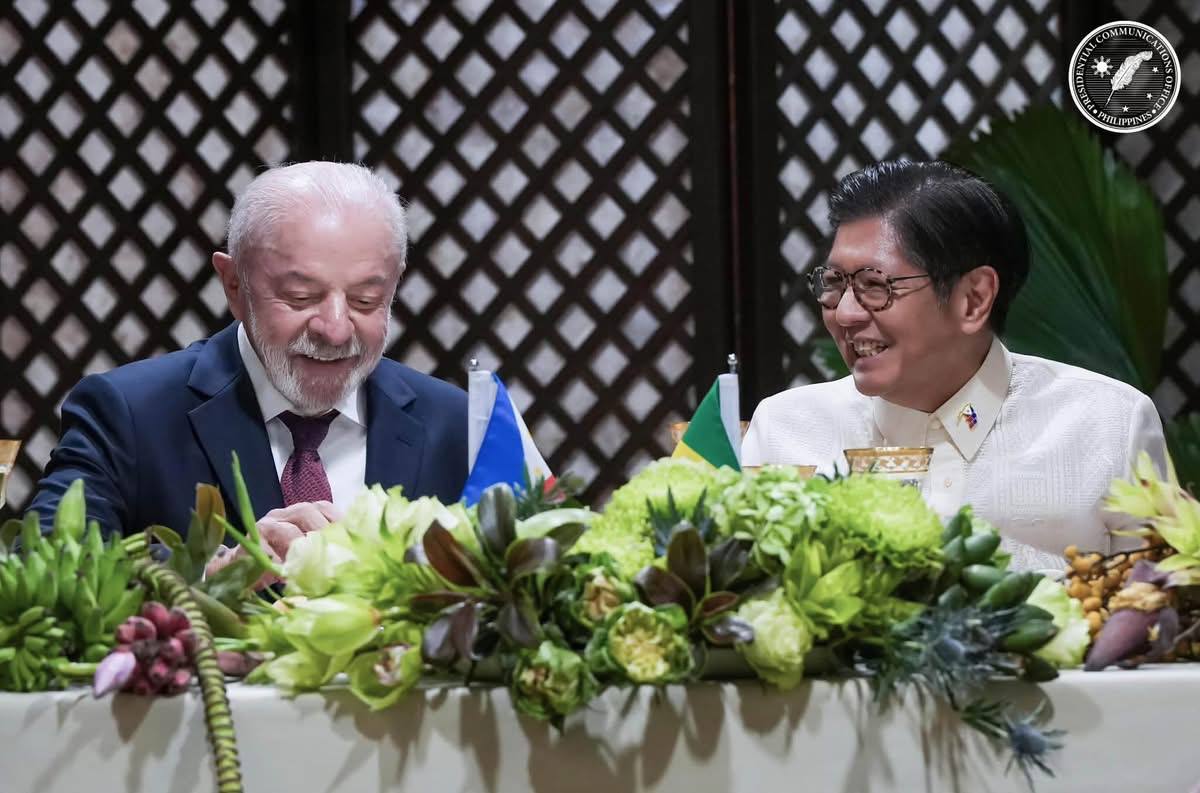
The Philippines is seeking Brazilian investments in food processing, ethanol and clean energy, as government and business leaders pursue partnerships to boost domestic production, create jobs and strengthen food and energy security.
Trade Secretary Cristina Roque pitched investment opportunities at the Philippines–Brazil Business Forum in Manila on November 14, held during the visit of Brazilian President Luiz Inácio Lula da Silva.
Ayala Corp. chairman Jaime Augusto Zobel de Ayala said the countries’ complementary strengths offered opportunities to build businesses that generate jobs and improve access to essential services.
“There is much we can learn from one another,” said Zobel, whose group sponsored the forum with International Container Terminal Services Inc.
He cited Brazil’s strengths in agriculture, food production and renewable energy, alongside the Philippines’ capabilities in services, electronics and its strategic connections across Southeast Asia.
Despite economic challenges, Zobel said Ayala remained committed to long-term investments and partnerships.
“We welcome more opportunities to develop deeper relationships with Brazilian business,” he said, citing food security, clean energy and technology as promising areas for cooperation.
Roque said Brazilian expertise could help modernize Philippine sugar mills, expand ethanol production and turn agricultural byproducts into energy.
“These partnerships can generate additional value for farmers while strengthening our energy security,” she said.
ApexBrasil projects Philippine ethanol demand at 875 million liters in 2026, against domestic production of just 385 million liters, leaving a supply gap of 490 million liters that could attract Brazilian producers and investors.
Roque also sought Brazilian investments in cold storage, food processing and agricultural logistics, areas critical to reducing postharvest losses, improving supply chains and increasing the value of local agricultural products.
Beyond attracting capital and technology, she said the Philippines was pursuing greater access to the Brazilian market for coconut products, mangoes and calamansi, broadening opportunities for Philippine exporters and giving bilateral trade a more balanced commercial foundation.