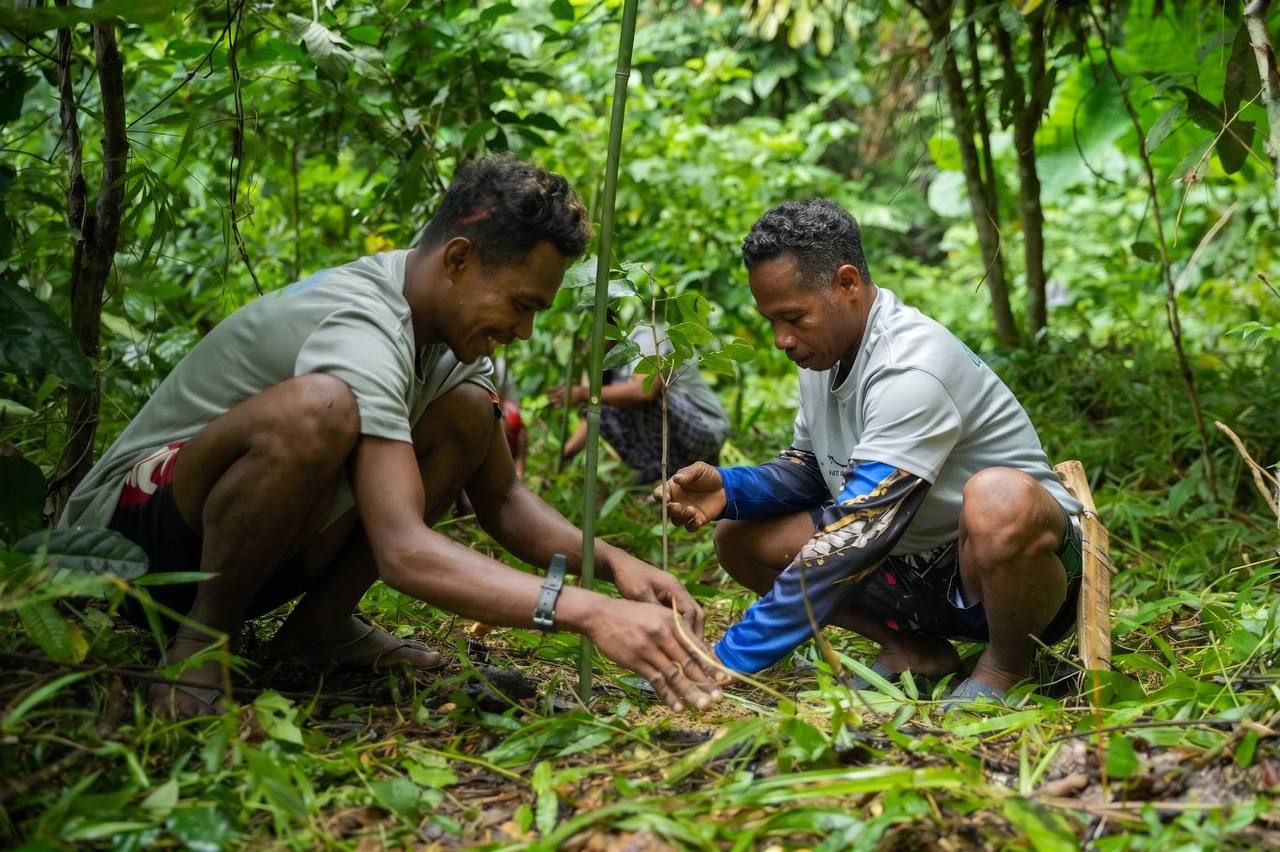
Conservation International Philippines Foundation and GCash’s GForest program will plant 500,000 native trees across 500 hectares in Puerto Princesa, Palawan, in a five-year restoration project targeting forests damaged by Typhoon Odette in 2021.
The initiative covers the Cleopatra’s Needle Critical Habitat, where severe storm damage has weakened forest cover, threatened wildlife and increased pressure on watersheds that protect nearby communities.
A USAID-SIBOL assessment found that nearly half of the habitat’s forests shifted to open forest or lost forest cover following the typhoon, with damage concentrated in Tanabag, San Rafael, and Langogan.
Beyond replanting trees, the project is designed to generate livelihoods for local and Indigenous communities through paid work and training in seed collection, planting, and long-term maintenance and monitoring of restoration sites.
Conservation International Philippines said it would secure the free, prior, and informed consent of Indigenous communities before implementing activities, while coordinating with government agencies and the habitat’s management board.
“Successful forest restoration depends on working in partnership with Indigenous and local communities, whose knowledge, connection to the land, and long-term stewardship are essential to ensuring lasting conservation outcomes,” said Wilson John Barbon, vice president and country lead of Conservation International Philippines.
Declared a critical habitat in 2017, Cleopatra’s Needle covers about 41,305 hectares across seven barangays. It shelters 13 critically endangered, 24 endangered, and 44 vulnerable species, including the Palawan pangolin, Palawan peacock pheasant, and blue-naped parrot.
Nearly half of the protected area falls within the Babuyan and Langogan watersheds, making forest recovery important not only for biodiversity but also for reducing erosion, flooding, and landslide risks in surrounding communities.
Over the next five to 10 years, the partners expect the restored forests to improve wildlife habitats, strengthen watershed protection, and absorb carbon.
The project also highlights the economic dimension of conservation, with restoration work creating income opportunities for communities whose livelihoods and safety are closely tied to the health of local ecosystems. Its longer-term success, however, will depend on whether newly planted trees survive and local stewardship continues well beyond the five-year implementation period.