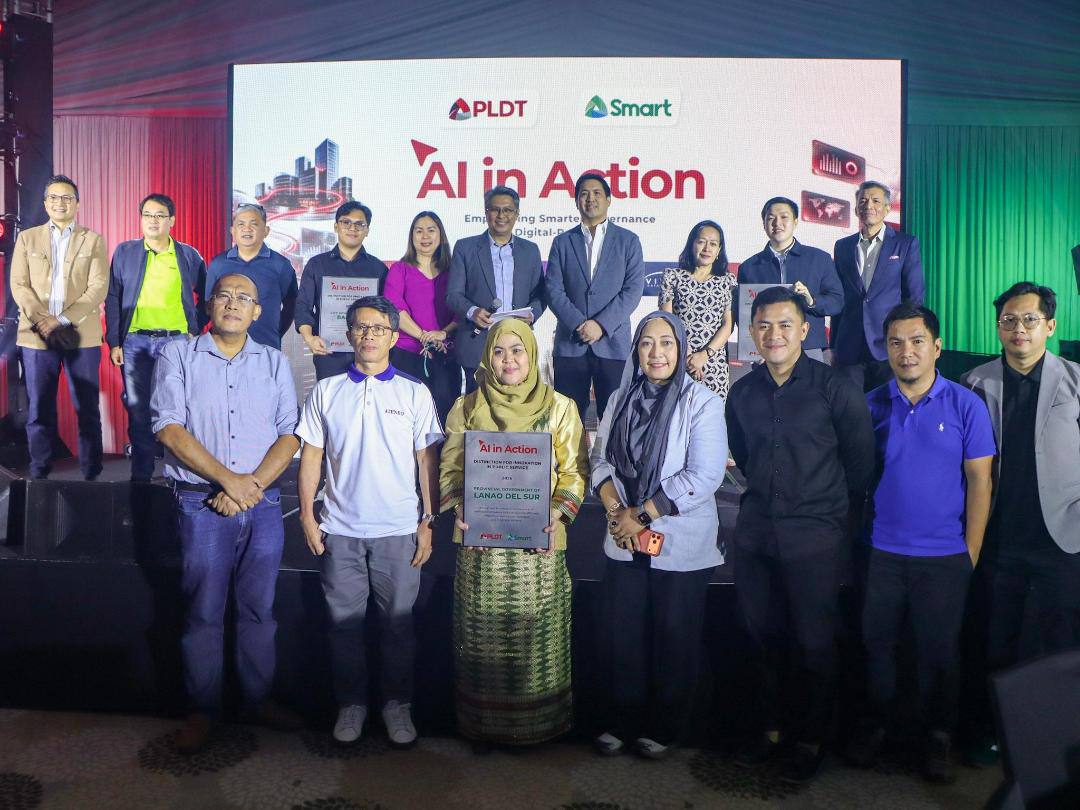
Local government units (LGU) across the country are moving artificial intelligence from concept to daily practice, rolling out homegrown digital tools to solve community problems and streamline citizen services. During the recent “AI in Action Forum” hosted by PLDT Inc. and Smart Communications, Inc., leaders from Baguio City, Cabanatuan City, Cebu City, and Lanao del Sur Province showcased practical AI applications developed through the telecoms’ “AI-in-a-Box” program. These tools are already being used on the ground to speed up service requests, improve citizen engagement, and support data-driven local governance.
For communities, these local initiatives carry clear practical value by cutting down bureaucratic delays and helping officials overcome geographic and logistical barriers. Instead of waiting for top-down tech rollouts, municipalities are tailoring AI to fit their specific local needs. Roby Alampay, First Vice President and head of PLDT and Smart’s Public Engagement Group, noted that the forum focused on learning from what is already working today so these grassroots innovations can be scaled effectively.
At the policy level, these local deployments serve as vital real-world testing grounds for the country’s broader digital transformation. Department of Science and Technology-Advanced Science and Technology Institute (DOST-ASTI) Assistant Scientist Elmer Peramo emphasized that LGUs provide the real service challenges, local context, and direct citizen feedback needed to shape and validate the National AI Strategy.
At the same time, national officials stressed that rapid adoption must be balanced with strong guardrails. Department of the Interior and Local Government (DILG) Undersecretary for Plans and Programs Atty. Jon Paulo V. Salvahan pointed out that while AI can build smarter and more resilient communities, governments must actively guard against economic disruption, over-dependence on technology, and the erosion of human critical thinking. Moving these LGU projects from pilot phases to permanent public services will require sustained human oversight, clear governance frameworks, and ongoing collaboration between local governments, national agencies, academia, and private tech partners.