Bees have long been the quiet workforce behind farms and forests alike. They pollinate crops, keep ecosystems humming, and produce everything from honey to beeswax.
But globally, these tiny powerhouses are in decline, squeezed by habitat loss, pests, and a growing list of diseases.
Now, scientists have confirmed that one of the world’s most notorious bee viruses has made its way into Philippine hives.
Called deformed wing virus or DWV, it is a major player in honeybee die-offs worldwide.
A new study titled Virus Detection in Apis mellifera from Selected Apiaries in Batangas and National Capital Region, the Philippines, led by Lovely Rose Ann A. Sison, Nathaniel R. Alcantara, and Noel G. Sabino of the University of the Philippines Los Baños and published in the April issue of the Philippine Journal of Science, confirms what many in the beekeeping community may have suspected.
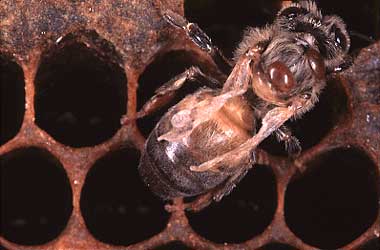
DWV is not subtle. Infected bees often emerge looking like they lost a fight with gravity, sporting crumpled wings and stunted bodies. Most do not survive long enough to do much pollinating. When enough bees are affected, entire colonies can falter or collapse.
The virus owes much of its success to a tiny accomplice, the parasitic mite Varroa destructor. This hitchhiker feeds on bees and delivers the virus straight into their system. From there, it spreads through everyday hive life, from food sharing to close contact, and even from parent to offspring. For a virus, it is an efficient social network.
To confirm its presence, researchers sampled apiaries in Metro Manila and Batangas, collecting adult bees, brood, and mites across 2023. Using polymerase chain reaction testing, they detected DWV in adult bees and mites in one NCR site, and in brood from Batangas. Genetic results pointed to the DWV B variant, a strain linked to severe colony losses abroad.
Two other viruses were also screened but not detected, offering a small bit of relief.
The finding is both a warning and a starting point. With better monitoring and strong mite control, experts say there is still time to keep Philippine bee populations from taking a deeper hit. Because when bees struggle, the ripple effects do not stay in the hive.