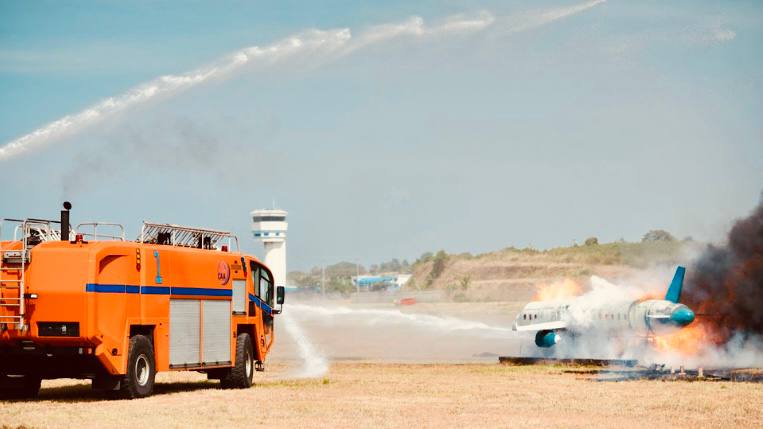
Laguindingan International Airport, the country’s tenth busiest gateway operated by Aboitiz InfraCapital, recently staged a high-stakes emergency simulation that looked less like a routine compliance exercise and more like a full-scale stress test of how an airport actually holds together under pressure.
The drill, called AERON2026 or Airport Emergency Response Operations Network, is conducted every two years in line with requirements from the Civil Aviation Authority of the Philippines. But beyond paperwork compliance, it increasingly functions as something closer to an operational audit under fire, where response time, coordination, and decision-making are tested in real time.
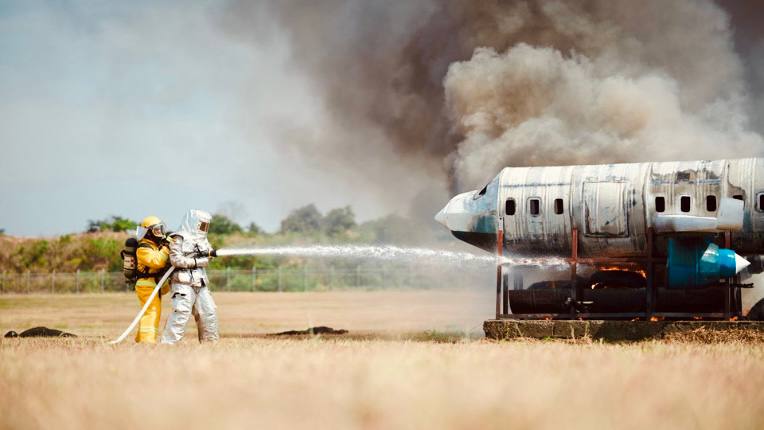
This year’s scenario simulated an on-airport aircraft accident involving a mock Airbus A321neo after a hard landing. From the outside, it resembled controlled chaos. Inside the airport system, it was a tightly choreographed sequence involving Aerodrome Rescue and Fire Fighting Services, medical teams, and multiple government and private partners operating under a Mutual Aid Emergency Agreement.
The exercise effectively turned the airfield into a live laboratory for crisis response. Sirens, staging areas, triage setups, and coordinated communications all formed part of a scenario designed to expose gaps before an actual emergency ever can.
Aboitiz InfraCapital look at the exercise as a quieter but important business logic. Airports today are judged not only by capacity and passenger growth, but by resilience. “Safety is not a static goal but a continuous practice,” said General Manager Ryan Ermac, emphasizing that repeated drills help sharpen coordination and reduce response friction as risks evolve.
Regulators agreed. CAAP Area Manager Job B. De Jesus noted that the exercise reflects a stronger alignment between public oversight and private airport operators, saying that unified action is key to keeping aviation standards aligned with global expectations.
The bigger picture is increasingly clear. As regional hubs like Laguindingan compete for traffic, investment, and airline confidence, operational readiness is becoming a competitive asset, not just a regulatory requirement.
Despite the intensity of the simulation, regular flight operations continued without disruption, a detail that quietly underscores the point of the exercise. In modern aviation, resilience is not just about reacting well when things go wrong, but ensuring passengers barely notice the system being tested at all.